




Cabbie died of a heart attack, says pathologist
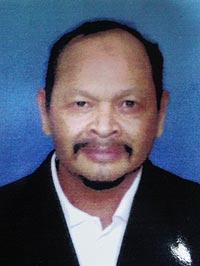
Bersih 2.0 protester Baharuddin Ahmad had died because of a heart attack, says the forensic pathologist who performed his autopsy.
Bersih 2.0 protester Baharuddin Ahmad died because of a heart attack, the forensic pathologist who performed his autopsy testified today.
Dr Khairul Anuar Zainal said he found the arteries of the deceased taxi driver’s heart were heavily clogged, which alone could have killed him.
But in addition to that, the doctor also found elevated levels of the protein troponin in the blood and signs of recent heart damage, leading him to conclude that Baharuddin had died of acute myocardial infarction.
 Khairul also ruled out the possibility that the heart attack was triggered by exposure to tear gas, based on tests done on Baharuddin’s skin swabs, eye swabs, blood and bile samples, all of which returned negative results.
Khairul added that a very high exposure was needed if this was this to occur.
“Exposure on the skin alone is not enough. It needs to go to the extent of the gas penetrating the skin and entering the bloodstream,” he told the coroner’s inquest in Baharuddin's death.
However, the lawyer for Baharuddin's family Ahmad Jufliz pointed out that the autopsy report also incorporated results from chemistry tests, which according to other witnesses had not start until July 21.
Khairul replied that July 15 was the date he started writing the report, and he only completed it sometime after the received the chemistry report on Aug 2. However, he was unable to provide the exact date.
“Don’t you think it is important to include the date you finish the report in a high-profile case like this?” asked another counsel for Baharuddin's family, Patrick Dass.
However, the pathologist from Kuala Lumpur General Hospital said that this was how he normally reported his autopsies, which numbered over 1,000 cadavers since his career beginning in 2009.
Why it's called 'silent killer'
Khairul also testified that a heart attack may cause several symptoms including an intense, stabbing chest pain, but this was not always true for all patients.
“It can come. The patient does not complain of any pain. He collapses...”
Khairul snapped his fingers and continued, “He dies instantly. That is why it is called the ‘silent killer’,” he said, when Ahmad Jufliz suggested that the symptom may have hinder Baharuddin ability to run.
Baharudddin was seen running towards the Avenue K building in CCTV footages, where he was found to have collapsed during the protests on July 9 last year.
Khairul also played down claims of inconsistency between a briefing given to the family and the contents of the autopsy report.
Baharuddin’s daughter Ummi Mirza Baharuddin had testified at an earlier hearing that she was told her late father’s lungs were healthy, but the autopsy report indicated “congestion” in the lungs.
When the issue was raised during cross-examination, Khairul suggested that the discrepancy might have arisen from different definitions of the word “healthy”.
“By ‘healthy’, I meant that the lungs had not undergone any changes that might cause death,” he explained, adding that the congestion taken on its own was not medically significant.
He also brushed off Ummi’s testimony that she was told that Baharuddin’s teeth were freshly broken.
Khairul said the teeth were broken while Baharuddin was dead or dying, because otherwise he would have bled. Instead, he had only found blood stains on the gums.
Thus, he suggested that the injury was caused by metal instruments used to pull Baharuddin’s tongue out of the way to allow a tube to be inserted to aid breathing, during his unsuccessful resuscitation.
He had previously, and during today’s hearing, used similar reasons to suggest that Baharuddin’s broken ribs were not due to a physical attack but were the result of cardiopulmonary resuscitation (CPR), because signs of bleeding on the three broken ribs were “minimal to absent”.
Khairul also based his conclusion regarding the broken ribs on the position of the fractures near the heart, the fact that there were no signs of bruising in the area, and no sign of assault on that area of Baharuddin’s shirt such as foot prints.
The inquest before coroner Zulkpli Abdullah continues at 11am tomorrow.


Are you sure you want to delete this comment?
This action cannot be undone.