




'ISA detainee being held in isolation'
An Internal Security Act (ISA) detainee has been confined by himself for the past two months at the Kamunting detention camp in Perak, according to the Abolish ISA Movement (GMI).
An Internal Security Act (ISA) detainee has been confined by himself for the past two months at the Kamunting detention camp in Perak, according to the Abolish ISA Movement (GMI).
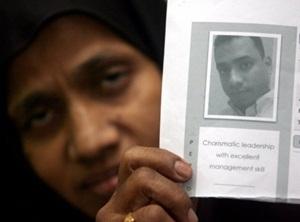 Mohamad Fadzullah Abdul Razak
(inset in photo)
has been separated from other detainees - and held in the vacant women’s block - but the reasons for his confinement have not been determined.
Mohamad Fadzullah Abdul Razak
(inset in photo)
has been separated from other detainees - and held in the vacant women’s block - but the reasons for his confinement have not been determined.
GMI chairperson Syed Ibrahim Syed Noh and Suaram coordinator Syukri Razab, in a joint statement today, said Mohamad Fadzullah was one of several detainees who had gone on a hunger strike last month to demand their freedom.
He had been arrested on July 15, 2010 for allegedly recruiting students for a Jemaah Islamiah group.
 The joint statement also called for the remaining 45 detainees to be released immediately, arguing that there is no reason to wait until their
detention orders lapse
if there is no evidence to charge them in court.
The joint statement also called for the remaining 45 detainees to be released immediately, arguing that there is no reason to wait until their
detention orders lapse
if there is no evidence to charge them in court.
Syed Ibrahim (right) and Syukri called for the closure of the camp and suggested that it be designated as a national heritage or museum, to commemorate the “injustice and cruelty” of the ISA.
They also called for a truth and reconciliation commission to deal with the many wrongdoings under the ISA, and to provided compensation to detainees.
‘Another hunger strike if ...'
At a press conference in the Parliament lobby later, Syed Ibrahim said that if the discussions between the Human Rights Commission and the Home Ministry end in a stalemate by June 30, the detainees have threatened to stage another hunger strike.
"The detainees are desperate and they do not understand why they are still being detained despite the fact that the Act has been abolished.
"There is a new law replacing ISA, so release them, charge them in court and detain them under that law if you want to detain. But what is stopping them from doing that? Instead they were beaten up, tortured, forced (to confess)," he said.
Related stories


