




M'sia lags behind in polls observer laws, says NGO
The regulatory framework governing election observers in Malaysia does not meet international standards, said the Malaysian Election Observers Network (Meo-net).
The regulatory framework governing election observers in Malaysia does not meet international standards, said the Malaysian Election Observers Network (Meo-net).
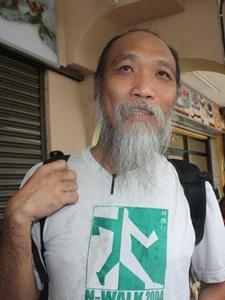 Meo-net coordinator Ong Boon Keong (
right
) said other countries, such as Sri Lanka, Indonesia and Pakistan, have included the need for election observers in either their laws or the constitution, unlike Malaysia.
Meo-net coordinator Ong Boon Keong (
right
) said other countries, such as Sri Lanka, Indonesia and Pakistan, have included the need for election observers in either their laws or the constitution, unlike Malaysia.
"According to international practice, accreditation should be given to all bona fide parties and only groups with direct affiliation to political parties are rejected.
"However in Malaysia, such decisions are left entirely to the discretion of the Election Commission (EC) which makes it very difficult for observers to operate," said Ong, who has been invited to observe elections in many countries.
He argued the lack of a framework allowed the EC to impose unreasonable conditions on polls observers, which include a gag order preventing them from talking to the media during the electoral campaign period.
The veteran social activist complained that such restrictions were unheard of in other countries.
"Another condition imposed is observers will have to ask permission from polling station officers to take pictures of evidence (of wrongdoing).
"This defeats the purpose of monitoring if the officer is involved with the malpractice," said Ong, who was denied entry into Sarawak during the state election campaign period.
Doubts on effectiveness of selected NGOs
The EC has named five NGOs as accredited poll observers for the 13th general election, but their selection has drawn strong criticism from civil society groups.
The five are think-tanks Institute for Democracy and Economic Affairs (Ideas) and Asian Strategy and Leadership Institute (Asli), graft watchdog Transparency International-Malaysia, human rights body Association for Promotion of Human Rights (Proham) and independent pollster Merdeka Centre.
Long-time election observer Malaysians for Free and Fair Elections (Mafrel) has complained of the lack of expertise among the selected NGOs in poll monitoring.
It accused the EC of using the NGOs to create an illusion of electoral transparency.
Ong agreed that the accredited observers may lack experience. "I don't know if they can be effective observers, or even if they want to be," he said.
He added that Meo-net, a network of six election observation and voter education groups, intends to apply to the EC for accreditation in order to gain access to the polling stations during the election.
"However, we will not accept the accreditation if the conditions imposed are the same as they are now," he said.
The National Institute for Democracy and Electoral Integrity (NIEI), which has done extensive international election monitoring work, turned down an invitation from the EC to be an accredited election observer due to the lack of a proper legislative framework for it to do a proper job.


Are you sure you want to delete this comment?
This action cannot be undone.