




Dry spell caused drop in water levels in S'gor dams
Selangor has blamed the recent decrease in water levels at dams on the dry spell brought about by the northeast monsoon that hit the country from May to July.
Selangor has blamed the recent decrease in water levels at dams on the dry spell brought about by the northeast monsoon that hit the country from May to July.
 Selangor Economic Planning Unit (Upen) macro and privatisation section deputy director Nor Azmie Diron
(left)
said the "phenomenon" is common, but gave the assurance that water levels will peak again, as the southwest monsoon has started.
Selangor Economic Planning Unit (Upen) macro and privatisation section deputy director Nor Azmie Diron
(left)
said the "phenomenon" is common, but gave the assurance that water levels will peak again, as the southwest monsoon has started.
"We have been in contact with the Meteorological Department. According to the briefing, the northeast monsoon brought the dry season but (the forecast) from August to November (is for) rain (from the southwest monsoon)," he explained at a public briefing in Shah Alam today.
"Let's look at it realistically. It is now August and for the past three days, it has been raining - not much, but it is raining and there has been rainfall at the dams (while the) water levels have risen to 2mm.”
Nor Azmie said that rainfall data from 2009-2010 showed a similar pattern.
"The rain is back and we are confident that the water levels will rise again but yes, we agree there was a decrease," he said.
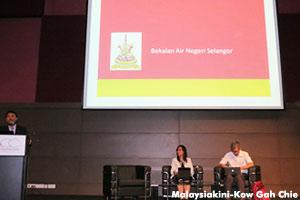 The public briefing was conducted to address the issues surrounding an alleged water crisis in the state, as well as to debunk claims of a bailout in the debt-restructuring exercise involving Talam Corporation Bhd.
Selangor main water industry player Syarikat Bekalan Air Selangor Sdn Bhd (Syabas) had proposed water rationing in the state as well as in Kuala Lumpur last month, citing the shortage of treated water.
The proposal drew fierce criticism from the Pakatan Rakyat-led government which claimed that dams were full to the brim and Syabas' management of the treatment plants should be scrutinised instead.
He told the 200 people present at the briefing that the state has among the highest rates of non-revenue water (NRW) wastage - at 32 percent - adding that, despite the financial assistance received, Syabas is still not able to reduce the NRW.
 Nor Azmie also noted that Selangor's 34 treatment plants can generate 4,475 million litres of water per day (MLD) and have the capacity to increase daily production to 4,946 MLD by 2020.
Some treatment plants like those in Sungai Labu and Bukit Jeluntong will be able to produce more treated water when upgraded, he said.
The state is also considering the use of underground resources of water and rain water.
Complaints about connectivity
During the briefing, several business personalities complained that Syabas has denied them approval for projects since last year, on the basis of shortage of water.
 An official from food and beverages giant Fraser and Neave said the company’s production facilities in Pulau Indah had been denied treated water supply for five days last year, until a query was raised.
He said the company had to revert to its old plant in Section 13, Petaling Jaya, during that period.
"All this is very ad hoc," said the official, recommending that the state sets up a panel to look into water supply in Pulau Indah.
According Nor Azmie, about 204 projects have been on hold since January, after being denied water connectivity by Syabas.
However, he pointed out the state through the local councils are acting to resolve the problems.
Related stories
S'gor to Noh: 75pct water tariff hike not a burden?
Royal intervention sought in Selangor water crisis
Spooked by Syabas for no good reason


