




'Amending rape laws won't clash with judicial discretion'
Amending statutory rape laws in order to prevent offenders from getting away scot free won’t conflict with judicial discretion, says Minister in the Prime Minister’s Department Mohd Nazri Abdul Aziz.
Amending statutory rape laws in order to prevent offenders from getting away scot free won’t conflict with judicial discretion, says Minister in the Prime Minister’s Department Mohd Nazri Abdul Aziz.
“It’s parliament’s prerogative to make clear certain sections of law,” the de facto law minister told the Dewan Rakyat while winding up for the ministry at the policy stage of the Budget 2013 debate.
Making clearer the stand of lawmakers, he clarified, is in no way in conflict with the judicial discretion given to judges.
He was commenting on news reports questioning government instruction to the Attorney-General’s Chambers (AGC) to amend Section 376 of the Penal Code concerning statutory rape to prevent judges from using Section 294 of the Criminal Procedure Code (CPC) to replace the mandatory five year prison sentence with being let off with a bond for good behaviour.
Section 294 of the CPC allows for judges to release first-time offenders or those with extenuating circumstances on a bond of good behaviour, circumventing custodial sentences mandated by specific legislations and sections in the Penal Code.
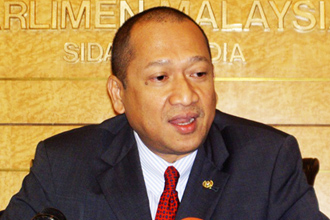 Earlier, Nazri (
left
) also said that the AGC has been given the “green light” by the government to expedite the formulation of a bill to amend Section 376 of the Penal Code and specifically prevent Section 294 of the CPC from being used in statutory rape cases.
Earlier, Nazri (
left
) also said that the AGC has been given the “green light” by the government to expedite the formulation of a bill to amend Section 376 of the Penal Code and specifically prevent Section 294 of the CPC from being used in statutory rape cases.
This, he said, was being done in view of the overwhelming public outcry from parents, law practitioners and child welfare NGOs over the recent decision by two judges who granted release with a bond for good behaviour for two statutory rape offenders.
The amendment, explained Nazri, is the more immediate measure to handle the matter, while a more comprehensive study is in the works to totally re-look at how the legal system handles sexual exploitation of minors.
The study will involve not only government agencies, but also NGOs, parents and public feedback and will then form the basis for future overhaul of laws that involve sexual exploitation of minors.
Statutory rape laws took national centrestage following two court decisions involving a national lawn bowler and an electrician in Penang, both of whom were released with a bond for good behaviour despite having been found guilty of statutory rape.
In both cases judges have stated that the offenders were still young and have a “bright future” and should be given a second chance.
The decisions caused a public outcry that has prompted the government to mull amending statutory rape laws, though this was met with opposition with those concerned that judicial discretion is being threatened.


Are you sure you want to delete this comment?
This action cannot be undone.