




DAP queries PM's 'secret plan' to avoid Fitch rating cut
Malaysian Prime Minister Najib Abdul Razak must reveal his plan to tackle corruption or his promise to trim spending just to avoid a credit rating cut as it holds no weight, the DAP said today.
Malaysian Prime Minister Najib Abdul Razak must reveal his plan to tackle corruption or his promise to trim spending just to avoid a credit rating cut, as it holds no weight, the DAP said today.
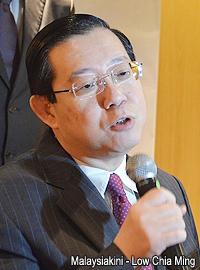 DAP's secretary-general Lim Guan Eng (
left
) slammed Najib for openly telling
Bloomberg
in an interview last week that his plan to avoid a rating cut by the Fitch rating agency was to further slash state subsidies, broaden its tax base and manage spending “prudently”.
DAP's secretary-general Lim Guan Eng (
left
) slammed Najib for openly telling
Bloomberg
in an interview last week that his plan to avoid a rating cut by the Fitch rating agency was to further slash state subsidies, broaden its tax base and manage spending “prudently”.
Fitch Ratings had in July cut Malaysia’s credit outlook to negative, and shortly after that, the Malaysian ringgit depreciated sharply against all major currencies.
"Is Najib talking about further increases in petrol, sugar and food prices when he talked of cutting state subsidies? Is Najib going to implement open competitive tenders to cut down crony capitalism when he talked of managing spending prudently?" Lim asked in a statement.
He called Najib's talk of prudent spending "meaningless," citing that no punishment has been meted out despite recent Auditor-General’s Report 2012 pointing out what DAP estimated to be RM6.5 bllion in losses due to excessive spending, wastage and financial wrongdoings.
In the Bloomberg interview at Putrajaya on Oct 11, Najib also said that the cabinet will meet before the 2014 Budget is released on Oct 25 to decide if there’s enough public support to introduce a goods and services tax (GST).
Lim expressed concern that Najib was prepared to sting the public with a sharp seven percent GST, as suggested earlier in the year by the prime minister's special economic adviser Idris Jala.
He cited reports from the Washington Post, which labelled Malaysia "a world champion of corruption" and Forbes writer Jesse Colombo’s online magazine, which warned of an economic bubble due to high government and household debs.
In the article, Colombo called Najib's RM5 billion plan to erect a 118-storey Warisan Merdeka Tower a red flag and another unsustainable bid to inflate Malaysia's economy through loose fiscal policy. The government's budget has been in a deficit for the last 15 years.
According to Bloomberg data, Malaysia’s debt-to-gross domestic product ratio, which stood at 53.3 percent, is the highest among 12 emerging Asian markets after Sri Lanka.
Besides Fitch, other debt rating agencies such as Moody's have also put Malaysia on a review watch.


Are you sure you want to delete this comment?
This action cannot be undone.