




TI-M rubbishes gov't stand on MACC prosecution power
The argument that giving the Malaysian Anti-Corruption Commission the power to prosecute in court can lead to abuse has no basis, anti-corruption watchdog Transparency International-Malaysia says.
The argument that giving the Malaysian Anti-Corruption Commission the power to prosecute in court can lead to abuse has no basis, anti-corruption watchdog Transparency International-Malaysia says.
"There is no reason to believe there will be elements of abuse if the MACC is given the power to prosecute.
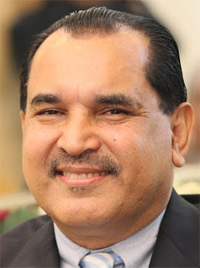 "Abuse of power should be the government's last fear, as the current system may also allow the Attorney-General's Chambers (AGC) to abuse its power whenever it chooses not to proceed with a prosecution," TI-M president Akhbar Satar (right) said today.
Even if MACC has the power to prosecute, it does not mean that it will always use it, he added. .
Instead, he said, it would be more likely that in the MACC invoking such a power to find that the cases it investigated are not prosecuted by the AGC because of "pressure from the top or because the case involves some cronies".
Even then, Akhbar said, safeguards could be put into place, for example by getting the anti-graft body to convince its advisory board that it needs to invoke the power to prosecute.
This will mean that there are two parties with the discretion to prosecute, and as a result the MACC would be "feared by all", he said.
On Wednesday, Minister in the Prime Minister's Department Razali Ibrahim told the Dewan Rakyat that the government would not bestow power to prosecute on the MACC as this could lead to "abuse of power".
Move in as 'undercover operatives'
Razali said this was because such powers would allow the MACC to probe and charge individuals without any check-and-balance and therefore open the room to under-serving the people to be charged.
Akhbar also said that while MACC's 88 percent conviction rate was commendable, it could not be compared with Hong Kong's Independent Commission Against Corruption (ICAC), with its 90 percent conviction rate.
This was because the MACC still needed to consider the types of cases for which its convictions have been achieved, whether "high profile" or "ordinary" cases.
To raise its arrest and conviction rates, Akhbar said, the MACC should send its officers into key government departments as "undercover operatives".
"Unless the MACC is able to clamp down on the perpetrators of everyday petty corruption and grand corruption to exemplify its long-term effectiveness, the people will just be immune to the display of high success rates," he said.
All the same, Akhbar lauded the MACC for nabbing some high profile offenders, including a former Sabak Bernam MP and an UiTM dean.


Are you sure you want to delete this comment?
This action cannot be undone.