




Stiglitz warns TPPA negotiators of pitfalls
Recent leaks of negotiating chapters of the Trans-Pacific Partnership Agreement (TPPA) show that “grave risks” are being taken by negotiating countries, Nobel laureate Joseph Stiglitz has warned.
Recent leaks of negotiating chapters of the Trans-Pacific Partnership Agreement (TPPA) show that “grave risks” are being taken by negotiating countries, Nobel laureate Joseph Stiglitz has warned.
In a letter dated Dec 6 addressed to trade negotiators, the renown economist said the TPPA will trap member-countries in “the worst features of the worst laws”.
 “(The TPPA) proposes to freeze into a binding trade agreement many of the worst features of the worst laws in (the TPPA) countries, making needed reforms extremely difficult if not impossible,” he said.
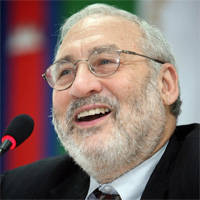
In particular, Stiglitz (right) urged negotiators to resist any text to impose high intellectual property protection on medical matters, including drugs and surgical procedures.
He also called on negotiators not to give any leeway for dilution of the Doha Declaration 2001, which gives exclusions for the World Trade Organisation agreement on intellectual property (Trips) for protection of public health.
He also condemned the fact that investor-state dispute resolution terms are being kept away from the public, but “routinely-discussed” with advisers of big corporations.
Other danger zones which Stiglitz said negotiators should resist include:
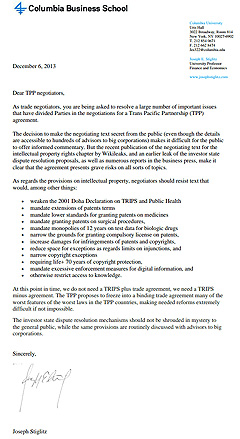 compulsory extensions of patents terms;
- compulsory lowering of standards for granting patents on medicines;
- compulsory patents on surgical procedures;
- compulsory 12-year monopolies on test data for biologic drugs;
- narrowing of grounds for granting compulsory licence on patents;
- increase of damages for infringements of patents and copyrights;
- reduction of space for exceptions to limits on injunctions and the narrowing of copyright exceptions;
- requirement of life plus 70 years of copyright protection;
- mandating excessive enforcement measures for digital information; and
- other restrictions to access to knowledge.
“At this point in time, we do not need a Trips plus trade agreement, we need a Trips minus agreement,” he said.
This is not the first time the Columbia University economics professor has spoken out against the agreement.
In a lecture at Bangkok's Dhurakij Pundit University, Stiglitz was reported by local media as having warned Asian countries against signing the TPPA.
He claimed the objective was for drug companies to make a profit by making consumers in member-countries pay high prices for drugs, even though the US government has already paid for the initial research.
He also warned Thailand that it will likely have to give up its generic drug industry if it signs on to the TPPA.


Are you sure you want to delete this comment?
This action cannot be undone.