




Consumer issues grab more headlines in 2013
The year 2013 saw a number of consumerism issues, including subsidy rationalisation, the Goods and Services Tax (GST), price of consumer products, utility tariffs and housing, being the hot topics of debates.
As for to subsidy rationalisation, the year saw an increase in the price of two commodities, namely fuel and sugar.
The year 2013 saw a number of consumerism issues, including subsidy rationalisation, the Goods and Services Tax (GST), price of consumer products, utility tariffs and housing, being the hot topics of debates.
As for to subsidy rationalisation, the year saw an increase in the price of two commodities, namely fuel and sugar.
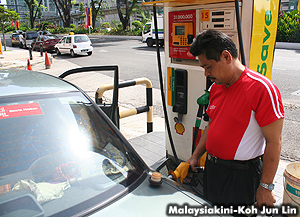 In September, the prices of RON95 and diesel were increased by 20 sen a litre under the subsidy rationalisation programme, which the government said saves it from a subsidy burden of RM3.3 billion a year.
Despite the 20 sen subsidy reduction, the government still provides 63 sen subsidy for a litre of RON95 and 80 sen for a litre of diesel.
The subsidy rationalisation programme also saw the abolition of sugar subsidy by 34 sen, which made the price of a kilogramme of sugar to stand at RM2.85 now, compared with RM2.50 previously.
Prime Minister Najib Abdul Razak, when announcing the abolition of sugar subsidy in the 2014 Budget in October, said the move was made because of concerns over the rising number of diabetes cases in the country.
Helps government save RM551 million
While some were cynical about the statement, the move could actually help the government to save RM551.25 million by abolishing the subsidy from 2014.
Another consumerism issue that captured public attention this year was the six percent GST, which is to be implemented from April 1, 2015, to replace the sales and and service tax (SST).
Many claimed that the implementation of the GST would cause the price of certain goods and services to become more expensive.
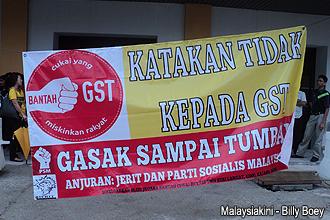 Finance Ministry secretary-general Mohd Irwan Siregar Abdullah clarified that the GST was better than SST as it only imposed a six percent tax on goods and services, compared to SST, which comprises a sales tax of 10 percent and a service tax of six per ent.
In order to protect the people, the government had decided that the GST will not be imposed on essential items.
"GST is not really an issue because it's not a new tax. It's just a tax reform method," Kuala Lumpur Consumer Safety Association president Samsudin Mohamad Fauzi told Bernama .
Earlier this year, the government also decided to review the gas and electricity subsidies, with the electricity tariff in Peninsular Malaysia being increased by 14.89 percent or 4.99 sen per kilowatt hour (kWh) to 38.53 sen/kWh, effective Jan 1, 2014.
The electricity tariff in Sabah and Labuan would also be increased by five sen/kWh or by 16.9 percent from the current rate of 29.52 sen/kWj, effective on the same date.
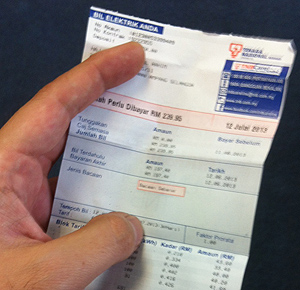 However, 70.67 percent or 4.56 million of the 6.45 million domestic users in the peninsula, and 62 percent or 260,000 of the 418,000 in Sabah and Labuan, who use electricity at the rate of 300 kWh and below, will not be affected by the review.
The last time the tariff was reviewed was in June 2011.
In the meantime, the issue of home ownership was answered when Najib, in tabling the 2014 Budget, announced a series of measures to increase the people's affordability of buying a house, to keep house prices stable, and to curb extreme housing speculation activities.
One of the important measures is cooperation to be forged between the government and private sectors to build a total of 223,000 affordable housing units in a bid to improve the people's access to home ownership.
In addition, the government will also introduce a Private Affordable Housing Scheme or MyHome, which offers a subsidy of RM30,000 per unit, to encourage private housing developers to build more low- and medium-cost houses.
- Bernama


Are you sure you want to delete this comment?
This action cannot be undone.