




Assessment system doomed from the start?
COMMENT The announcement by Deputy Prime Minister and Education Minister Muhyiddin Yassin recently that the schools' based assessment (SBA) system is under review , is of little surprise.
COMMENT The announcement by Deputy Prime Minister and Education Minister Muhyiddin Yassin recently that the schools' based assessment (SBA) system is under review , is of little surprise.
Whatever reasons the government may give, the fact that there was no proper planning, consultation or thought before its implementation, can’t be hidden.
Introduced in 2011 in primary and secondary schools, its purpose is to reduce the reliance on examinations and ensure students are not left behind.
It requires teachers to monitor the progress of students individually and key in their progress to government databases.
However The Education Ministry and the national examination syndicate have proven ill-prepared.
They had insufficient resources computer-wise and simply could not not deal with the vast amount of information feeding in from the whole country.
Teachers found the system hung much of the time. They had to key-in the data several times or work in the wee hours of the morning.
Some parts of the country, especially in rural areas, are lacking in internet access resulting in difficulty in the teachers to key in the results.
All these factors were not taken into consideration. To make matters worse, classes have not grown smaller but bigger.
As a result, teachers complain of being burdened with clerical work, compromising their core responsibility of teaching.
This matter was also highlighted during the Umno general assembly in December.
If you have wondered why your children in public schools received their textbooks late last year, it was due to the SBA, as the finalisation of the syllabus was late, and delayed the printing process.
Even till today, it is understood teachers and policy makers attend never ending briefings as there are loose ends still to tie up.
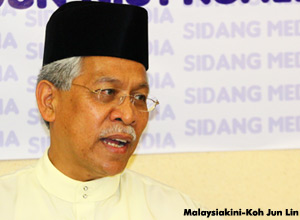 Teachers, upset with that there have not been any improvements in the SBA system, have resorted to setting-up a Facebook page calling for it to be abolished.
They have even threatened to protest on Feb 22 after discussions with Second Education Minister Idris Jusoh ( left ) last December failed.
Such weaknesses in planning and implementation have resulted in questions and doubts expressed on the National Education Blueprint planned for 2013 to 2025.
Certainly there are already doubters to the National Education Blueprint as according to the opposition, RM20.56 million was paid to a a foreign firm, McKinsey and Co to prepare the document but local educationists remarked they were not consulted.
Past systems
Can anyone remember what happened to the Kurikulum Baru Sekolah Rendah/Menengah (KBSR/KBSM) and Sekolah bestari (smart schools)? Both were introduced in the 1990's.
What about the National Education Blueprint 2006 to 2010 or the use of English in Maths and Science subjects?
All these have met untimely deaths despite millions of ringgit spent, and our children being used as lab rats to test each new system.
And what happened to the computers in schools when smart school programme was implemented?
Whatever education systems introduced by the government, it failed to stop the decline in the level of understanding and competency of the students in Maths and Science resulting in the country to be ranked below Singapore and Thailand.
When students were beginning to adapt to the usage of English in Science and Maths, it has now reverted back to Bahasa Malaysia as the medium of instruction. What do the past experiences with those systems show?
Maybe the ideas were good, but they suffered from poor planning or implementation, or both.
Whatever the reasons, the Education Ministry must know that they are toying with the future of our children and country, and act appropriately.
In its hands are the level of competency of our labour force, the competitiveness of our country, and our economic wellbeing.
Long-term goals
Ideally, education policies must be long term, let’s say 20 years, and there should not be sudden shifts unless truly necessary.
Most important of all, education should not be used for political benefits.
It should cater towards fulfilling the thirst of our children for knowledge. This is what is lacking in today's education system.
Since the late 1980's till today, whenever a new education minister steps in, there have been various shifts in the education policy. This instability has left teachers and students confused.
The education minister, in implementing a new policy, must discuss it thoroughly and consider whether the country has the human capital and resources to implement it.
Fulfilling the needs of the well-connected in terms of jobs and money-making opportunities should not be on the agenda. Concern for the future of our children and country must be the primary consideration.
HAFIZ YATIM is a member of the Malaysiakini team.


Are you sure you want to delete this comment?
This action cannot be undone.