




Isn’t it too early for a new ‘Pakatan’?
MP SPEAKS The Malaysian opposition is in deep trouble, and the sooner we recognise this, the more time we will have to fix the problem. The next general election may not be as far away as 30 months from now. No doubt, the BN advisers will be pushing for a general election within six months of persuading Najib Abdul Razak to go on retirement so as to give us (the Malaysians desiring political change) as little time as possible to settle our internal problems.
The Pakatan Rakyat has fallen apart quite acrimoniously. We need a new political formula to continue battling the BN - to govern the states which the Pakatan Rakyat won in 2013 and to work together for the 14th general election (GE14).
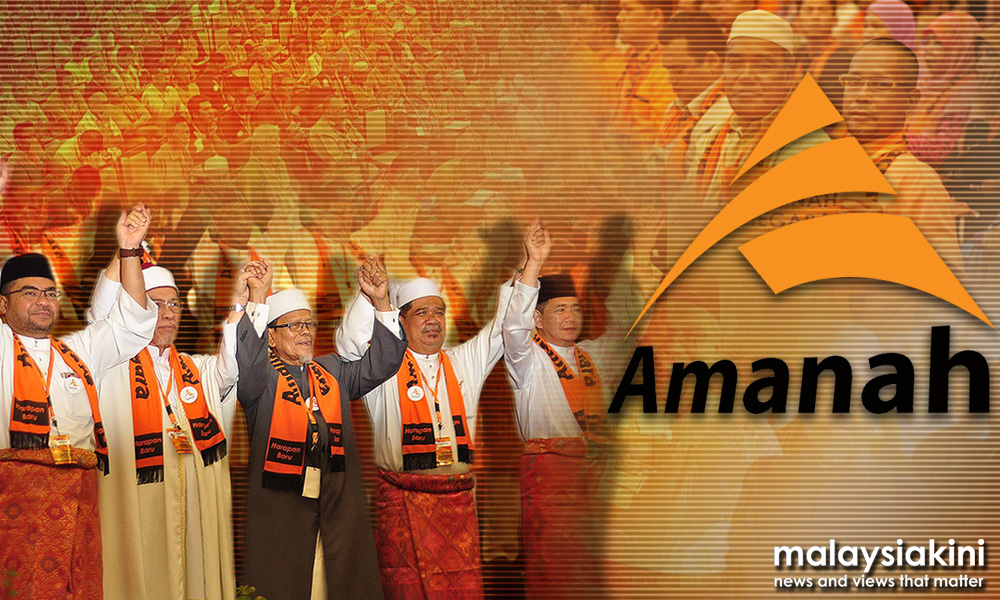 I am not quite sure that a ‘replacement’ Pakatan is what is best for us now. For the Pakatan structure is quite formal - a party has to be either in or out. Put plainly, it either has to be Parti Amanah Negara or PAS. All the other parties have to choose between the two if we adopt the ‘Pakatan’ structure.
I certainly am disappointed with the manner the PAS ulama fell for Umno’s trick, and pushed on with their hudud agenda without consulting the rest of us. I tried to initiate a discussion with PAS president Abdul Hadi Awang to address some of his misconceptions regarding the PSM, but failed to get any response from him. But I do not think that these are sufficient reasons to write off the whole of PAS or to consider them our enemy #2 after the BN.
There are many branch members of PAS who I have worked with these past 16 years in Sg Siput. Many of them are grassroots people - the ‘marhaen’ that my party believes in working for. Many of them have stayed on in PAS instead of crossing over to Amanah. They are still my friends, and I believe we have to work with them.
For many among them believe in better governance and in eradicating corruption. They remain opposed to ethnic politicking, they agree that the poor of all ethnic groups should be helped, and they are against economic policies that burden the poorer half of society. These are points upon which we can build a common political programme that can take our country forward.
 We must make a differentiation between some elements in the current top leadership of PAS and the rank-and -file members of PAS throughout the country who have stood shoulder to shoulder with us in the anti-ISA campaigns, the Bersih gatherings and in the anti-Trans-Pacific Partnership Agreement (TPPA) demonstrations. I have some serious points of difference with the former, but am not prepared to reject outright the latter group!
So instead of plunging in headlong to the building another Pakatan structure to replace the Pakatan Rakyat (and in that process making the whole of PAS our enemy), some time should be spent on discussing whether there are alternative formats for political parties and the NGOs to work together. Perhaps less formal, not so tight structures where the various actors can meet and coordinate action bilaterally and multi-laterally?
Look, the political situation has changed quite markedly. Isn’t it possible that the best format for working together is now different?
Simplistic and unrealistic analysis
I know there are certain people who are arguing that the Pakatan Harapan will come out tops in any three-cornered electoral contest between PAS, Amanah and Umno. So they believe that the Pakatan Harapan can afford to take a hard line against PAS. They argue that the non-Malay voters would choose Amanah over PAS and Umno.
According to them, in a seat with 30 percent of non-Malay voters, Amanah would only need to win 14 percent of the Malay votes to be able to win in a three-cornered contest. This is a simplistic and unrealistic analysis.
Firstly, not all non-Malay votes will go to Amanah. In the Teluk Intan by-election for example, about 33 percent of the Chinese voters and 50 percent of the Indian voters voted for BN. In the seats in Perak which saw PAS fighting Umno in GE13, PAS only got about 42 percent of the Malay vote. It is far more likely that Umno will be the beneficiary of three-cornered fights involving PAS, Umno and Amanah.
I would urge NGOs and civil society groups to weigh in on this debate. We all have a stake in it. If we do not play our depleted cards the best we can, BN might win back a two-thirds majority in Parliament in GE14. That would augment their arrogance and lead to even more abuse of power and misgovernance. That would be quite painful!
On the other hand, it is still possible to deny the BN a two-thirds majority in Parliament and maybe even win state governments in Perak, Negri Sembilan and Johor if we can avoid ruinous three-cornered contests among opposition parties. But we have to play our cards right!
DR JEYAKUMAR DEVARAJ is PSM’s MP for Sungai Siput.


Are you sure you want to delete this comment?
This action cannot be undone.