



M’sian books still walk on wild side at Frankfurt book fair
COMMENT | A fortnight ago, I was in Frankfurt to represent DuBook Press, a five-year-old publishing house, at the Frankfurter Buchmess e (Frankfurt Book Festival).
It is one of the premier book festivals in the world, where publishers, writers and literary agents from five continents gather for five days to speak on literature, writing and publishing. But the real agenda is the multibillion-dollar transactions that keep the global book industry alive.
As a first timer at Frankfurter Buchmesse, our objective was to gain as much knowledge about the international book industry as possible.
COMMENT | A fortnight ago, I was in Frankfurt to represent DuBook Press, a five-year-old publishing house, at the Frankfurter Buchmess e (Frankfurt Book Festival).
It is one of the premier book festivals in the world, where publishers, writers and literary agents from five continents gather for five days to speak on literature, writing and publishing. But the real agenda is the multibillion-dollar transactions that keep the global book industry alive.
As a first timer at Frankfurter Buchmesse, our objective was to gain as much knowledge about the international book industry as possible.
But this does not mean that we came empty-handed. I and my business partner Firdaus Ahmad had in hand two books published by DuBook Press.
One of them was a children’s book called ‘ Advencer (Adventures of) Yaya & Fufu ’, a tale of siblings centred around universal human rights. The other is a novel called ‘ Bagaimana Anyss Naik Ke Langit ’ (How Anyss Rose To The Sky) which is about the oppression of the Penans in Sarawak.
Both are the works of Faisal Tehrani, a talented Malaysian writer who is increasingly stifled by censorship in Malaysia. Several of his titles have been banned.
In Frankfurt, DuBook Press attended as delegates of the Malaysian National Book Council (MKBM), an Education Ministry agency with the motto ‘Books Enrich the Mind’.
It took months of discussions before ‘ Advencer Yaya & Fufu ’ was included in the catalogue of ‘50 Best Malaysian Titles for International Rights’ presented at the festival.
We chose the children’s book because we felt the content was ‘more tame’ compared to ‘ Bagaimana Anyss Naik Ke Langit ’, which could stir some negative misconceptions.
Dropped from catalogue
We were shocked to find on the first day of the festival that ‘ Advencer Yaya & Fufu ’ was dropped from the ‘50 Best Malaysian Titles for International Rights’ catalogue.
The title was on the catalogue’s cover, but the synopsis was replaced by the synopsis of another children’s book about a tree house in Borneo. MBKM and DuBook Press never discussed dropping ‘ Advencer Yaya & Fufu ’ before.
When asked, a MBKM representative said Faisal Tehrani’s background and the fact that the book dealt with human rights were among the reasons the book was dropped.
There were also concerns that the characters Tok Adam (Grandpa Adam) ad Nenek Hawa (Grandma Hawa) would be confused with the Prophet Adam and his partner Eve. We were not informed about this either by writing or orally.
The reasons given are shallow.
Should all of Faisal Tehrani’s books be barred simply because several of his titles are banned? Are human rights in accordance with United Nations definitions unacceptable to the Malaysian government?
Are all couples named Adam and Hawa to be mistaken for the prophet and his wife?
Book fair or food fest?
There is much to be said about the Malaysian delegation at Frankfurter Buchmesse.
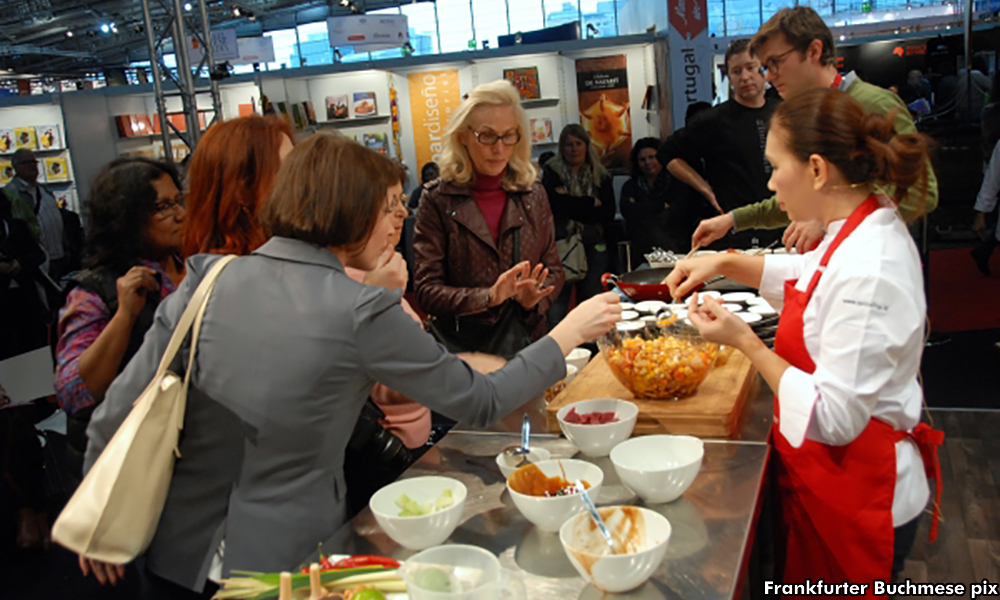
The Malaysian pavilion seems to have prioritised showcasing Malaysian food instead of literature, while their presentations were conducted in English. This contrasts with neighbouring Indonesia, whose delegates showcased their literature and not food, and were confident enough to use their mother tongue during the launch at the main stage.
It should also be noted that Indonesia was the guest of honour at this year’s Frankfurter Buchmesse, so yes, Indonesia’s presence was more prominent than Malaysia’s. Indonesia had a large presentation area and a large delegation of writers and publishers.
But this is because their literary scene is far more mature and advanced than Malaysia, that they need not rely on food or tourism to attract attention at a book fair.
I have no personal issues with promoting food under the theme ‘Citarasa Malaysia’. Malaysia has been selling itself as a food destination for years to attract tourists. It is our tradition and our strength.
If we think of Malaysia, we think of food. Even Malaysians who headed to Frankfurt for the festival found their bellies filled with nasi lemak, lontong, satay and teh tarik to ease the longing for home.
But all this means nothing when a children’s book like ‘Advencer Yaya & Fufu’ can be sidelined from the national catalogue. What hope is there if a book is ‘banned’ because of the writer, and not its contents?
We’re not even talking about ‘ Bagaimana Anyss Naik Ke Langit ?’, which is more haram (illegitimate) that DuBook Press decided to bring it to Frankfurt on its own without relying on MBKM.
I say Indonesia is more open and mature, and this is why. They brought books on Islam like ‘ Republika ’ as well as on Christianity like ‘ Kanisius ’ to Frankfurt, on top of books on socialism and communism by independent publisher Marjin Kiri (Left Margin).
In fact, books on oppression and criticism against the Suharto and Sukarno regimes were displayed without restrictions. In their ’17,000 Pulau Imajinasi ’ (17,000 Imaginary Islands) display, Indonesia also presented their old Hindu manuscripts, something we find hard to do given our tendency to wash away any Hindu aspect of Malay history.
It would also be hard for Malaysia to do this because we probably never kept these artefacts in good condition.
This is the reality of the wide ravine between the Indonesian literary world and ours. This is also why the literary community in Europe is more well-versed with Indonesian literature than it is to ours.
Look at how many Indonesian titles have been translated into European languages, and how many Indonesian writers are known in Europe compared to Malaysians.
Interest abroad, none at home
In the end, DuBook Press continued to head to Frankfurter Buchmesse with our two titles.
Despite restrictions by our own book council, ‘ Advencer Yaya & Fufu ’ attracted attention from publishers and literary agents from Indonesia, Singapore and China. ‘ Bagaimana Anyss Naik Ke Langit ?’ garnered interest from German, Italian and Spanish publishers and agents.
For a five-year-old publishing house at its first showing at a foreign book festival, I believe we didn’t too shabbily.
The authorities can continue to restrict or ban our books, that’s fine. We don’t mind if some people view us differently. We’re okay with that.
DuBook Press has for the longest time been viewed as a wild, fringe publishing house, sidelined from the mainstream Malaysian book industry.
Several of our titles continue to be restricted - the latest ‘ Karya Agong ’ (An Agong’s Tale) by Nasron Yasin and ‘ Nazi Goreng ’ (Fried ‘Rice’) by Marco Ferrarese - but we will continue to rise and grow, to Frankfurt and beyond.
If DuBook Press titles do not fit Malaysian tastes, then let us bring them and the titles of others who have been equally sidelined, overseas.
In the meantime, Malaysia’s presence at international book festivals will continue to rely on food to attract attention, so as not to step on anyone’s toes.
How much longer will this go on?
LUCIUS MAXIMUS is the chief information officer of DuBook Press. The article was translated from its original Bahasa Malaysia. Read more about DuBook and other Malay independent publishers.


Are you sure you want to delete this comment?
This action cannot be undone.