



TPPA can block minimum wage hikes, opponents warn
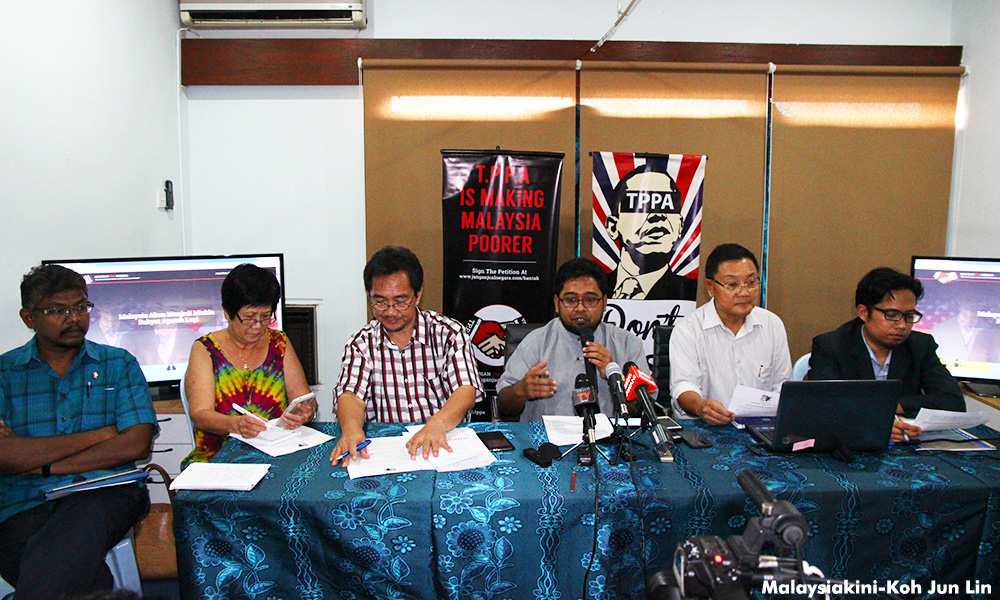
While the government has promised that the Trans-Pacific Partnership Agreement (TPPA) will improve labour standards, the Bantah TPPA coalition warns that the deal may in fact allow foreign corporations to block minimum wage increases.
Bantah TPPA deputy chairperson Azlan Awang said that when Egypt attempted to raise its minimum wage following the Arab Spring revolution, a French water concessionaire operating in the country lodged in Investor-State Dispute Settlement (ISDS) suit against the Egyptian government.
While the government has promised that the Trans-Pacific Partnership Agreement (TPPA) will improve labour standards, the Bantah TPPA coalition warns that the deal may in fact allow foreign corporations to block minimum wage increases.
Bantah TPPA deputy chairperson Azlan Awang said that when Egypt attempted to raise its minimum wage following the Arab Spring revolution, a French water concessionaire operating in the country lodged an Investor-State Dispute Settlement (ISDS) suit against the Egyptian government.
“It (the company) said it would suffer losses, so the minimum wage shouldn’t be raised. It sued!
“There is no judgment yet, but the Egyptian government has rescinded (the raise),” Azlan told a press conference in Kuala Lumpur today.
Since ISDS suits would have to be litigated abroad, Azlan claimed, this would incur high litigation costs of about RM8 million per case.
This would in turn limit Malaysia’s ability to make new policies out of fear that it would attract ISDS suits, Azlan said.
ISDS is a component of TPPA’s investment chapter, and allows foreign investors to sue governments in some circumstances if a new policy would cause losses to the investor.
Egypt is not a party to the TPPA, but similar provisions for setting up an ISDS system exists in many other trade agreements.
Previously, International Trade and Industry Minister Mustapa Mohamed had said that legal changes may be necessary to Malaysia’s labour law, as TPPA would require that the law to be in accordance with the International Labour Organisation (ILO) standards.
However, Jaringan Rakyat Tertindas (Jerit) activist A Sivarajan rubbished the minister’s assertions.
Sivarajan said the ILO’s conventions had been in existence since 1998 and contains many good provisions, but Malaysia doesn’t have to sign it through TPPA.
'Just comply with ILO conventions'
“You don’t have to sign it through TPPA; that is our position. This ILO convention should have been complied with by Malaysia a long time ago.
 “It has very good aspects, which is the right to organise, the right to a minimum wage, (and) the right to strike. A lot of labour standards would be updated through this convention.
“But our position is that you can comply with the convention without the TPPA. So it is a bit misleading for Miti to say that with the TPPA, your labour rights would be updated,” Sivarajan ( photo ) said.
He added that the TPPA labour chapter also contains provisions that allow foreign companies to bypass Malaysia’s industrial courts during labour disputes.
The provision calls for the setting up of a ‘labour council’ to mediate such disputes, and if a resolution is not reached in 60 days, the case can be referred for arbitration through the ISDS system.
“And so what is going to happen to our industrial court system? What is going to happen to our labour courts? This is very, very, dangerous,” Sivarajan said.
Azlan acknowledged that some TPPA provisions are indeed beneficial, such as improved transparency in the government procurement system.
However, he stressed that these practices can be implemented by Malaysia on its own, without adopting the TPPA together with its drawbacks.
“We can do it, like what he (Sivarajan) just said. We can do it, even without TPPA.
“It is a good practice, but why should it be imposed (on us) to do all these things and in a way that stifles everything?” Azlan said.
The group also reiterated its concerns on the impact of TPPA on the healthcare costs and how ISDS could negatively affect future policymaking.
It said that it is still studying the final TPPA text released yesterday, which contains over 6,000 pages organised into 30 chapters.
Bantah TPPA will hold more press conferences in the future to update the public on its findings, the coalition’s chairperson Mohd Nizam Mashar said.
Angkatan Belia Islam Malaysia (Abim) secretary-general Muhammad Faisal Abdul Aziz hailed the public release of the documents as a ‘small victory’ for the people, having pressured various governments to do so for years.
“Now is the time for TPPA opponents especially the people of Malaysia to move forward proactively, including by doing research and raise awareness to the people about (TPPA’s contents),” he said.


Are you sure you want to delete this comment?
This action cannot be undone.