


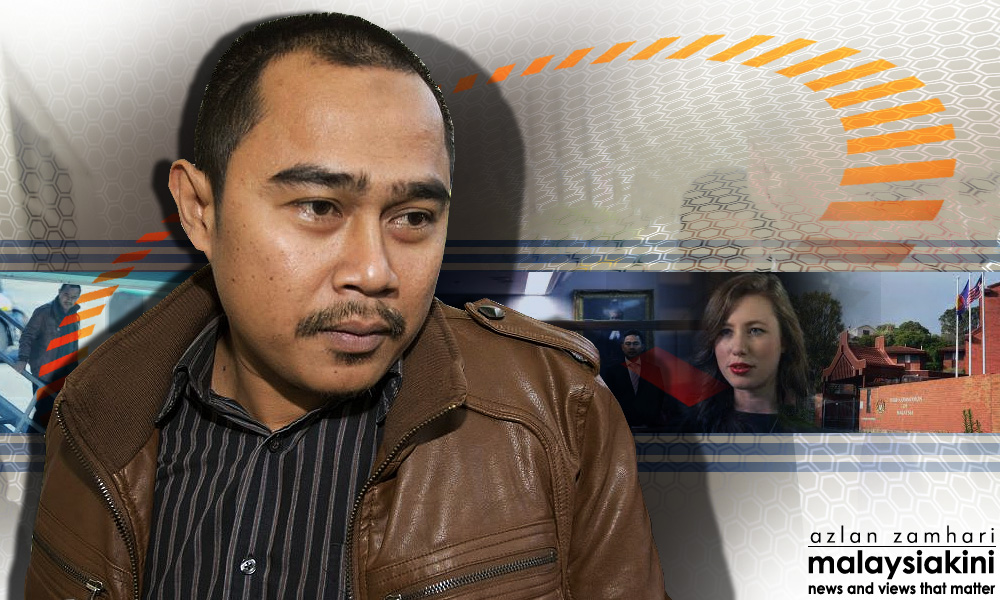

Rizalman blames stress because of 'corrupt seniors'
Former Malaysian military attache Muhammad Rizalman Ismail claimed he was stressed at work as a result of what he alleged was corrupt practice perpetrated by his seniors.
University of Auckland professor of psychiatry Graham Mellsop interviewed the 39-year-old Rizalman last month and his report on his mental fitness was submitted to the Wellington High Court today.
"His (Rizalman's) major concern was that there was an element of corruption by his superiors with which he, as an underling, had to comply," Mellsop's report said as reported in the New Zealand Herald today.
"It was, he said, immoral. So he had not wanted to comply, but felt that he had to obey the orders of his superiors. He became 'stressed', developed headaches, the excessive sleepiness and the forgetfulness described in his statement,” added the professor in psychiatry.
Rizalman, 39, had pleaded guilty to indecently assaulting Wellington woman Tania Billingsley, 21, at her flat in May 2014 last Monday.
Rizalman was reported to have admitted to indecently assaulting Wellington woman, Tania Billingsley, at her flat in May 2014, but he disputes aspects of the Crown's case against him.
He saw Billingsley, 22, in Brooklyn and, he said, believed she'd given him a look that gave permission for him to follow . He says he wanted to talk about his problems.
Last week, Rizalman admitted to smoking cannabis, buying legal highs and believing in black magic.
However, he denied defecating outside Billingsley's home, to cast a spell on her.
The former military attache alleged he had diarrhoea and entered the Billingsley's flat to clean himself up, but the Crown (prosecutor) alleged the motive was sexual and he had tried to make moves on other women previously.
Rizalman also did not admit smoking the legal highs (substances) and claimed at the time of the alleged offence, he was suffering from stress due to work pressures.
During Rizalman's interview with Mellsop, he told the expert psychiatrist that a Malaysian army medical team last year submitted a report which "contained those negative things about him because it was the Malaysian way to always blame their underlings".
That Malaysian report found:
- In the days leading up to the alleged offence, Rizalman was alternatively sleepy or operating at "reasonable performance" levels. Positive drugs tests suggest this varied according to his drug use.
- His accounts of taking substances appeared to contain untruths. Examples of this included claiming not to have used cannabis and alcohol, when urine tests suggested otherwise, and claiming to smoke seven cigarettes a day, when he probably puffed 20.
- Some opinions claimed Rizalman was a "regular cheat" and a "manipulative person".
- A Wellington medical assessment in May 2014 had diagnosed him as having "mixed depression and anxiety". However, Rizalman was not suffering from a mental illness.
The Auckland professor opined that “on the balance of probabilities", Rizalman suffered from symptoms consistent with "a combination of anxiety and ingestion of cannabis or cannabinoid substances".
"My opinion is therefore that not only was he not suffering from a disease of the mind, but that he did know both the nature and quality of his actions and that he was capable of considering their moral wrongfulness or rightfulness according to commonly accepted standards,” he was reported as saying.


Are you sure you want to delete this comment?
This action cannot be undone.