




Victims still wait for homes, a year after the floods
December comes again, bringing with it the frightening memories of floods forever etched in the minds of thousands of people in Kelantan.
Trapped, drowning, left out in the cold and rain watching flood waters carry away their homes, treasured possessions, crops and livestock – these are the dreaded memories of the 2014 Bah Kuning, the Yellow Flood.
A year on, the pain and suffering has yet to subside, with fears as well aroused again by the approaching monsoon rains...
December comes again, bringing with it the frightening memories of floods forever etched in the minds of thousands of people in Kelantan.
Trapped, drowning, left out in the cold and rain watching flood waters carry away their homes, treasured possessions, crops and livestock – these are the dreaded memories of the 2014 Bah Kuning, the Yellow Flood.
A year on, the pain and suffering has yet to subside, with fears as well aroused again by the approaching monsoon rains.
“Life must go on,” Ab Rahman Ali, 70, told Malaysiakini .
A shadow of worry flits across the face of the ex-serviceman who served the nation in the early days after Independence.
Persistent drizzle slowly drenches the compounds of the Taman Etno Botani National Service (PLKN) Camp, some 3km from Gua Musang.
This is home to about 100 families who are still waiting for their new houses after they watched their homes torn away by raging waters last year.
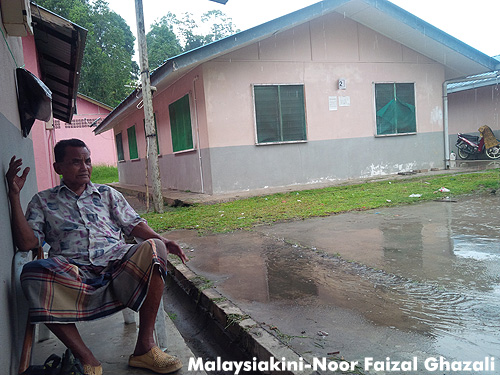 “We still don’t know what will happen to us. We have heard so many things about these new homes we’re supposed to get.
“But it’s all still a blur, we don’t know when we will be able to step into those new homes. Some say by the end of this year, some say next March, others say it may not even be ready in June.
“And now, the flood season has arrived again,” Ab Rahman ( photo ), who has been living at the camp since early this year, said.
Life at a camp
The senior citizen lived with his wife in Kampung Tiong, near Galas, before the flood, and finds there is nothing much for him to do at this camp to while the days away.
“Most of them here go out to work. We are also provided with food and drink every day, so life is better than when we were living in tents before.
‘But of course, it is not as comfortable as living in your own home. We have no other choice, so we wait,” he said.
Come meal time, Ab Rahman and others housed at the camp flock to the dining hall located about a kilometre away from their sleeping quarters.
“I hitch a ride with some neighbours to get food. I’m can’t climb up steep hills anymore. Especially in the rain,” he said.
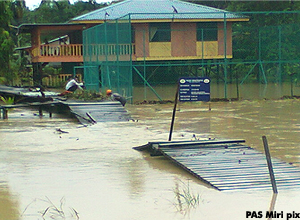 The flood that hit Kelantan last year was the worst the state ever endured – even worse than the big flood of 1967, which also displaced thousands of people.
The Kuala Krai district was the worst hit, with 1,927 houses utterly destroyed by the raging waters.
Rainfall reached 1,295mm when it poured continuously for three days in a row in the district of Gua Musang – the equivalent of 64 days of average rainfall.
The Meteorological Department estimates that in the months of November and December, the East Coast states receive more than 500mm of rain, or up to 40 percent more than normal.
This year’s floods have yet to arrive, but the monsoon season is bringing rain daily to the East Coast states.
10x10 metres space
Nik Mah Nik Kob can still see the moment her family home was swept away by the flood.
“If you ask anyone here, the only thing we want is a new home.
“They conducted a census before and told us we will be given new houses, but a year has passed and we still don’t know the outcome.
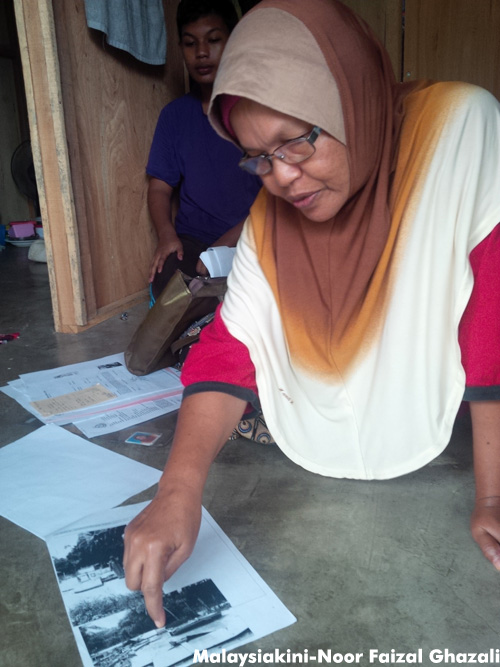 “Some people will come promising this and that, but we can only wait,” said Nik Mah (
photo
), who is at the camp with her husband and two children.
“Some people will come promising this and that, but we can only wait,” said Nik Mah (
photo
), who is at the camp with her husband and two children.
They live in space measuring 10 by 10 metres, equipped with beds and single mattresses. Those with bigger families are allocated more space.
According Abdullah Ismail, special officer to Galas assemblyperson Ab Aziz Yusuff, the authorities keep tabs on how many people are placed at the camp.
This is to ensure that the 500-plus people there get all they need and that their health and hygiene are taken care of.
“Before this, they lived in tents provided by the National Security Council (NSC) at Bandar Utama, but we moved them here so that they can be more comfortable.
“But there are still those who are too stubborn and ignore orders to move,” Abdullah said.
These people were first placed in schools when flood waters started to rise last year, before they moved to tents provided by the NSC.
They were moved in batches to the National Service Camp throughout the year, but five families remain in tents because they prefer not to live in cramped quarters.
Some also are tired of moving, and would rather rough it out in the tents until they can move to permanent homes.
'May we have homes soon?'
Abdullah said permanent homes are being built through cooperation between the state and federal governments and NGOs.
The Kelantan menteri besar on Dec 3 handed over the keys to five houses built for flood victims in Tumpat, with the help of corporate sponsors.
The government says 378 of the 720 new houses built with the assistance of NGOs are now occupied.
These houses are in Machang, Tumpat and Pasir Mas, while the houses in Gua Musang and Kuala Krai are still under construction. Pre-construction work is under way in Kota Bharu.
Back at the National Service camp, no one dares to complain much – after all, as Ab Rahman said, they are only squatters.
“We’re just thankful to have a roof over our heads for now. Who knows what will happen in the future. Maybe we will have to move again when the National Service resumes,” he said.
“May we get new homes soon?”


Are you sure you want to delete this comment?
This action cannot be undone.