


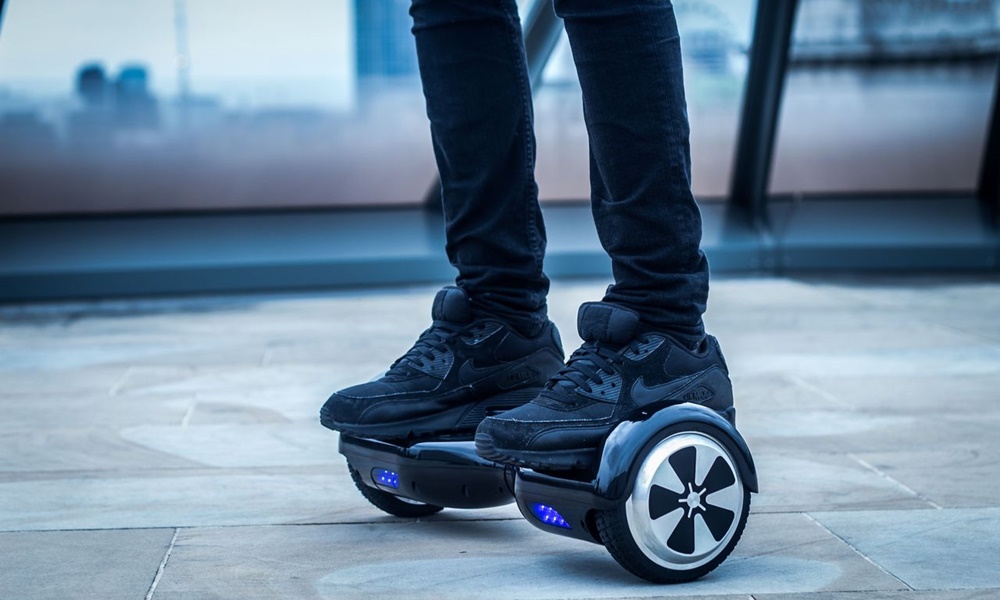

Why airlines ban battery-powered hoverboards
On Wednesday, low-cost carrier AirAsia announced a ban on a range of battery-powered personal transportation devices.
These include, the airline said , “hoverboards, Segways, mini-Segways, electronic scooters, solowheels, airwheels, balance wheels and similar equipment”, although exceptions can be made for electric wheelchairs.
While it may seem strange, AirAsia's move is only the latest in a widespread ban by airlines against carrying such devices on aircraft, whether as check-in luggage or as carry-on luggage.
The culprit here, it turns out, are the volatile lithium-ion batteries used to power these devices.
If mishandled or short-circuited, these batteries are liable to overheat and catch fire, especially if they are poorly made.
These self-balancing scooters have been popular in the United States over the current holiday season, but a number of incidents have highlighted the dangers associated with these batteries.
“An exploding two-wheeler burned down a house in Louisiana a few weeks ago; another scooter combusted in the same state in the past week. A gyroboard caused significant damage to a home in New York a few days ago. At a mall in Washington this week, a scooterboard caught fire and shoppers were forced to evacuate...
On Wednesday, low-cost carrier AirAsia announced a ban on a range of battery-powered personal transportation devices.
These include, the airline said , “hoverboards, Segways, mini-Segways, electronic scooters, solowheels, airwheels, balance wheels and similar equipment”, although exceptions can be made for electric wheelchairs.
While it may seem strange, AirAsia's move is only the latest in a widespread ban by airlines against carrying such devices on aircraft, whether as check-in luggage or as carry-on luggage.
The culprit here, it turns out, are the volatile lithium-ion batteries used to power these devices.
If mishandled or short-circuited, these batteries are liable to overheat and catch fire, especially if they are poorly made.
These self-balancing scooters have been popular in the United States over the current holiday season, but a number of incidents have highlighted the dangers associated with these batteries.
“An exploding two-wheeler burned down a house in Louisiana a few weeks ago; another scooter combusted in the same state in the past week. A gyroboard caused significant damage to a home in New York a few days ago. At a mall in Washington this week, a scooterboard caught fire and shoppers were forced to evacuate.
“The perceived danger is significant enough that major airlines have banned the little vehicles altogether,” read an article published in the tech magazine Wired on Dec 12.
The US Consumer Product Safety Commission is reportedly investigating 22 reports of such fires.
The Wired magazine article explained that the demand for these vehicles as holiday gifts have fuelled the production of cheaper versions, made from lower quality components, including batteries.
The bumps and abuses that these vehicles would inadvertently suffer during its use further increases the risk of damage to the batteries.
Health and safety hazards
The industry group International Air Transport Association (IATA) has already taken note of the dangers posed by the self-balancing scooters.
“Hoverboards — self-balancing, two-wheeled, motorised platforms — are the must-have item this holiday season. However, major safety concerns have surfaced following reports of fires possibly caused by substandard and counterfeit lithium-ion batteries, faulty plugs, cables and chargers in some of these devices.
“Counterfeit and pirated products pose serious health and safety hazards to the people who buy and use them,” it said in a newsletter last month, which welcomed a crackdown by UK and US authorities on the batteries used in the vehicles.
The IATA had also issued an advisory to its members on how to deal with such devices under existing regulations on lithium-based batteries.
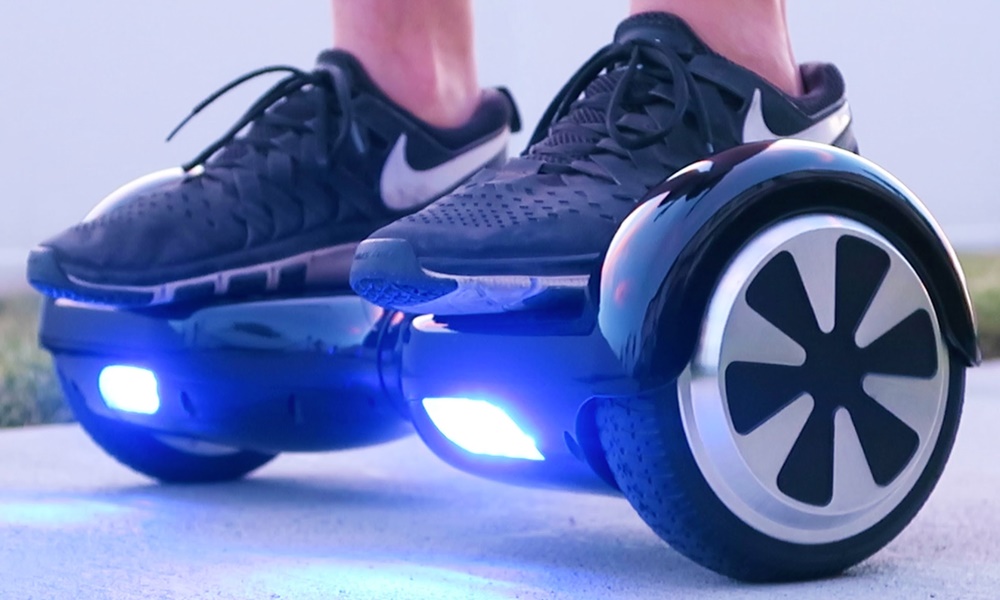
“The agreed view is that these devices are not 'mobility aids', but instead be treated as 'portable electronic devices' (PED) on the basis that the item subject to the regulations is the lithium-ion battery that powers these devices,” says the Dec 16 advisory .
The regulations referenced in the guideline stipulate that if the batteries are fitted inside PEDs are up to 100 watt-hour in capacity, they may be brought onboard the aircraft without explicit permission from the airline.
This category covers most consumer electronics, ranging from mobile phones and smartwatches to large 'extended life' batteries of most laptop.
For lithium-ion batteries above 100 watt-hours up to 160 watt-hours, they can still be brought onboard but only at the discretion of the airline. This covers the largest of laptop batteries, as well as some audiovisual equipment.
In either case, the batteries may not be carried in checked luggage as spares, although subject to restrictions, spare batteries may be carried in the carry-on luggage if they are properly protected from short-circuiting.
Dangerous goods
However, most lithium-ion batteries used in the self-balancing electric scooters would fall in the third category, which is for batteries over 160 watt-hours in capacity.
These need to be carried as 'cargo', where they would be need to be declared and handled as 'dangerous goods'.
The Dec 16 advisory states: “Personnel, including those of ground service providers, must verify that […] the watt-hour rating of the lithium-ion battery in the device does not exceed 160 watt-hours. All lithium-ion batteries are required to have the watt-hour rating marked on the outside of the battery case.
“If passenger handling staff are unable to verify the watt-hour rating by checking either the battery, or the user documentation, it is recommended that the passenger be advised that the device cannot be carried.
“If cabin crew identify that the device does not meet the operator's requirement during boarding, they should refer to the ground personnel for proper offloading.”
AirAsia is not an IATA member, but the body of close to 300 airlines is highly influential in setting industry guidelines and regulations. Malaysia Airlines, an IATA member, has placed a total ban on self-balancing electric scooters since Dec 19.
Previously when it was revealed that Malaysian Airlines flight MH370 was carrying a 221-kilogram shipment of lithium-ion batteries, it was speculated that the batteries may have caused an accident on the aircraft that led to its disappearance.
There is no way to verify whether this is the case at this point, and Malaysia Airlines said the lithium-ion batteries were packed properly. A search for the aircraft is still ongoing since it had gone missing on March 8 last year.
Nevertheless, changes are underway to how lithium-ion and lithium-metal batteries are handled on aircraft, following new testing that revealed that aircraft fire-suppression systems are inadequate in tackling fires involving large quantities of lithium-based batteries.
Among others, passenger aircraft will be totally prohibited from carrying lithium-ion batteries as cargo, and the batteries must be no more than 30 percent charged.
The new regulations will come into force sometime in 2016.


Are you sure you want to delete this comment?
This action cannot be undone.