



Oppositional politics going nowhere fast
COMMENT “The difference between a politician and a statesman is that a politician thinks about the next election while the statesman thinks about the next generation.” - James Freeman Clarke
Sultan Nazrin Shah of Perak was quoted as saying, “Information is no longer limited to sources that have been filtered and controlled by the authorities.”
The problem with large scale media organisations is that information is always controlled, sometimes even by consumers who show very little tolerance for anything that goes against prevailing sentiments. Echo chambers have always told you what you want to hear.
COMMENT “The difference between a politician and a statesman is that a politician thinks about the next election while the statesman thinks about the next generation.” - James Freeman Clarke
Sultan Nazrin Shah of Perak was quoted as saying, “Information is no longer limited to sources that have been filtered and controlled by the authorities.”
The problem with large-scale media organisations is that information is always controlled, sometimes even by consumers who show very little tolerance for anything that goes against prevailing sentiments. Echo chambers have always told you what you want to hear.
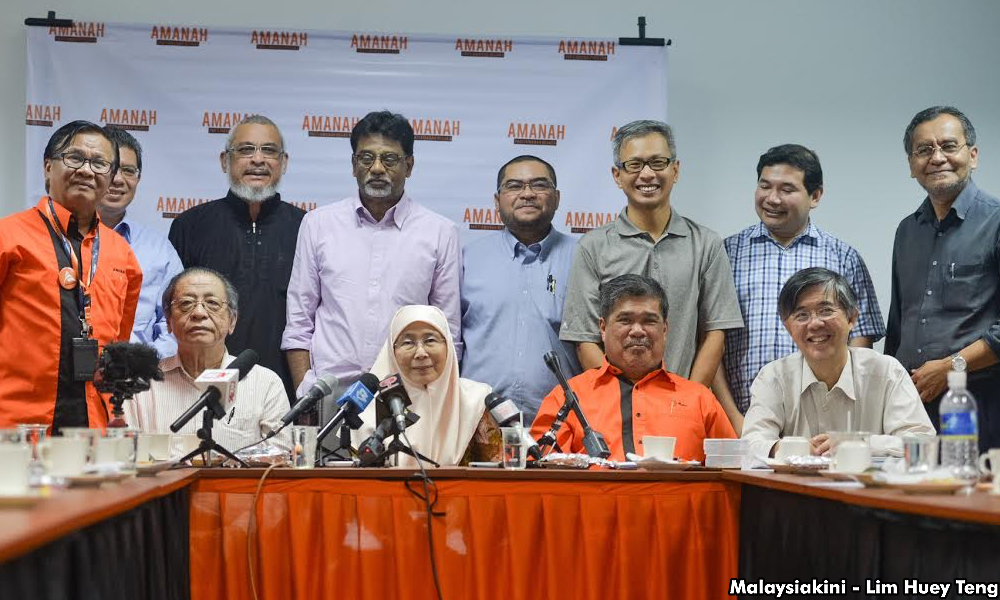
This brings us to Pakatan Harapan. If Pakatan Harapan really thinks that Harapan’s hope is in Sungai Buloh, then we are all in trouble. Terence Netto is right. Pakatan Harapan is the artful dodger.
In his piece, Terence wrote , “The tripartite assembly wheeled out all the broadly supportable democratic principles embedded in the Federal Constitution, with a particular eye for those planks that sustain Malay Muslim primacy, saying that the coalition would ensure their rule will uphold this.”
What exactly has Malay Muslim primacy achieved? The latest evidence are students who, for whatever reasons, do not have enough funds to buy food and a court decision endorsing unilateral conversion of minors as something legally acceptable (sic) under the Federal Constitution.
John Cage said, “I can't understand why people are frightened of new ideas. I'm frightened of the old ones.”
Here in Malaysia, politicians who have power, or seek it, are so afraid that new ideas would impede their efforts that they are content to let the rot continue so long as the old ways, the old ideas, maintain them in power. Meanwhile, the disenfranchised of society regardless, of race but with very little options, plays the part of maintaining this charade we call a democracy.
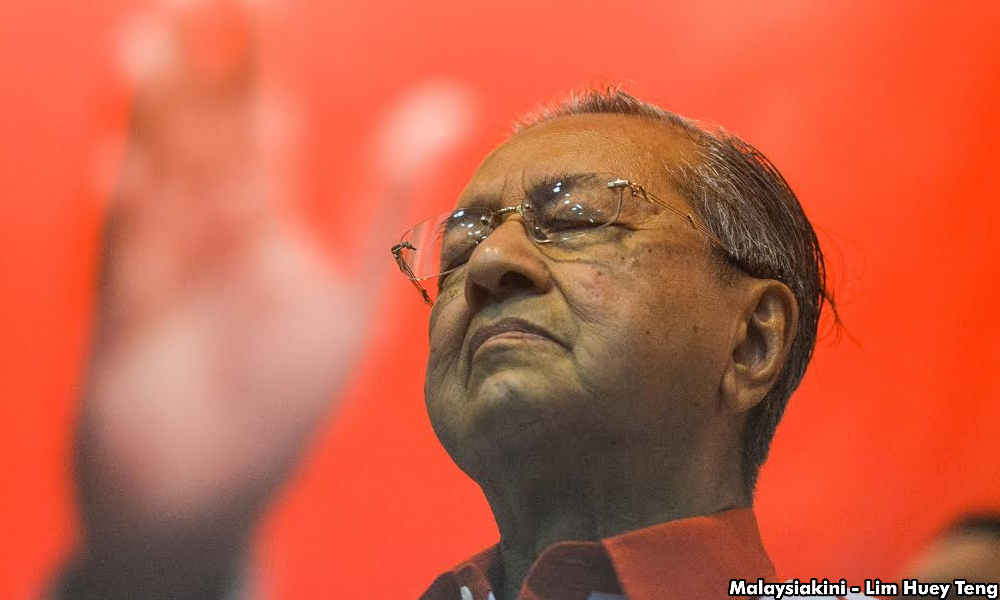 Of former prime minister Dr Mahathir Mohamad, I wrote, “You see in the reality Mahathir (
photo
) and Umno have created, drawing attention to the systemic inequalities faced by non-Malay communities is a racist act. Criticisms directed towards the government or civil departments are considered racist acts because the majorities who comprise those institutions are Malays. It was getting to the absurd level where simply being a non-Malay who didn’t support the government was considered a racial provocation.”
Of former prime minister Dr Mahathir Mohamad, I wrote, “You see in the reality Mahathir (
photo
) and Umno have created, drawing attention to the systemic inequalities faced by non-Malay communities is a racist act. Criticisms directed towards the government or civil departments are considered racist acts because the majorities who comprise those institutions are Malays. It was getting to the absurd level where simply being a non-Malay who didn’t support the government was considered a racial provocation.”
And we are still falling into his trap. These days you find people more than willing to subscribe to the premise that “as Malaysians we are all racists in our own ways” as shorthand to dismiss any constructive objections to racist or racialist ideas.
In this way it legitimises the Umno-BN ideology as not a moral failing but as a failure of execution. It implies that the only route for a functional Malaysia is a racial one. Hence the usual BN plea of “give us more time” or “the Malays need not worry, because even in a class-based approach, the Malays are the majority” assurances from Pakatan Rakyat.
Racial and relgious tensions
The DAP is demonised as being anti-Malay and Islam, while PKR is terrified that it is perceived as being not Malay or Muslim enough. This gives PAS the opportunity to dishonourably (in my opinion) remain relevant by hanging on the coattails of a movement that supposedly offered change but so far has kept to the old Umno ways.
Squabbling over seats and reaching an “amicable” compromise is hardly an achievement in a country simmering with racial and religious tensions. Furthermore, it is hardly learning from past mistakes when this problem of seat allocations had always been a preoccupation with Pakatan Rakyat, and now Pakatan Harapan.
Johor Amanah deputy chief Zulkefly Ahmad said because Umno has convinced the rural Malays that DAP is anti-Malay and Muslim, Harapan should resort to trickery – fielding candidates under an Amanah or PKR logo – to win a seat. While the big cheese in Amanah and the DAP distanced themselves from the comment, it really points to the political dissonance of opposition politics.
It is all about convincing people that you are not anti this or anti that when we are living in a country that defines its citizens along racial and religious lines. Of course, the Opposition can’t rely on foundation principles because, at the end of the day, race and religion are just as much a preoccupation to them as it is with Umno-BN.
Wong Chin Huat of the DAP-linked Penang Institute backs “cultural literacy” as a means to neutralise Umno propaganda, but this really is not the solution to the problem. Malays, whose scepticism is based on racial or religious grounds, are not going to be convinced because they are spoken to in the same language. The DAP’s image problem among a demographic of the Malay polity is best left for another article.
The reality is that beyond the religious component, when politicians and pundits talk about the special positions of the Malays, the gist of it is the so-called affirmative action policies at work here in Malaysia. Again I revisit an earlier article of mine, No Brave New Malaysia:
“Thomas Sowell in his provocative essay ‘Affirmative Action: A World Wide Disaster’ (1989) on his research in countries with such policies either race-based or needs-based lists several ‘patterns’ which have a deleterious effect on any given society. I will list them, from the article, here for convenience.
1. Preferential programmes, even when explicitly and repeatedly defined as “temporary”, have tended not only to persist but also to expand in scope, either embracing more groups or spreading to wider realms for the same groups, or both. Even preferential programmes established with legally mandated cut-off dates in India and Pakistan have continued past those dates by subsequent extensions.
2. Within these groups designated by government as recipients of preferential treatment, the benefits have disproportionately gone to those members already more fortunate.
3. Group polarisation has tended to increase in the wake of preferential treatment programmes, with non-preferred groups reacting adversely in ways ranging from political backlash to mob violence and civil war.
4. Fraudulent claims of belonging to beneficiary groups have been widespread and have taken many forms in various countries.”
I will just throw this out there. The goal of the opposition should be to ensure that people are not reliant on political parties or government policies that appear to favour them. It may take some time to get to that better place, but it is better than going nowhere fast.
S THAYAPARAN is Commander (Rtd) of the Royal Malaysian Navy.


Are you sure you want to delete this comment?
This action cannot be undone.