


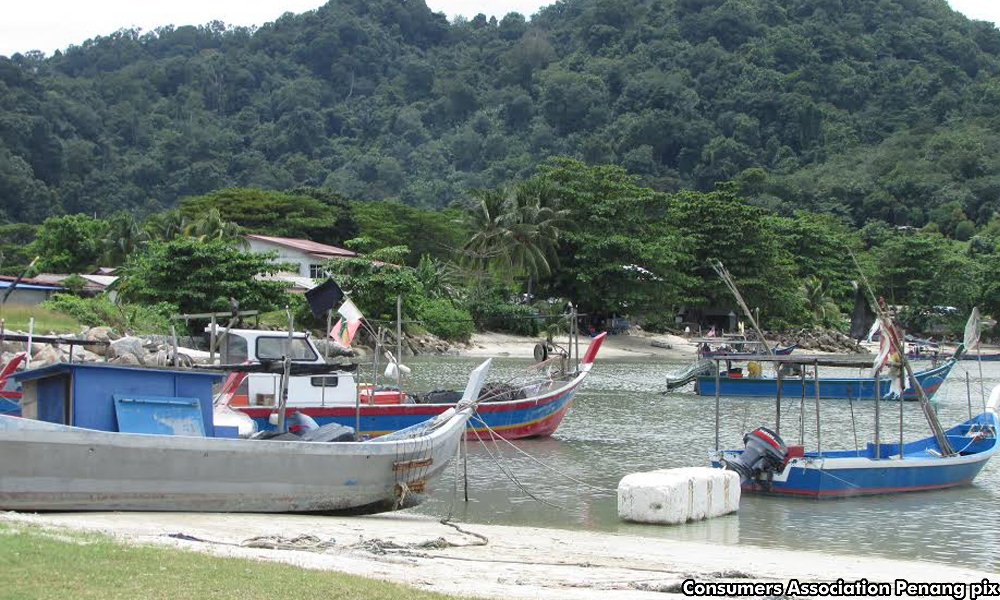

Penang's transport master plan will affect 900 fisherfolk
The Penang government and SRS Consortium, its project delivery partner for the Transport Master Plan (TMP), today admitted that some 900 fisherfolk in 10 villages would be affected by the development in the southern post of the island.
However, both denied any ongoing reclamation works in the area so far.
State executive councillor in-charge of the project, Chow Kon Yeow, said the state government is merely working on various types of studies, including environmental impact and fishery assessment.
The Penang government and SRS Consortium, its project delivery partner for the Transport Master Plan (TMP), today admitted that some 900 fisherfolk in 10 villages would be affected by the development in the southern post of the island.
However, both denied any ongoing reclamation works in the area so far.
State executive councillor in charge of the project, Chow Kon Yeow, said the state government is merely working on various types of studies, including environmental impact and fishery assessment.
“Yes, we started work but have only been conducting studies, and not reclamation works. This includes visiting every household in the fishermen village to listen to their voices,” Chow said at a public consultation in Mandarin at the Penang Chinese Town Hall in George Town.
Project partner, Gamuda’s engineering management manager Tan Seng Fong, could not deny that reclamation would impact the environment and livelihood of the fishermen.
He said the same could be said of the impact to the residents and Penangites as a whole during the construction of light rail transit project, but the consortium would try its best to minimise the effect.
Tan said the consortium can also arrange for those affected to be involved in the reclamation project.
“After all, Gamuda has trained thousands of people on how to operate our machinery but that is only for the transition period when the reclamation is going on.
 “Ultimately and for the long term, they are the beneficiaries of the project,” he said.
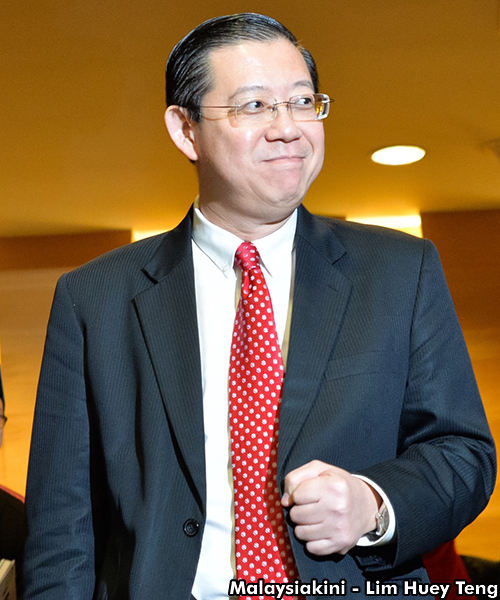
Also present at the briefing were Chief Minister Lim Guan Eng ( photo ), SRS Consortium project director Szeto Wai Loong and Penang’s local government division chief engineer Lim Thean Heng.
Attended by more than 200 people, only about 10 of them asked questions about the TMP after Lim’s speech and presentation by Tan.
Most of the participants were rather supportive of the TMP but raised questions and concerns on reclamation at the southern post, asking if development could be done in the mainland like Batu Kawan instead.
Participants also asked if a tram system were in place, would it be competing for space with other vehicles in George Town.
They also asked if the state government was planning to build low-cost homes on the reclamation land or collect toll for the proposed new highways.
Cost to rise due to economic growth
Although some were of the view that reclamation might negatively affect prices of properties, others argue that cost would eventually rise due to economic growth.
Tan replied that Batu Kawan was not considered for the TMP as the land is limited and cost relatively low compared to the island, and the amount would not be sufficient to finance the TMP.
The CM denied that his plans marginalised Batu Kawan or the mainland.
“Since industrial land is getting less in the island, most of the hi-tech companies have chosen to invest in Batu Kawan.
“The state government even attracted branded companies like IKEA and two universities - local and international - to operate there,” Lim said.
He said the state government had spend 60 percent of its budget in the mainland, and that it was trying very hard to improve the infrastructure and road network there for the past few years.
Lim emphasised that the purpose of reclamation is to implement the TMP and was not meant for profit making.
Chow said once the land is ready, any development project on the island would still follow all guidelines and requirement to build 30 percent of low-cost housing.
He assured that no tolls would be imposed on the new highways connecting the island.
However, Lim reminded that a toll will be imposed for the undersea tunnel at a similar rate as the second Penang bridge.
Asked what would be the outcome if the federal government refused to approve the licence for the TMP, Chow jested that those from SRS Consortium would lose their job “and save the Penang government a lot of trouble”.
He said the consortium has briefed Putrajaya and Prime Minister Najib Abdul Razak about the TMP.
“SRS Consortium was selected as project delivery partner because of their track record and working relationship with a lot of government projects,” Chow said.


