




Selangor mufti: Muslim bodies require burial
The situation in tsunami-devastated Aceh has raised a burning question for muftis in Malaysia - whether religion or realism should dictate the disposal of bodies recovered in large numbers.
The situation in tsunami-devastated Aceh has raised a burning question for muftis in Malaysia - whether religion or realism should dictate the disposal of bodies recovered in large numbers.
Aceh has recorded more than 104,000 fatalities from killer waves that struck on Dec 26 and which then rippled out to cause death and destruction in 11 other countries including Malaysia.
This has since sparked debate in Malay-language newspapers here, which have been following the developments in Muslim-majority Aceh with special interest.
 Selangor mufti Mohd Tamyes Abdul Wahid, who provided his views in a telephone interview with
malaysiakini
, said available methods and technology obviate the need to compromise on Islamic funeral rites.
Selangor mufti Mohd Tamyes Abdul Wahid, who provided his views in a telephone interview with
malaysiakini
, said available methods and technology obviate the need to compromise on Islamic funeral rites.
"The four integrals of funeral rites according to Islam are to wash, cover, recite prayers over, and bury the body. But these need not be done for each body (during disasters)," he said.
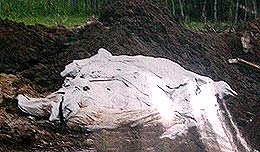
"For example, the bodies can be sprayed with water. They need not be wrapped individually with cloth, but can covered collectively even by plastic, and the bodies can be laid to rest in a mass grave."
Emphasising the "special honour" that God has accorded to human beings as the progeny of Adam, Tamyes said Islam requires that this honour be extended to the dead through prescribed rites.
"The question of cremating the bodies of Muslims (for reasons of hygiene) does not arise. Disease (breaks out and) is spread because of unsanitary surroundings, not because of the corpses.
"Even if we need to treat the dead bodies (differently), they can be sprayed (with disinfectant) to ward off diseases. I am sure we have the methods and technology to do what is necessary."
Tamyes said Indonesia could always seek the help of neighbouring countries if it feels unable to manage burials according to Muslim rites in such situations.
"If we can properly bury persons who have contracted Aids, I am sure that the burial of these bodies (of disaster victims) can also be done."
Two views
Tamyes' comments echoed those of Johor mufti Noh Gadut, who was quoted by Malay daily Utusan Malaysia as saying that Islam did not allow for cremation.
"Burning the body is not allowed. Apart from torturing the corpse, this is also an imitation of the rites of other religions," he said in the report published last Friday.
In the same article, however, Perak mufti Harussani Zakaria was reported as saying the welfare of the living is of higher priority than respect for the dead.
"In Aceh, experts and religious scholars should determine if more lives could be lost if corpses are not cremated," he said.
"Cremation is allowed as this is an emergency situation, which provides for exceptions to the rule."
Since the tsunami struck, high priority was accorded to quick disposal of bodies found, particularly since these began to decompose quickly. There was also a shortage of human resources and equipment to undertake burial.


Are you sure you want to delete this comment?
This action cannot be undone.