



In search of knowledge in the back alleys of Chow Kit
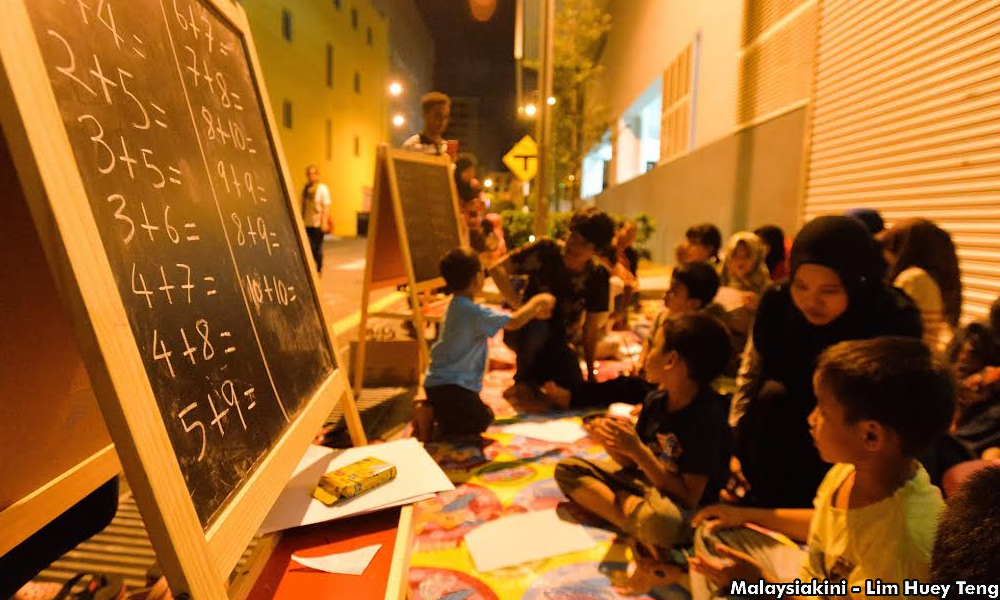
FEATURE One rainy Sunday night, I made an appointment with 28-year-old activist Benz Ali to visit a makeshift street tuition centre for poor children at Chow Kit in Kuala Lumpur.
“It is still raining. I am not sure whether the children will come for tuition,” said Benz, who seemed quite concerned that my presence would be an exercise in futility.
We waited by a textile store called Alka Ria by the side of Jalan Tuanku Abdul Rahman, which is where the tuition is being held.
The tuition is not conducted at the three-storey shoplot but in the back alleys.
Several homeless people were sitting idly or lying down on the floor under a pile of paper boxes or newspapers seeking shelter as the night beckoned.

By 9pm, a group of children arrived, unaccompanied by their parents. Carrying umbrellas and small bags, they are aged between two and 15. They appeared jovial and shouted, “We want tuition!”
Benz proceeded to move the “classes” to the back alley of the shoplot where rubber mats were placed on the street for the children to sit. The children were slightly protected from the rain under the bright street lights.
These street alleys are the favourite haunts of drug addicts and the destitute, but now it is filled with children learning how to read and count...
FEATURE One rainy Sunday night, I made an appointment with 28-year-old activist Benz Ali to visit a makeshift street tuition centre for poor children at Chow Kit in Kuala Lumpur.
“It is still raining. I am not sure whether the children will come for tuition,” said Benz, who seemed quite concerned that my presence would be an exercise in futility.
We waited by a textile store called Alka Ria by the side of Jalan Tuanku Abdul Rahman, which is where the tuition is being held.
The tuition is not conducted at the three-storey shoplot but in the back alleys.
Several homeless people were sitting idly or lying down on the floor under a pile of paper boxes or newspapers seeking shelter as the night beckoned.
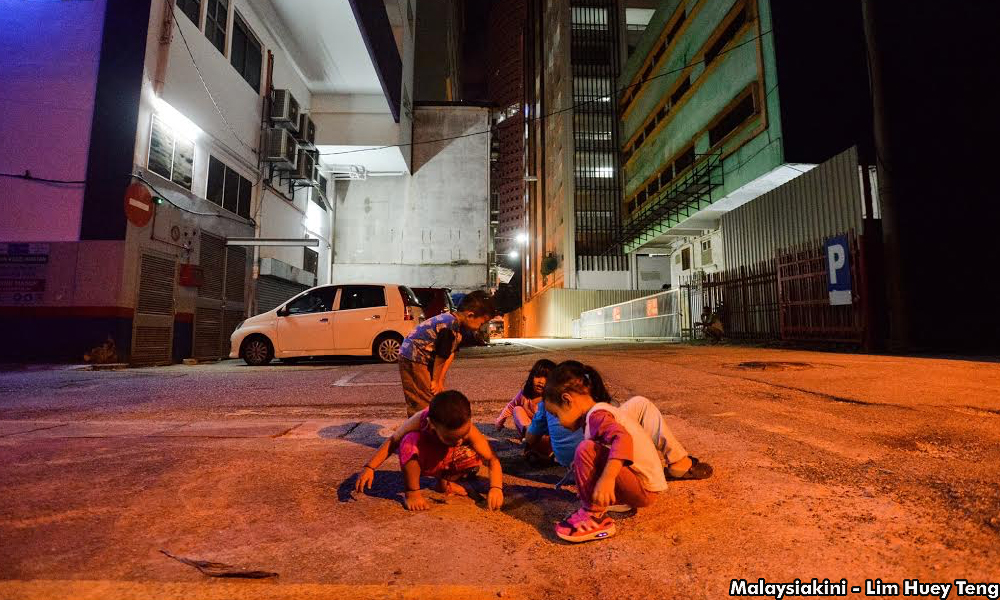 By 9pm, a group of children arrived. Carrying umbrellas and small bags, they are aged between two and 15. They appeared jovial and shouted, “We want tuition!”
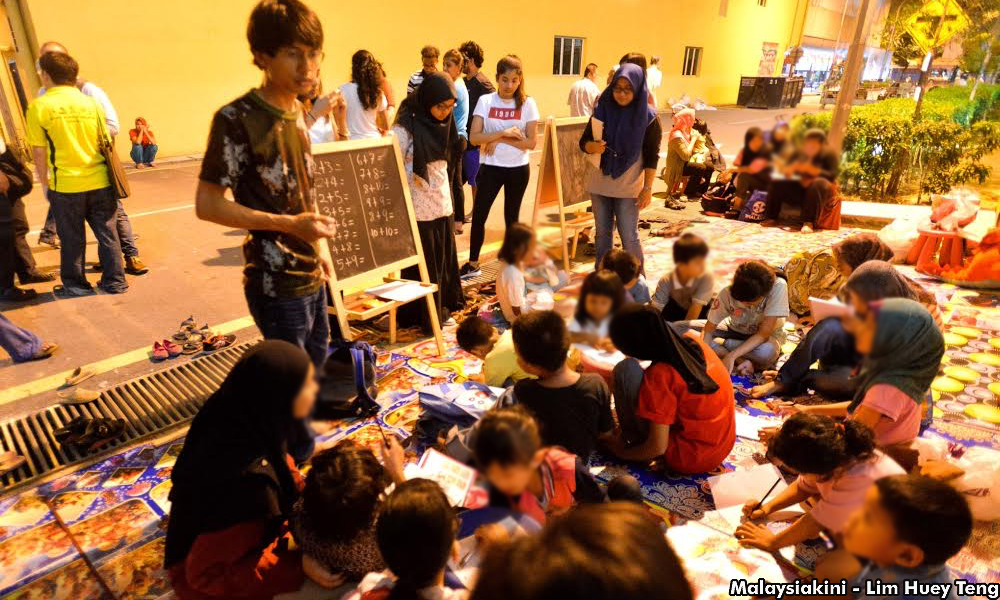
Benz proceeded to move the “classes” to the back alley of the shoplot where rubber mats were placed on the street for the children to sit. The children were slightly protected from the rain under the bright street lights.
These street alleys are the favourite haunts of drug addicts and the destitute, but now it is filled with children learning how to read and count.
Benz started the “class” last month, while another non-government organisation called Region Of Love teaches art to the children every Thursday and Saturday night. It also gives sewing classes to the girls.
 Benz had then encountered members of the Region Of Love. He said the group mainly teaches artwork while his Street Tuition focuses on improving the children's knowledge, which is why he and his friend organised the '
Buku Jalanan Chow Kit
' programme that includes the tuition sessions.
Benz had then encountered members of the Region Of Love. He said the group mainly teaches artwork while his Street Tuition focuses on improving the children's knowledge, which is why he and his friend organised the '
Buku Jalanan Chow Kit
' programme that includes the tuition sessions.
Meanwhile due to the rain that night fewer pupils turned up than usual, and two volunteer teachers, Siti Rahayu and Amir Al-Helmy, were on hand to teach them, using a makeshift black board.
The pupils took off their shoes as they sat on the rubber and plastic mats.
“We will learn maths and multiplication today,” said Siti, who jotted down on her notebook the attendance of the pupils.
Learning under the street lights
I sat next to a girl and asked her about her parents. The girl replied that her mother was queuing up for food handouts by charity groups in front of the shop.
“What makes you come here?” I asked.
“Because I can get some food here easily,” said the girl sheepishly.
 Standard Three pupil Ajin (not her real name), who goes to a nearby school in Chow Kit, comes here everyday with her mother and sister after a 10-minute walk from their house.
“I like to come here because I can play and get food,” she said, while a boy snuggled up to us to say he too came for the food, besides the studies.
“I enjoy coming here,” said Ridzuan (not his real name). He pointed the direction of his home to us, saying he often comes to the tuition with his grandfather, mother and four siblings.
“At night, there are always teachers who give us tuition and there are also other activities,” said Ridzuan. If there are no classes, he would stay back to play with his other friends.
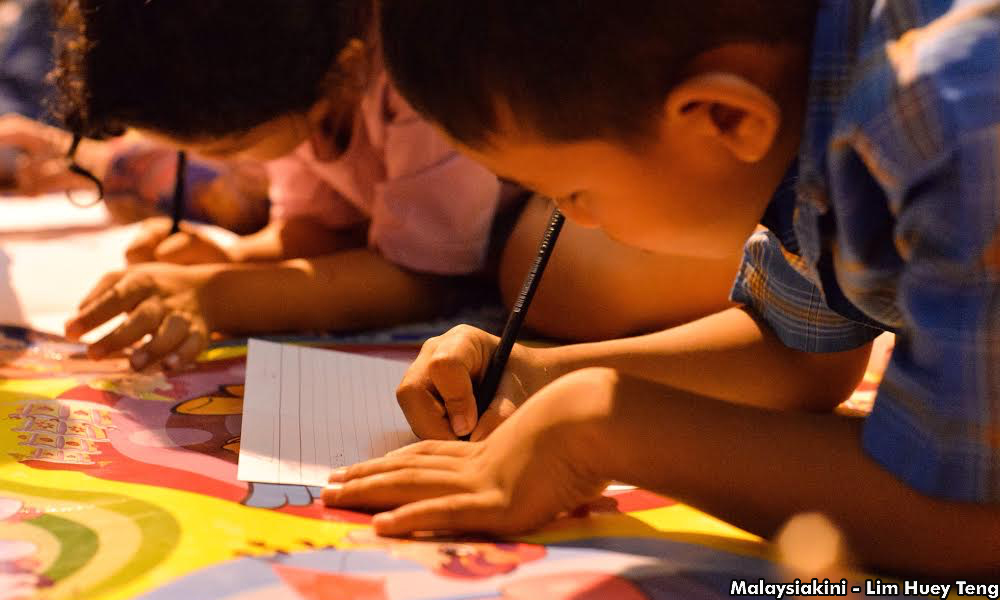
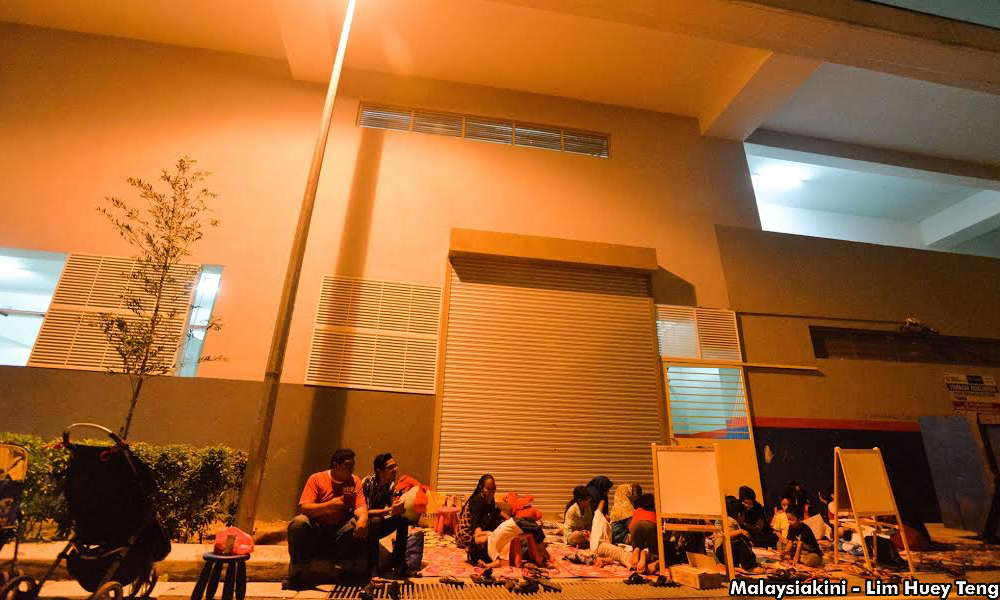 Under the street lights, the children were seen memorising the multiplication tables, and using their fingers to count.
For the next three hours, they were engrossed in their studies.
These children come from the urban poor families who live around Chow Kit.
These families - from local as well as migrant worker communities - would come here nightly to collect food and other supplies donated by charity groups, while letting their children play at the sidewalks.
Most of the fathers earn between RM1,000 and RM1,500 a month, which is insufficient to support their family members in a city as big as Kuala Lumpur.
Open library for the homeless
Benz said when he first saw the children roaming the streets late at night, it shocked him.
“I was eating at a nearby mamak restaurant when I saw the children playing between 8pm and 9pm. (I thought to myself) if this continues for the next 10 years, they will destroy themselves.
“So I thought something must be done. There is a need for tuition classes for them. There are NGOs giving out food but none giving education,” said Benz.
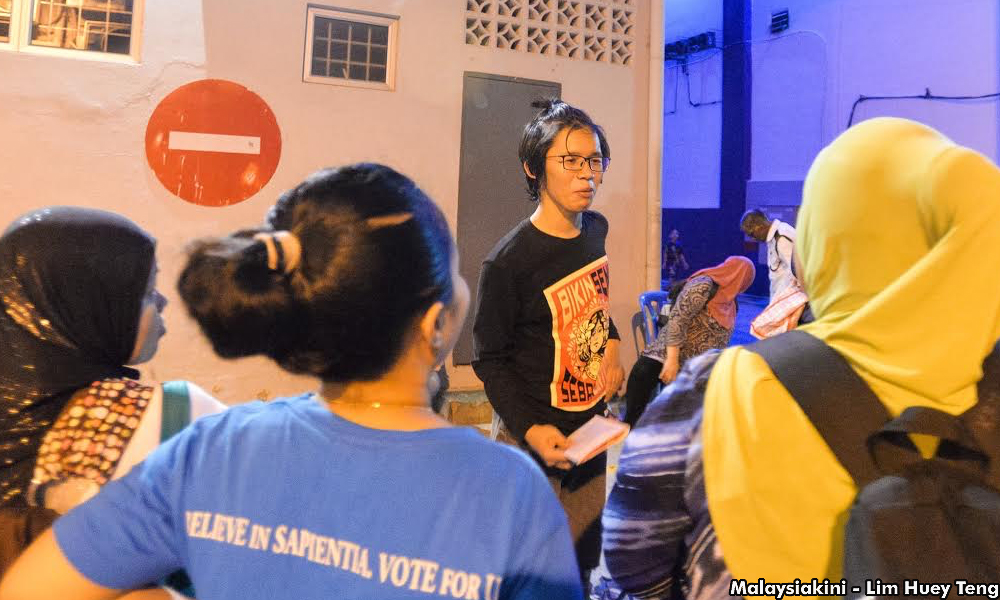 Benz (
photo
) has now become a full-time activist and also sells books online. He studied at a local university but had to stop mid-way because his family could not afford the fees.
Benz (
photo
) has now become a full-time activist and also sells books online. He studied at a local university but had to stop mid-way because his family could not afford the fees.
Benz started an open library in Chow Kit for the homeless last August where they can borrow and read books.
The library is run with the help of Siti and a couple, Hazri and Hajar. Later, other volunteers chipped in.
“We used a vacant spot to set up this open library where the homeless can spend their time reading some books,” said Benz. The library is open every Sunday from 9pm to midnight.
“Even on rainy days, we got many children coming to the library. We could not turn them away,” said Benz.
Then came the tuition project. Benz sees it as an effective tool to break the cycle of poverty for these children so that they could stand on their own feet.
 “That's our objective: to ensure that they don't destroy their future. If we can educate them constantly, maybe these children would avoid taking drugs,” he said.
Benz teaches Mathematics and English but he emphasises that the purpose is not to prepare the children for examinations but to create interest in learning.
“You have to remember there are many unemployed graduates. If these children know English, maybe some of them can become tourist guides,” he said, adding that this is his first experience in organising such classes.
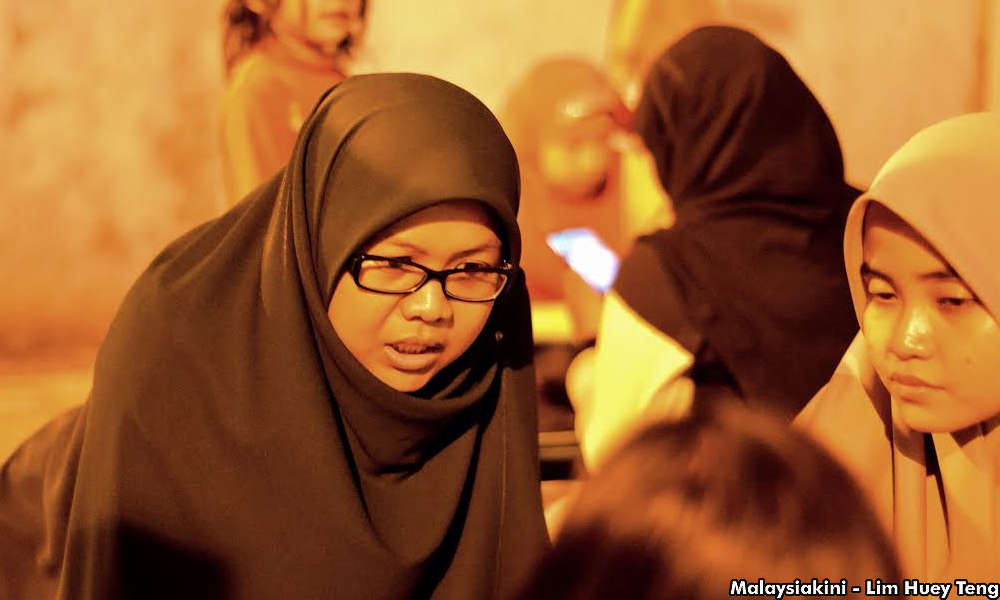
Meanwhile, Siti, 35, ( photo ) who teaches at a private school in the daytime, said she volunteered to offer her services.
Amir, who had just completed his studies overseas, decided to offer his services to help the children after seeing their plight on Facebook .
Readers who would like to make contributions to the poor children or mothers of Chow Kit can contact or follow Facebook page Buku Jalanan Chow Kit or Benz Ali's Facebook page .
Tomorrow: Transformation from within Chow Kit


