


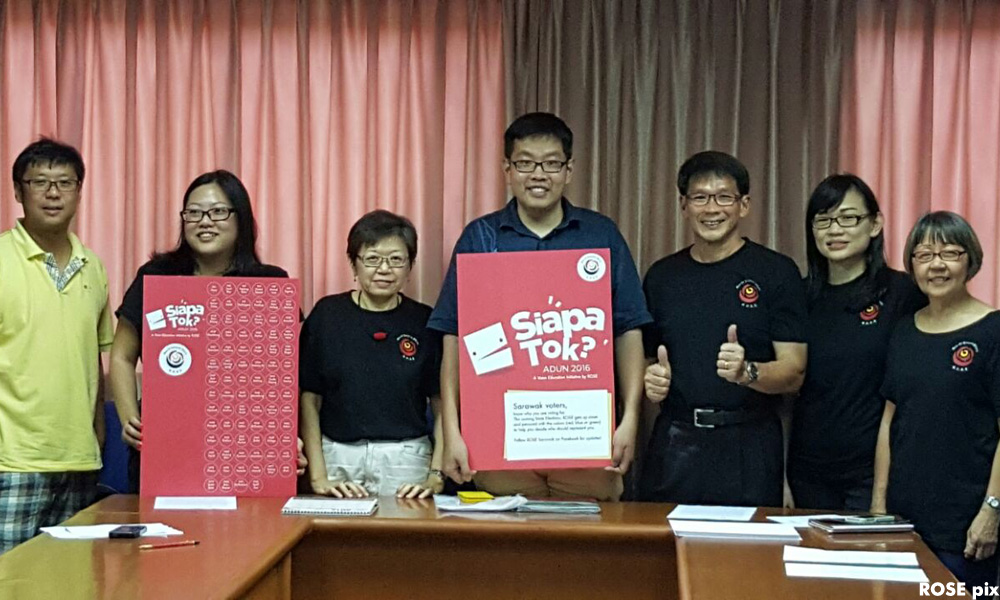

S'wak NGO launches 'up close and personal' polls project
Sarawakians will soon be able to get up close and personal with candidates in the upcoming state elections.
A local civil society group, Rise of Sarawak Efforts (Rose), has launched its “Siapa Tok? ADUN 2016” project with six questions for potential elected representatives.
According to Rose spokesperson Ann Teo, the “Siapa Tok?” project aimed to connect election candidates to the voters in their constituencies.
“The future of Sarawakian politics is closely linked to the character of individuals representing us at the state assembly.
“As such, Sarawakians need to know that the person they are voting for is able and willing to address both the community concerns and policies for the benefit of Sarawak,” Teo said in a statement.
She pointed out that Sarawakians are essentially paying the salaries of their elected representatives and so the campaign season should be seen as one big job interview, with voters choosing the best possible candidate for the position.
“By saying so we are not discounting the importance of voting towards a two-party system in our state or country.
“We are saying that making the choice as a voter based on the candidate’s performance and character would eventually lead to a much healthier two-party system in the government,” she stressed.
Candidates across the state have been approached to get involved and their profiles will be posted on Rose’s Facebook page during the election campaign period.
The questions were designed to bridge the gap between voters and constituency representatives.
What your voters want to know about you:
- Why did you decide to enter politics?
- What is the fondest memory you have of your childhood?
- If you are elected as our state representative, which is the biggest issue that you would like to tackle first in your constituency and how would you do it?
- What is your favourite Sarawakian food or drink?
- Describe the Sarawak you want to see in 10 years.
Bonus question! Is there anything else you want to say to young voters?
In the past, Teo said that votes were often cast based on party lines instead of their performance, track-record, as well as promises made during the campaign period.


Are you sure you want to delete this comment?
This action cannot be undone.