
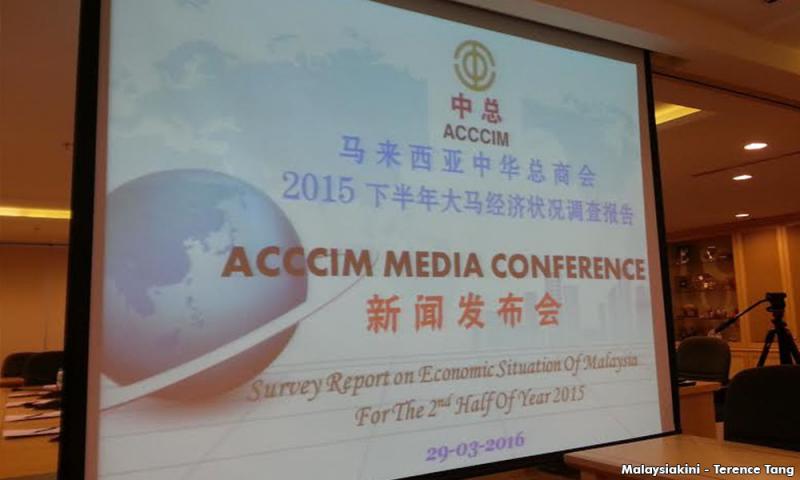
Malaysia’s economy will continue to struggle this year and in 2017, as foreseen in a survey conducted by the Associated Chinese Chambers of Commerce and Industry of Malaysia (ACCCIM).

Among the reasons cited for the pessimistic economic outlook are new government policies; the increase in operating costs and prices of raw materials; domestic competition and the drop in foreign and domestic demand.

Released today, the survey, which analysed Malaysia’s economic situation for the second half of 2015, however expects the nation’s economy to improve in 2018.

Also highlighted in the survey are the costs of hiring foreign workers, with 36 percent of the respondents stating that their businesses relied on the use of foreign workers.

Respondents using foreign labour all agreed that that their businesses would suffer a negative impact should the cost of hiring these workers increase.

ACCCIM president Ter Leong Yap has attributed the rising cost of hiring foreign labour to the recent increase in foreign workers’ levy.

Most of the respondents were also expected to be adversely affected by the costs required to mechanise and automate their businesses.

An overwhelming majority of importers (84 percent) also claimed that movements in the ringgit exchange rates had caused their sales to decrease.

Among exporters, 43 percent reported that their businesses had benefited from the ringgit depreciation as they earned more after converting foreign currencies received from customers into ringgit.

Another 42 percent of the exporters said they were forced to lower their selling prices in foreign currency to the extent that they received less returns after converting to ringgit.

Asked about the impact from the recent strengthening of the ringgit (which is now RM3.99 to US$1), ACCCIM Socio-Economic Research Committee deputy head Peck Boon Soon opined that ringgit fluctuations in the past (before the strengthening) had already affected businesses and the finances of consumers.

'Damage has already been done'

“Yes, the ringgit may have bounced back, but the damage (to businesses and consumers) has already been done.

“The ringgit depreciation had affected consumers’ confidence (in local businesses); our respondents will probably require a few months to regain their customers’ confidence,” Peck said.

He said numerous local small and medium enterprises (SMEs) may have been indirectly affected by the government’s decision to cut back on various areas of its administration’s expenditure.

The respondents in the survey consist of businesses in wholesale and retail (26.7 percent), manufacturing (23.7 percent), professional and business services (11.7 percent), construction (11.2 percent), real estate (six percent), and telecommunications and information technology (4.7 percent) and others (16 percent).

An estimated 14.5 percent of the respondents are categorised as “large enterprises” (based on their annual turnovers and numbers of permanent employees).

About 76.1 percent of the respondents are labelled domestic market-oriented businesses while the remaining 23.9 percent focus on both domestic and export markets (13.4 percent) and only export market (10.5 percent).