


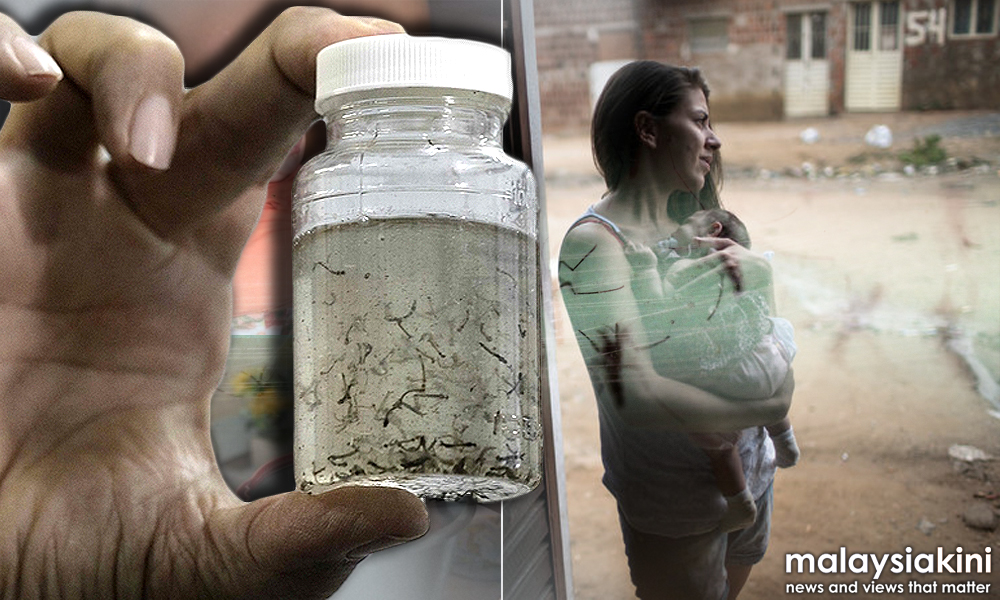

Zika virus 'is scarier than initially thought'
Calling what they've learned since focusing on the Zika virus "not reassuring", US health officials said the illness brings a "broader set of complications" for pregnant women than first thought.
"Everything we look at with this virus seems to be a bit scarier than we initially thought," Anne Schuchat of the Centers for Disease Control and Prevention said in Washington yesterday.
Speaking at the White House, Schuchat said authorities have learned that the Aedes aegypti mosquito, which is primarily responsible for spreading the illness, could be present in 30 US states - not just the 12 initially believed.
The mosquito-borne Zika illness causes only mild flu symptoms in most patients. But the outbreak has raised international concerns because it appears to be linked to birth defects in babies, as well as a neurological disorder called Guillain Barre syndrome.
"We've also learned that the virus is likely to be a problem at much of the pregnancy period, not just probably the first trimester but potentially throughout the pregnancy," Schuchat said.
Virus concentrated in Latin America
The virus has been concentrated in Latin America, particularly Brazil, but has also spread to several US territories like Puerto Rico and the Virgin Islands.
Schuchat said health officials were also "quite concerned" about Puerto Rico.
"We think there could be hundreds of thousands of cases of Zika virus in Puerto Rico and perhaps hundreds of affected babies," she said.
Anthony Fauci, director of the National Institute of Allergy and Infectious Diseases, said vaccine trials were still on target for the beginning of September.
The White House announced last week that it would shift US$589 million (RM2.288.6 billion) to combat Zika after Congress did not respond to a request for US$1.9 billion.
The funds, most of which were once earmarked for the fight against Ebola, will be used for mosquito control, vaccine development, support for affected pregnant women and babies and mapping the spread of the disease.
- dpa


Are you sure you want to delete this comment?
This action cannot be undone.