
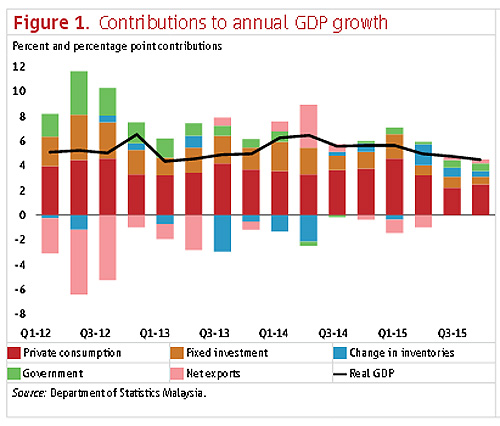
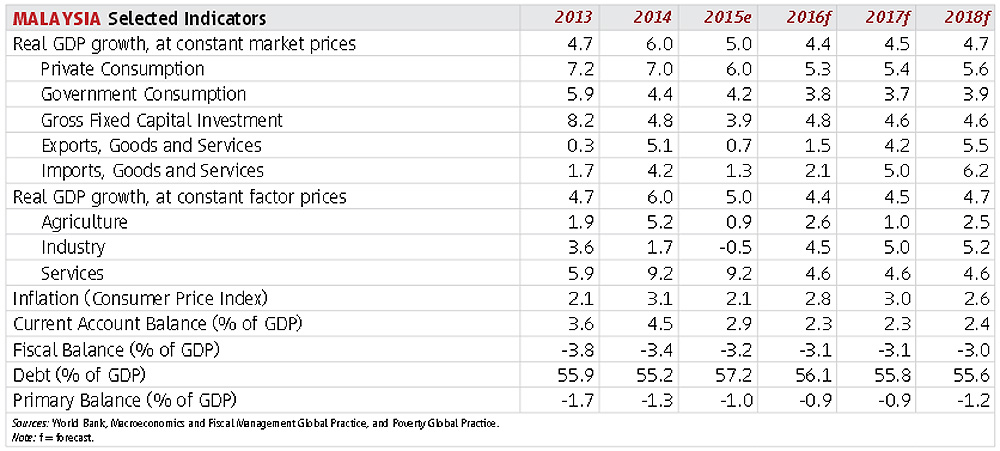
The Malaysian economy fared poorly in 2015, with both domestic demand and export growth slowing, but Bank Negara Malaysia’s measures managed to avert further decline, the World Bank said.
This is on the back of 23 percent depreciation of the ringgit against the US dollar in 2015.
“At the same time, Malaysian authorities have smoothed volatility and utilised reserves, which fell by US$20.7 billion in 2015 (around 17.8 percent of total reserves)...
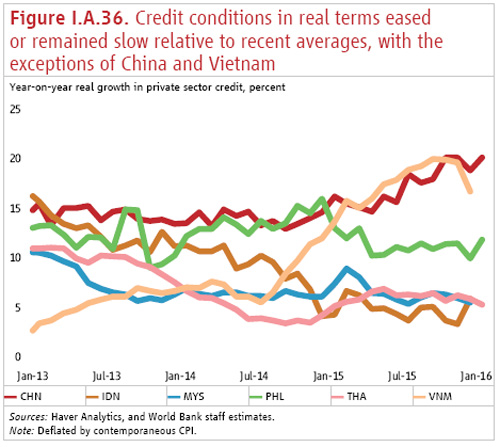
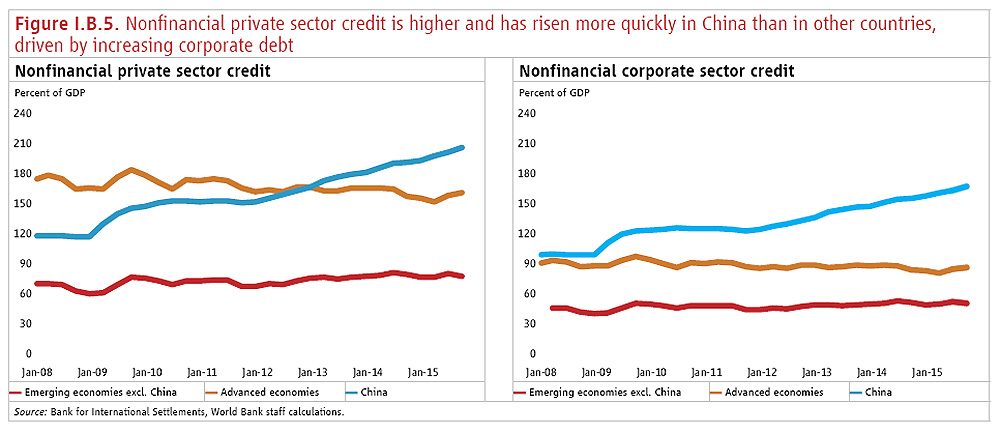
“Growth in business loans in the banking system accelerated to 8 percent as at Q4 2015, while household loan growth moderated to 7.7 percent, as a result of successful macroprudential regulations introduced by Bank Negara Malaysia,” it said in a report released today.
It added that that inflation rose by 2.7 percent year-on-year in December 2015, but is likely to be contained due to low fuel prices and slower wage growth.
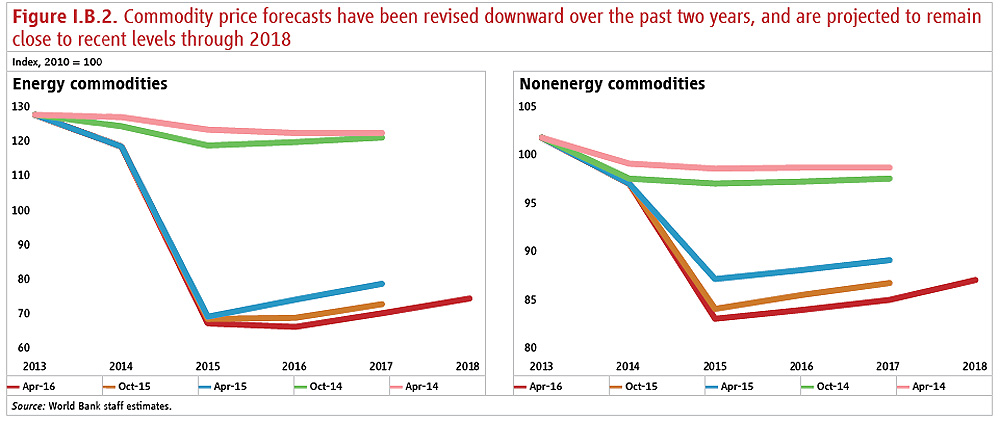
However, lower fuel prices cut oil-linked revenues by 30 percent compared to the 2014.
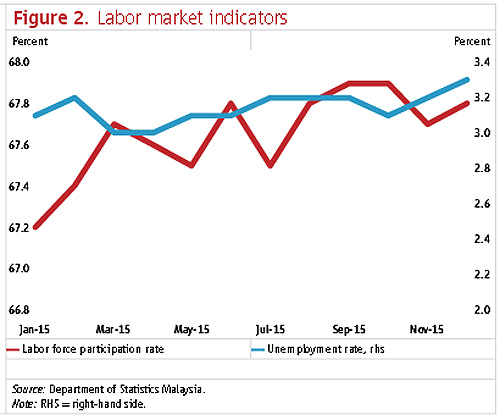
The average Malaysian worker is also facing hard times with unemployment rising to 3.3 percent year-on-year and job creation and vacancies subdued.
“As a result, the rising cost of living has started to affect some vulnerable segments of the population,” it said.
The World Bank added there must be improvement in efficient public spending and more targeted social protection to reduce inequality.
 -
-
 -
-