




Orang Asli to act for amendments to law
Not many are aware that the problems faced by the Orang Asli community stem partly from the very piece of legislation - Orang Asli Act 1954 - that was formulated to insulate them from communist influence at the time.
Not many are aware that the problems faced by the Orang Asli community stem partly from the very piece of legislation - Orang Asli Act 1954 - that was formulated to insulate them from communist influence at the time.
Today, however, the community would prefer that the Act is used to protect their welfare, development and customary rights, and that existing ambiguities are removed alongside its "paternalistic" features.
With this objective in mind, about 50 Orang Asli from across the country will meet this weekend in Port Dickson, Negri Sembilan, to discuss the provisions of the Act and to propose amendments.
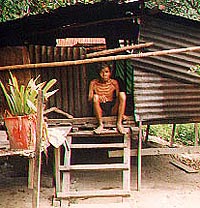 Three papers will outline what is wrong with the Act; look at issues linked to beliefs and customs; and proposed amendments to the Act.
The input will be fed into a national conference to be held later by JHEOA - the first such initiative by a government agency to amend the Act.
Association of Peninsular Malaysia Orang Asli president Majid Suhut said the seminar would also address issues that are proving to be a challenge to present generations.
"The Act is not entirely unworkable, but there is still a lot of room for refinement to take things to a higher level," he said when contacted.
"One of the problems is that people (in government) are still thinking in terms of 'protecting' the Orang Asli. We need to move away from this paradigm."
Privilege, not right
Majid said the authorities have perpetuated a system of appointing the community's representatives, from the director of the Orang Asli Affairs Department (JHEOA) to the village heads.
While this was introduced during the communist insurgency from 1948 to 1960, Majid said there is now a need to dismantle such provisions.
He said the paternalistic treatment of the Orang Asli has also extended over the years to a situation where state authorities treat their occupation of ancestral land as a privilege, rather than a right.
"The Act does provide for rights to education and other human rights, but these are in need of clarification as they are susceptible to all kinds of interpretation.
 "In the Act, the Orang Asli have no rights over their land but are merely regarded as 'tenants-at-will'. It's only when you fight your case at court that you find some room within the Act to claim rights to livelihood."
These judicial outcomes have shown up ambiguities that exist in the Act, especially over land disputes, with potential to exacerbate violation of human rights.
"We need to clarify other things that are not yet clear, reduce shortcomings in the Act and update the provisions in order to protect the rights of the Orang Asli, especially over their land," Majid said.
Majid also pointed out the need to place clear priority on the rights of the Orang Asli in relation to other laws such as those regulating forestry activities, so that the community is not disadvantaged.
For instance, the state forestry authorities claim that such regulations take precedence over the Orang Asli's rights to livelihood, he explained.
Although community leaders have long proposed the need for amendments, there has been no response until now.


Are you sure you want to delete this comment?
This action cannot be undone.