




Bukit Cahaya tussle - Don recommends middle way solution
The tussle between the federal government and Selangor government over the Bukit Cahaya Agricultural Park in Shah Alam can be resolved by resorting to Article 92 of the Constitution, said a constitutional expert.
The tussle between the federal government and Selangor government over the Bukit Cahaya Agricultural Park in Shah Alam can be resolved by resorting to Article 92 of the Constitution, said a constitutional expert.
Article 92 provides for an area to be declared a federal 'development area' without needing the consent of the state government while remaining within state territory.
 Universiti Teknologi Mara (UTM) law professor Dr Shad Faruqi said this presents 'a middle way' between amending the Constitution and resorting to the Federal Land Development Authority (Felda) scheme.
He said as long as the respective land and finance councils and expert committees are 'consulted' and the Yang Di-pertuan Agong deems it of 'national interest', the federal government can declare a development area under its administration.
"Bear in mind that consultation doesn't mean consent. Nobody has a veto.
"You don't need the consent of the Majlis Raja-Raja or the state assembly. The land will remain a state land, it just means it is being (federally) developed," he added when contacted.
Recent media reports have touched upon a debate in certain circles as to how Bukit Cahaya as an environmentally important area can be conserved in the wake of development in its surrounding areas.
Agriculture and Agro-Based Industry Minister Muhyiddin Yassin said there was a proposal for the federal government to take over Bukit Cahaya.
Others, meanwhile, had suggested some form of cooperation between state and federal authorities for the agricultural park's conservation.
On Sunday, the Star reported that the Sultan of Selangor had expressed his objections in a letter on surrendering the park to the federal government.
'Heavy-handed'
Admitting that employing Article 92 would be a 'heavy handed' manner by which the federal government could acquire the disputed land, Shad it nevertheless keeps to the intentions of the Constitution.
"It does appear to be a one-sided thing but that's the way the Constitution was drafted. We're not a true federal system. We are a federal system with a heavy, central bias. It was always intended from day one that the federal government has overriding powers in many areas.
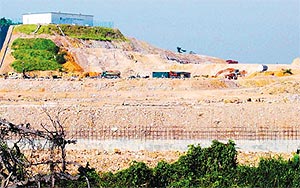 "This is a sort of exception to the federal principle of division of powers. Land is in the state list, but it is an exception. Though land is in the state list, the federal government can interfere with the management of this land for exploitation or, for that matter, conservation," he added.
Furthermore, Shad said the tendency of state governments acquiring more say over religious affairs is countered by the opposite tendency in the federal government of expanding territorially and financially into state affairs.
"Clearly in the area of land management, in the area of resource management, the trend in the Constitution is towards giving the federal government more and more power.
"Part of the reason for that is Malaysia is not a true federation. There is no fiscal federalism in the sense that the states still have land and local government, but they don't have the money to implement this vision, so they lean on 'big brother', and big brother is, of course, able to impose some policies," he explained.


