



Corruption fuels the democratic deficit in South-East Asia
COMMENT The recent arrest and indictment on corruption charges of a senior opposition leader in Malaysia highlights the potent role of corruption, both as a condition and a weapon, in South-East Asian politics.
The move on Penang Chief Minister Lim Guan Eng comes as Prime Minister Najib Abdul Razak seeks to divert attention and battle the political fallout from a financial scandal involving the diversion of close to a billion dollars of public funds into his personal bank accounts, a fact he denies involves any financial wrongdoing.
Whatever the legal determination of either the price Guan Eng paid for a bungalow, or the source of the millions of dollars in Najib’s personal accounts, it is clear that Malaysian political fortunes rise and fall on allegations of graft, rather than the performance of its politicians in government. Democracy is the poorer for it, society feels cheated, and a country’s reputation is tarnished.
With rising demands for transparency and equality in South-East Asia’s more educated, prosperous societies, the question is how much longer prevailing high levels of corruption, among the highest in the world according to international watchdog Transparency International, will be tolerated, and what remedial efforts will work to change the situation.
Corruption is an everyday reality in almost all the 10 countries of Southeast Asia. South-East Asian countries regularly figure high up the global tables measuring corruption and a lack of transparency. The standout exception is Singapore, where decades of determined policy and institutional attention have all but eradicated the problem.
But Indonesia, Malaysia as well as Cambodia and Thailand have scored highly on indices of corruption. In 2015, Cambodia ranked 150th out of 168 countries in Transparency International’s corruption index. Thailand sat at 76, Indonesia at 88.
In the Philippines, incoming President Rody Durtete, ‘listening to the murmurings of the people’, made transparency in government the very first order of his presidency; his predecessor Benigno Aquino had made battling corruption the central plank of his presidency.
'The currency of political patronage'
The scale of the problem goes beyond the wastage of resources, the stealing of people’s hard-earned incomes, and the basic perpetuation of criminal activity. Corruption is the currency of political patronage protecting selfish oligarchies and elites and underpinning the region’s alarming inequality of income and opportunity.
Corruption has also been weaponised through the undue influence that powerful political forces can bring to bear on supposedly blind processes of justice, and is wielded to fell political foes without giving them a fair chance to defend themselves. Corruption in all these forms and through all these uses is a major obstacle to democratic progress in South-East Asia.
The roots of corruption lie in the weaknesses of institutions: police that turn a blind eye to crime for money; regulatory authorities that take bribes to turn a blind eye to rules; administrators and government officials who demand extra payment to carry out their duties.
Government at a basic level is poorly financed in Southeast Asia, so it’s no surprise that those doing the governing demand extra payment to do their jobs. In Indonesia, for example, the average monthly salaries of low-ranking civil servants barely rise above US$300 (RM1,200).
The social pathology of the region also plays a role. Economic and political power is concentrated in the hands of the few and corruption is a deeply entrenched mechanism of elite survival. Bribery is basically a social separator. Those who can afford to pay the bribe, secure the best access to services or resources.
Doing away with bribery and corruption brings about a levelling of society, which would undermine and erode existing social and political hierarchies and mean that scarce resources need to be shared more widely. Moreover, paying extra for services ensures that the rules serve those who can pay.
'Anything can be fixed if…'
A cushion of graft therefore sustains the selfishness of elite behaviour. In this way, as the Thai columnist Kong Rithdee aptly describes, parents bribe to get their little kids into top schools; the rich bribe to doctor ledgers to avoid paying tax; and government officials bribe to have their wives and children appointed to government positions. ‘The system allows officials to pocket differences and shape our thinking that anything can be fixed if you know the right person.’
As well as sustaining high levels of wealth for the elite, corruption is a handy political tool for those who wish to control the elite. Authoritarian leaders such as Suharto of Indonesia used massive levels of corruption to fuel the patronage system that sustained his three decades in power. Loyalty was secured and sustained by granting licences for businesses or monopolies on the import or export of goods.
Similarly in Malaysia, the ruling Umno party harnessed corporate activity to raise funds for the party. As in Suharto’s Indonesia, many of these Umno-linked companies amounted to monopolies, especially in the area of corporate finance. The proceeds of these deals and revenues earned were used quite simply to underwrite elections.
In addition to enriching Umno barons and ensuring their loyalty, the money was needed in areas where the opposition was strong. Financial inducement was used both to sway voters through vote buying and fund local economic initiatives to lend the impression that government cared for them.
The legacy is a corporate landscape in which politics and business are so closely associated they cannot be distinguished. This situation set the stage for one of South-East Asia’s most spectacular corruption scandals of recent years, one that has transfixed Malaysians and set new standards in terms of the amounts of money involved and the trail of greed and destruction left in its wake.
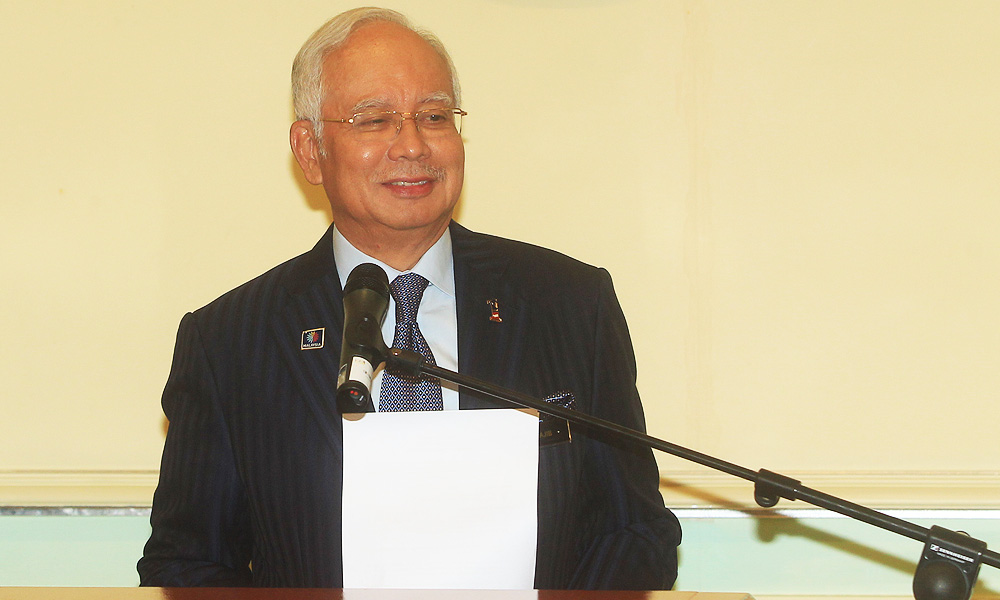 In the course of 2015 a little known UK-based blog named Sarawak Report started revealing details of massive transfers of money from the 1MDB investment fund chaired by the Malaysian prime minister, totalling almost US$700 million, via Gulf Arab investment funds, Swiss banks and offshore accounts in the Cayman Islands that somehow ended up in Najib’s Malaysian bank account.
Najib denied any wrongdoing, claimed the money was a ‘donation’ from a member of the Saudi royal family to help win the 2013 general election, and that the bulk of the money was later returned. 1MDB insists that it never paid any money to Najib personally.
What made these allegations even more sensitive were moves by the authorities in Malaysia to investigate at the highest levels. Before Najib removed him, attorney-general Abdul Gani Patail had allegedly drawn up charges against Najib, though this was vigorously denied by his successor.
Meanwhile, the scope of the scandal grew as investigative authorities in Switzerland, Singapore and the United States began looking into the trail of alleged financial malfeasance spawned by 1MDB. Several senior foreign bankers in the region either lost their jobs or resigned. At least one Swiss Bank and a prominent US investment bank were named as the possible targets of investigation.
Hefty cash payments for silence
Yet in Malaysia, the response was to protect 1MDB and sack instead those politicians and officials who had been critical of the government’s handling of the case. Heads rolled, including two ministers and a deputy prime minister who was also deputy president of Umno.
If there were voices within Umno uncomfortable with all this they remained, for the most part, silent. Most observers assumed that time-honoured methods of patronage involving hefty cash payments were enough to keep the party rank and file quiet.
However, beneath the surface, Malaysians of all stripes, especially in the urban areas, were seething with anger, dismayed at the inability of any legal or political institution to check and address what seemed to the ordinary punter a clear case of outright corruption. When hundreds of thousands took to the streets of Kuala Lumpur to protest in mid-2015, the authorities threatened people with arrest, using a newly re-furbished Sedition Act that makes virtually anything said against the government liable to prosecution.
Faced with serious charges of corruption it has failed to explain, the government has resorted to generating fear in the Malay community that the opposition threatens Malay privileges and the status of Islam.
In turn, the Malay majority appears susceptible to manipulation. ‘We Malays tend to believe our leaders deserve to do well, which breeds a complacency about corruption,’ says Marina Mahathir, the articulate activist daughter of former Malaysian prime minister Dr Mahathir Mohamad.
This blind acceptance of what the leadership says and does results in an uncritical receptivity to fears about the threat to Islam that in turn reinforces divisions in Malaysian society - to the point where calls for Muslims to be provided with separate shopping trolleys in supermarkets to avoid being tainted by non-halal food simply drowns out concerns about corruption in high places.
In a sign of how far Najib, once hailed as a force for liberal reform, was prepared to go to defend himself against his accusers, the government department responsible for scripting the Friday prayer sermons across all mosques in Malaysia wrote one in March 2016 that insisted: ‘The decree to be loyal to the country’s leaders does not come from the leaders themselves, but from God. Therefore, if the citizens are disloyal towards the leaders, that means they have been disloyal to God.’
No such protection is being afforded to Lim Guan Eng, the popular chief minister of Penang, which is controlled by the opposition DAP. At his first appearance in court after being arrested on two charges of corruption - one, for allegedly purchasing a bungalow for private use at a price below market value and two, for allegedly using his position to approve the re-zoning of land from agriculture to commercial use - the case was referred to the High Court, where the government appointed attorney-general will manage the prosecution.
Neither Najib nor Guan Eng is being judged by the quality of their leadership, or what public good they deliver as elected representatives. Rather, their fortunes are rising and falling on the back of alleged cases of corruption processed in a way that seems incapable of distinguishing between right and wrong, unless directed to do so by political fiat. Worse still, the public sentiment whipped up by these cases is seriously destabilising Malaysia’s fragile racial and religious equilibrium.
The week before Guan Eng was brought to court, a state mufti in Pahang, Najib’s home state, declared that members of the Chinese-dominated DAP could be considered eligible for being put to death because they questioned the implementation of hudud, the Islamic penal system in Malaysia.
Meanwhile, fearful of racial and religious tension, Malaysians have been distracted from the central question of how close to a billion dollars of their money ended up in their prime minister’s personal bank accounts.
MICHAEL VATIKIOTIS is Asia regional director for the Centre for Humanitarian Dialogue. This article first appeared in New Mandala.


Are you sure you want to delete this comment?
This action cannot be undone.