



Up to PAC to table 1MDB audit report in Parliament, says auditor-general
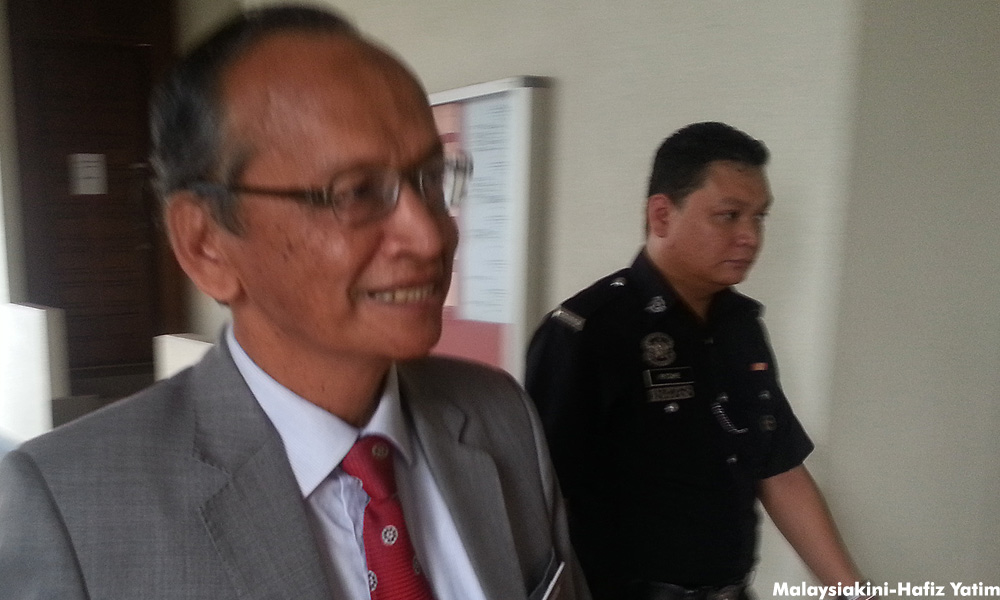
Auditor-general Ambrin Buang said it is up to the Public Accounts Committee (PAC) to decide if it wants to table the final audit report on 1MDB in Parliament.
He said the report, which is classified under the Official Secrets Act, is a special audit that certain bodies, such as the cabinet or the PAC, require.
The 1MDB audit report is different from those the Audit Department carries out periodically on government departments, statutory bodies or companies owned by the government, he added.
This is why it was not tabled in the Dewan Rakyat or handed to the Yang di-Pertuan Agong, said Ambrin.
Auditor-general Ambrin Buang said today it is up to the Public Accounts Committee (PAC) to decide if it wants to table the final audit report on 1MDB in Parliament.
He said the report, which is classified under the Official Secrets Act, is a special audit that certain bodies, such as the cabinet or the PAC, require.
The 1MDB audit report is different from those the Audit Department carries out periodically on government departments, statutory bodies or companies owned by the government, he added.
This is why it was not tabled in the Dewan Rakyat or handed to the Yang di-Pertuan Agong, said Ambrin.
“It is up to PAC to submit the report to the Parliament,” he told the Sessions Court in Kuala Lumpur during cross-examination by lawyer Gobind Singh Deo.
Ambrin was testifying in the criminal trial involving Pandan MP Rafizi Ramli, who was charged under the Official Secrets Act.
Despite Ambrin's testimony today, PAC chief Hasan Ariffin had said two months ago that any decision to declassify the final audit report on 1MDB lay with the cabinet.
But PAC member Tony Pua responded that the PAC has the power to table the audit report, as Hasan need only write a letter to the executive asking them to declassify the report.
Not familiar if against constitution
Ambrin today also clarified that the Audit Department does not normally audit government-linked companies (GLCs) as they have their own auditors under the Companies Act.
However, he said the government or the PAC can request that they do a separate audit on GLCs.
“I am not familiar if my decision (is against) or whether the PAC's view is against the Federal Constitution.
"But I wish to clarify that on the status of GLCs, the Audit Department does not normally audit GLCs as they have their own auditors and follow provisions under the Companies Act.
“When the Audit Department does an audit, it is to review the performance of the GLC and (corporate) governance.
"This is because we classify it as an audit activity and not an audit of the accounts (per se) as the audit is done by a qualified auditor. For GLC companies, we do not audit accounts unlike statutory bodies.
"Following this, I consider that this is a special audit as we are required to review the accounts that had already been audited by qualified auditors," he said.
Ambrin had said this in response to a question from Gobind, who is appearing for Rafizi, on whether keeping the final audit report on 1MDB confidential was in violation of the constitution.
Article 107 of the Federal Constitution states that an auditor-general's report shall be submitted to the Yang di-Pertuan Agong, who shall cause them to be laid before the House of Representatives.
DPP Mohd Abazafree Mohd Abbas objected to Gobind's question, but Sessions judge Zulqarnain Hassan allowed Ambrin to decide if he wanted to answer.
Gobind also asked if the auditor-general's powers to classify documents should not be used to cover up financial misconduct or criminal acts.
To this, Ambrin maintained that the final 1MDB audit report was classified as confidential to ensure no interruptions in the PAC proceedings, and to maintain the integrity of its department.


Are you sure you want to delete this comment?
This action cannot be undone.