
Anti-graft group sees startling similarities in 'gift letters'
The language used in the 'gift letters' accompanying the artworks gifted to businessman Jho Low from his associate Eric Tan and Tanore Finance Corporation seems to bear resemblance to the letter purportedly from a Saudi prince giving Prime Minister Najib Abdul Razak US$375 million to do with as the latter wished.
In the US Department of Justice's lawsuit, it had provided details of what was included in the 'gift letters', dated Oct 2, 2013, saying that the letters closed with the statement:
"All the artworks gifted to you should not in any event be construed as an act of corruption since this is against the company and/or my principles and I personally do not encourage such practices in any manner whatsoever.
The language used in the 'gift letters' accompanying the artworks gifted to businessman Jho Low from his associate Eric Tan and Tanore Finance Corporation seems to bear resemblance to the letter purportedly from a Saudi prince giving Prime Minister Najib Abdul Razak US$375 million to do with as the latter wished.
In the US Department of Justice's lawsuit, it had provided details of what was included in the 'gift letters', dated Oct 2, 2013, saying that the letters closed with the statement:
"All the artworks gifted to you should not in any event be construed as an act of corruption since this is against the company and/or my principles and I personally do not encourage such practices in any manner whatsoever.
"The gifts are merely a token of appreciation and I am hoping that the gifts to you would encourage you to continue with your good work globally."
Meanwhile, in the letter supposedly from Prince Saud Abdulaziz Majib, dated Nov 1, 2011, and first revealed to the public by the Australian Broadcasting Corporation (ABC) in March this year, it had concluded as such:
"This letter is issued as a gesture of good faith and for clarification. I do not expect to receive any personal benefit whether directly or indirectly as a result of the gift.
"The gift should not in any event be construed as an act of corruption since this is against the practice of Islam and I personally do not encourage such practices in any manner whatsoever.
"This is merely a personal token of appreciation and I am hoping that the gift would encourage you to continue with your good work to promote Islam around the world."
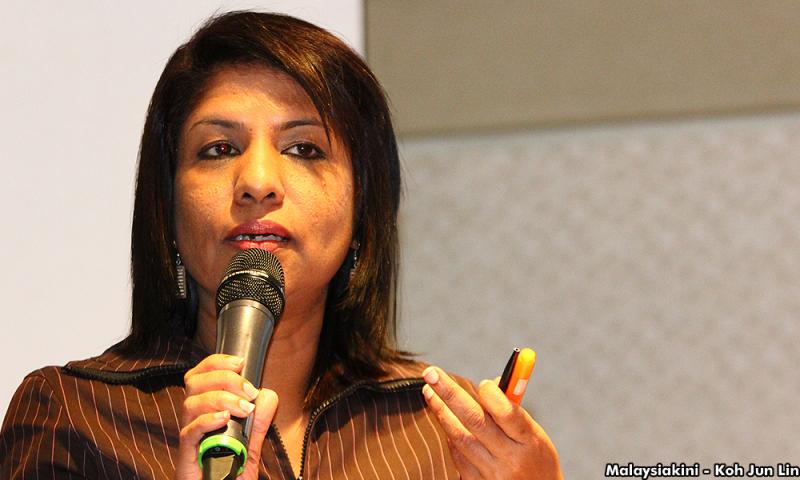
When contacted by Malaysiakini, Centre to Combat Corruption and Cronyism (C4) executive director Cynthia Gabriel said the similarities in language between the letters were "startling".
"(This) raises suspicions if they (the letters) could have been carefully drafted by third parties involved in the scam.
"In any case, the provisions that these gifts are not corruption do not absolve Low or other beneficiaries from stealing public funds and corruption claims," she said.
Lawyer Syahredzan Johan pointed out to Malaysiakini that this sort of declaration in a letter would not be helpful in corruption charges.
At the end of the day, he said, what was important was whether an act could be construed as an act of corruption, regardless of the declaration that it was not corruption.
Character assertion
The court would have to assess the circumstances leading up to the gift and whether it constitutes as corruption, he explained.
"If they are claiming that this is actually a gift that has nothing to do with anything else and they can show that it was given freely without any consideration or expectation, there could be support for it.
"But (the letter) on its own, that in itself cannot be a defence. You cannot say, 'Look, it's not corruption because I have this letter,'" he said.
Fellow lawyer Andrew Khoo agreed with this, saying that anyone can write a letter saying anything they want.
The letters, he said, could be "self-serving", adding that the very fact someone took the effort to write such letters meant that they acknowledged the gifts could possibly be seen as corruption.
"Putting it in a letter like that can cut both ways. Either you are genuinely not doing it (corruption) or you are genuinely trying to cover up," Khoo said.
He also agreed that the letter by itself was "neither here nor there" but what was important was to look at the circumstances and events surrounding the letter or supposed acts.
"I would say that the value of the statements contained in the letter has to be tested vis-a-vis contemporaneous events and other corroborative evidence," he said.
Khoo also pointed out that the letter purportedly by the Saudi prince saying that corruption is against Islam might open a door for the prosecution to exploit if it ever goes to trial, as that statement is a character assertion.
The prosecution, he said, could then potentially bring up examples of shady dealings that the person had been involved in and question how is that consistent with that statement in the letter.
The DOJ had filed lawsuits in Los Angeles, seeking to seize assets located in US and abroad, including in the UK and Switzerland, as it alleged that the assets were linked to money laundering through 1MDB.
The assets include mansions, artworks, a private jet and gambling debt in Las Vegas casinos.
Other than Low, the lawsuit also named Prime Minister Najib Abdul Razak's stepson Riza Aziz and two Abu Dhabi government officials, Khadem al-Qubaisi and Mohamed Ahmed Badawy Al-Husseiny.
Meanwhile, Najib had been involved in a scandal involving RM2.6 billion found in his personal bank accounts, with attorney-general Mohamed Apandi Ali exonerating him of any wrongdoing in this matter.
Apandi said the RM2.6 billion was a donation from a Saudi royal family member, and that Najib returned RM2.03 billion.
The prime minister has also denied abusing public funds for personal gain, and blamed such allegations on those attempting to topple him from power.
In the letter supposedly by Prince Abdulaziz Majid, he had said he would remit the funds to Najib using his company bank accounts, such as British Virgin Islands-incorporated Blackstone Asia Real Estate Partners Ltd.
The DOJ, in its lawsuit, had noted that Blackstone received about US$1.1 billion from British Virgin Islands-based Aabar Investment PJS Ltd, which had a similar name but was not related to IPIC’s subsidiary Aabar Investment PJS.
Blackstone then transferred nearly US$800 million from it to the bank accounts of four persons, that is Riza, 'Malaysian Official 1', Khadem and Mohamed Ahmed.
On the other hand, the DOJ lawsuit also revealed that the sum of RM2.6 billion appeared to have originated from Tanore, which is owned by Tan.


Are you sure you want to delete this comment?
This action cannot be undone.