



Penang FOI's restrictive clauses not cast in stone, says Ramasamy
Several restrictive clauses in Penang’s Freedom of Information (FOI) Act are not cast in stone and may be amended when the time is appropriate, says the executive councillor in charge of the matter, P Ramasamy.
These clauses include the controversial issue of signing a statutory declaration (SD) to obtain information, the exorbitant application fees and third party consent or approval before information is shared.
“Last week there was a discussion on whether we should incorporate the SD into the enactment itself, but we came to the conclusion that it was not necessary,” the Penang Deputy Chief Minister II said.
Several restrictive clauses in Penang’s Freedom of Information (FOI) Act are not cast in stone and may be amended when the time is appropriate, says the executive councillor in charge of the matter, P Ramasamy.
These clauses include the controversial issue of signing a statutory declaration (SD) to obtain information, the exorbitant application fees and third party consent or approval before information is shared.
“Last week there was a discussion on whether we should incorporate the SD into the enactment itself, but we came to the conclusion that it was not necessary,” the Penang Deputy Chief Minister II said.
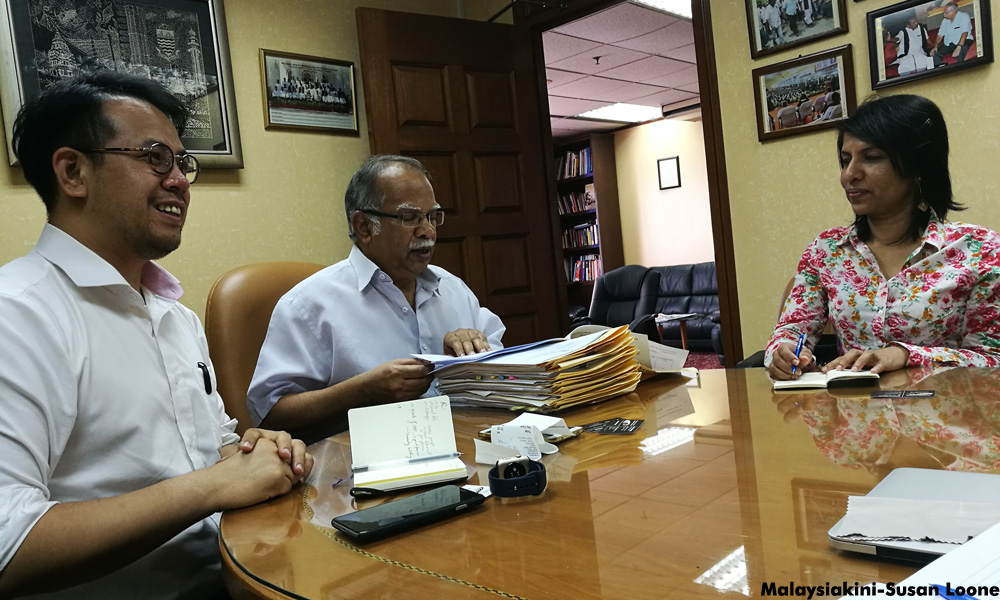
“The SD is a temporary measure. It was a collective decision we made that day, independent of my own decision, which I felt the SD was not necessary,” Ramasamy said after a meeting with corruption watchdog C4 (Center to Combat Cronyism and Corruption) and several journalists at Komtar.
“The SD is to prohibit commercial use of documents, it can be shared as long as it is not sold and the Act is silent on reproductions of the materials, so you can use for press conferences and research but you cannot make a profit of it.
“It is also to prevent your competitor from profiting from what you have done."
On the deadline to amend the clauses, Ramasamy declined to commit himself, but said such matters were discussed regularly and raised for deliberation at the weekly state executive council meeting chaired by Chief Minister Lim Guan Eng.
He added that the FOI committee, which includes members like representatives from the state secretariat and state executive council, as well as DAP Dato Keramat assemblyperson Jagdeep Singh Deo, meets every six months.
“The amendments will be brought up at the next meeting at the end of the year,” Ramasamy said.
In the meeting with him were C4 director Cynthia Gabriel and Penang Institute director cum Bukit Mertajam MP Steven Sim.
105 applications under FOI Act
Ramasamy informed the group that since its implementation in 2015, there were 105 applications under the FOI Act (45 up to June 2016), while only nine rejections.
“Most of the applicants are regular people,” he said, acknowledging that there were applications from State Gerakan acting youth chief Jason Loo, for documents related to Taman Manggis and the proposed undersea tunnel project linking Gurney Drive with Butterworth.
Loo has refused to sign the SD, which requires him not to use the document for commercial or for profit.
“Loo is a special case, he is a politician and did not want to sign the SD. He asked for documents related to Taman Manggis but these were taken by MACC,” Ramasamy added, referring to allegations that the state had sold the plot of land intended for public housing to a private company.
C4 has applied for and obtained the agreement signed between the state and Consortium Zenith-BUCG for the undersea tunnel, while Malaysiakini has applied for the agreement signed with SRS Consortium, the project delivery partner for the RM27 billion Penang Transport Master Plan, but has yet to obtain it as the document is yet to be officially inked.
Ramasamy said the decision to approve or reject applications are made by the heads of departments (HODs) where the information is asked.
When the HODs have problems deciding, the matter is referred to the executive council, but no one has appealed the decisions so far.
“Some are rejected because the information is already available. For example, there were applications for syariah court decisions, which are already available online,” said the Perai assemblyperson.
On the exorbitant application fees, Gabriel said for the marginalised community, the RM100 can be very daunting.
“We want that spirit (of FOI) to be operational. May be you want to review the nominal cost,” she told Ramasamy.
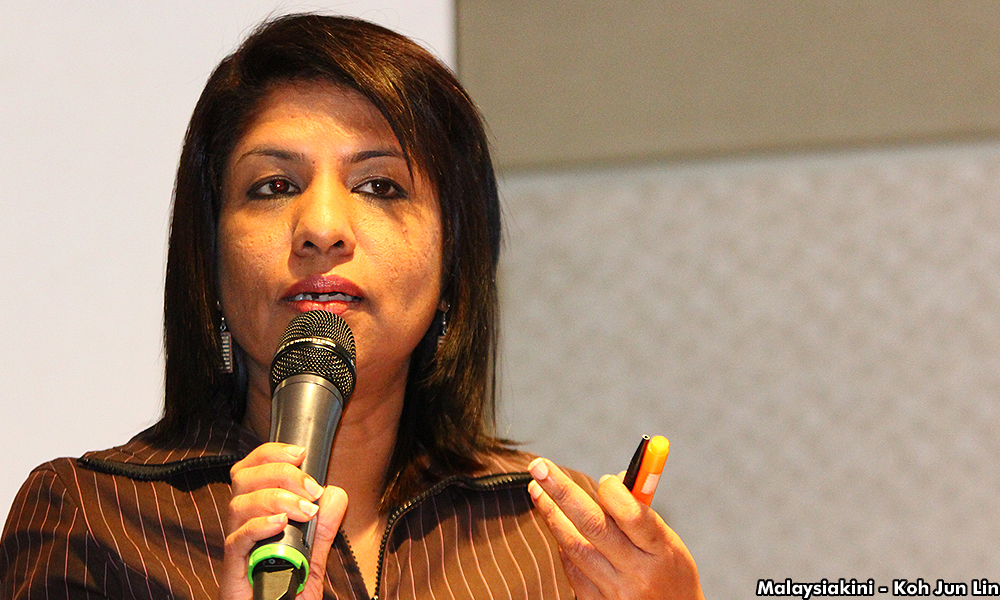 Gabriel (photo) also reminded Ramasamy that the application fees for Selangor is RM15, compared to Penang’s RM50 (for current year documents) and RM100 (for previous years), while photocopy charges are 20 sen for Selangor, while Penang charges RM1 per piece.
Ramasamy said the state exco had decided to maintain the amount of fees, adding “I do not think there is any ulterior motive for this. Why should we put so much effort in drafting and passing this Act only to restrict it?
“It is not like we want to pass the Act, implement it then control. There may be some uncertainties but something like the cost will be reviewed from time to time,” he added.
Don't want to open up the floodgates
Question: How did you arrive at the amount of cost, which is exorbitant?
Ramasamy: The Act says the cost should be nominal but at the time we did not have anything to compare it with and our intention was to ensure that the system is not abused.
We do not want to open up the floodgates so that everyone wants to apply for it, if the fees is RM1, for example. Then people will have no hesitation to come and apply for information. A balance needs to be created. These are some of the reasons we had discussed which led us to decide on this amount for Penang.
We (are aware that we) have been criticised for the high fees. Some may say that the cost is high, some may feel it is decent but it only means that if you really need the information, you are willing to pay for it.
Question: The spirit of FOI is that anyone and everyone should be able to apply for the information. The public view the imposition of high fees as a means by the state government to discourage FOI.
Ramasamy: I do not know if it would happen - that we open up the floodgates. Maybe that is not true, but one must feel really in need of a particular information to get it (by willing to pay for it).
Question: The HODs sometimes do not understand FOI. Have you all briefed them on this?
Ramasamy: There have been a number of briefing sessions done when the FOI was passed in the state assembly (and implemented last year). You understand how the bureaucracy works, some are not used to it (to give out information).
Usually, they are restricted from doing so due to 'perintah kerajaan' (government orders). The FOI is an education process. They can put a lot of obstacles that information is not available, it is a question for government departments to decide.
I am not defending the civil servant but we have to educate them as this is something new to them. It has been planted in their minds that they cannot give out information, they come from the Official Secrets Act culture.
There is always the temptation that everything is secret and cannot be shared. So, now that the FOI is implemented and all information available, we need to go through the socialisation process.


Are you sure you want to delete this comment?
This action cannot be undone.