



Race-based politics still relevant, says Bersatu member
Race-based politics will always be relevant in Malaysia as long as its institutions have not been reformed, said Parti Pribumi Bersatu Malaysia pro-tem committee member Syed Saddiq Abdul Rahman.
As long as the media is controlled by the government and the police don’t act against racial extremists, Syed Saddiq said, the government will be able to divert attention from its political scandals by stoking racial sentiments.
“If there is widespread corruption, it can easily be covered up through racism. All these become relevant, because they can hide behind racist sentiments,” Syed Saddiq told a forum last night.
Race-based politics will always be relevant in Malaysia as long as its institutions have not been reformed, said Parti Pribumi Bersatu Malaysia pro-tem committee member Syed Saddiq Abdul Rahman.
As long as the media is controlled by the government and the police don’t act against racial extremists, Syed Saddiq said, the government will be able to divert attention from its political scandals by stoking racial sentiments.
“If there is widespread corruption, it can easily be covered up through racism. All these become relevant, because they can hide behind racist sentiments.
“The question is; how can we attract Malay voters who want to retain their identity (through a race-based party), and yet slowly but surely push for long-term reforms,” Syed Saddiq told a forum last night.
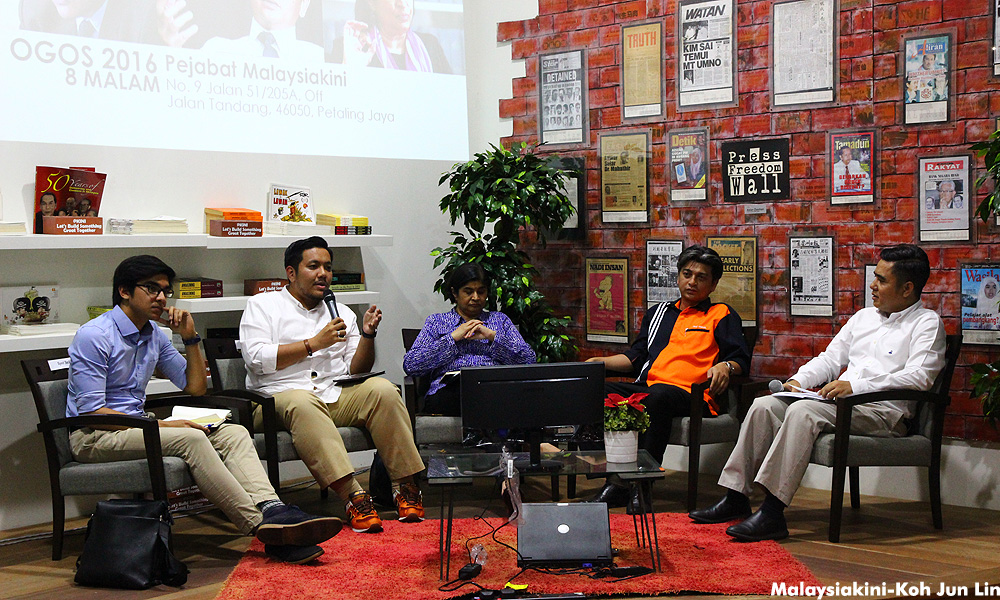
The forum was organised by PKR’s Youth wing. It was held at the Malaysiakini premises in Petaling Jaya and attended by about 50 people.
Bersatu has submitted its registration form for a new political party on Aug 9, and is pending approval by the Registrar of Societies.
The party has been criticised for its two-tier membership system, whereby full membership is only open to the bumiputera, while non-bumiputera may join as affiliate members.
 Affiliate members have no voting powers and may not stand for party elections, but may still be appointed to become office bearers.
Syed Saddiq (photo) said the decision to set up Bersatu was made after conducting studies in constituencies where opposition parties had failed to make inroads, after which its founding members decided that the party needs to be a bumiputera party.
However, he said, the party will be well-poised to make the leap to become a fully multiracial party when the time comes.
“Although the party has bumiputera members as its core, it started off as a compromise model. It is a good progressive start,” he said.
He added that he would ensure that non-bumiputera will be appointed as the party’s office bearers, to ensure that it can move forward as a Malaysian party in the future.
The former debating champion also said the time to act against Umno was quickly diminishing, as more and more of Malaysia’s institutions become compromised.
Prime Minister Najib Abdul Razak has pushed a number of changes that are imperfect but still progressive since taking power, Syed Saddiq said.
Transformation and reforms reversed
These include the amendments to the Universities and University Colleges Act 1971 to allow university students to take part in political activities and the Peaceful Assembly Act 2012.
“He did a lot of progressive things, but the moment the 1MDB scandal came up, all his transformation and reforms were reversed to save himself.
“Within the span of a year, there had been major changes,” he said.
 Syed Saddiq said the money lost through the 1MDB could be replaced, but it would be more difficult to salvage Malaysia’s democratic institutions once these have been undermined.
In addition, he said, Malaysia’s youth and fence-sitters are becoming more apathetic as efforts to push for reforms fail to yield results, making it more pressing to act.
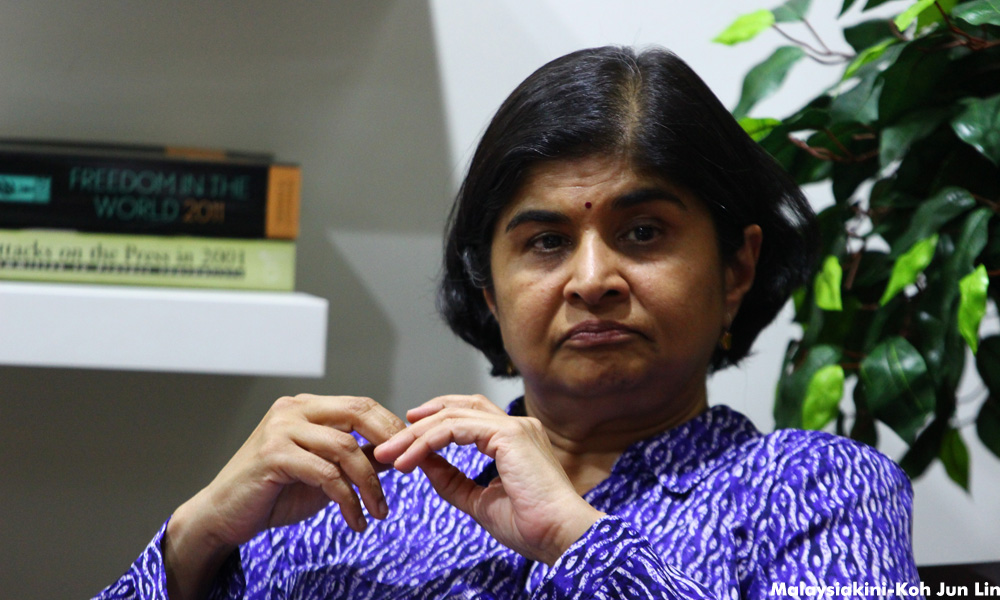
Meanwhile, another panellist - former Malaysian Bar president Ambiga Sreenevasan (photo) - said Bersatu’s move to become a race-based party is not ideal, but understandable.
This is given the fact that there is only about one-and-half years until the next general election is due to be called, said Ambiga, who is the president of the National Human Rights Society (Hakam).
“As much as people are idealistic and we don’t like to see parties based on race, I get it, because right now that is what is needed; because it is important to have party that can attract those who are disgruntled with Umno and others, who feel more comfortable with a Malay party.
“Don’t forget, the Malays in the semi-urban and rural areas are used to Umno all their lives – a Malay party. To ask them to suddenly change? That would be difficult,” Ambiga said.
The former Bersih co-chairperson said she felt that Bersatu would ultimately strengthen the opposition by bringing its own unique strengths into play, provided that the parties can work together.


Are you sure you want to delete this comment?
This action cannot be undone.