




Govt 'caves in' to industry pressure on paraquat ban
It is clear that the government is bowing down to pressure when it announced that the decision to ban paraquat made three years ago will be reviewed, charges an anti-pesticide group today.
It is clear that the government is bowing down to pressure when it announced that the decision to ban paraquat made three years ago will be reviewed, charges an anti-pesticide group today.
Objecting the latest development, the Pesticide Network Asia and the Pacific (PAN-AP) urged the government to reconsider its decision to review the ban due to the serious implications it would have on the health of plantation workers .
The review was announced by Agricultural and Agro-Based Industries Minister Muhyiddin Yassin, who said the decision was made following 'presentations' by small-holders and key industry players.
 "It is crystal clear that the minister had caved in to the pressures and persuasions of these 'small-holders' and 'key' industry players," responded PAN-AP executive director Sarojeni V Rengam in a statement.
"We were the first country in Asia to announce the ban. The decision was taken by consultation with the different ministries based on human health concerns and because of available alternatives. What a shame that now the government has gone back on its word ," she said.
Reputation at stake
Paraquat is the most important product of Swedish company Syngenta, the world's largest agrochemical company.
Identified by the World Health Organisation (WHO) as one of the leading contributors to Acute Pesticide Poisoning (APP), it has been classified by the organisation as a Class II (highly hazardous) pesticide. In Malaysia, it has been given a higher classification of Class I (extremely hazardous).
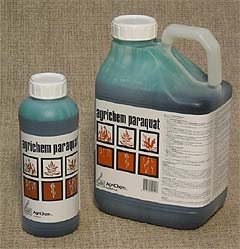 On Aug 27, 2002, the government announced its decision to ban the use of paraquat which included rejecting all applications for its registration or re-registration and phasing out of currently registered products such as Syngenta's Gramoxone. The availability of cost efficient and less hazardous alternatives were cited to justify the decision.
With regard to the current situation, PAN-AP demanded that the ministry review the outcome of several consultative sessions held with various quarters such as the Health Ministry, workers and NGOs which eventually led to the ban in 2002.
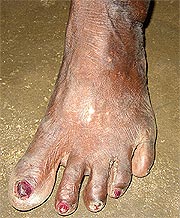 Using Golden Hope plantation as an example, they also stated that the use of paraquat is not necessary and that alternatives have already been identified and used by companies in the plantation sector.
Another issue mentioned was the possible repercussions the issue could bring to Malaysia's international reputation.
"When the ban was announced in 2002, NGOs, public interest groups, doctors and medical associations in Malaysia and other parts of the world had applauded the Malaysian government's decision to ban and phase out the use of paraquat. Now Malaysia's reputation in the eyes of the world is at stake," said Sarojeni.


Are you sure you want to delete this comment?
This action cannot be undone.