




Shahrir Samad Q&A: Media has vested interests
Backbenchers Club chairperson Shahrir Samad talks about how these vested interests lead to lopsided media coverage. In this interview, the veteran politician also fields questions on corruption and money politics.
Malaysiakini: You were not happy with the frontbenchers' performance lately.
 Shahrir:
The real reason is that we would like parliamentary replies to be substantive and comprehensive. It doesn't matter whether the minister or deputy minister attends. What I noticed is that the issues raised on the last day during (the debate on the) motion to thank the Royal address were not replied to by at least two ministries. I deliberately chose to speak at 6.30pm on the (debate's) last day, the time when the media was not there. It's not fair for members of Parliament who spoke on the last day to not get replies or even be addressed. It's not so much about the minister being present although generally we think this will help, (but) when the minister is present then civil servants (who prepare the brief for the ministers) will do their best, do more to make sure the minister's (replies) are not baseless.
Shahrir:
The real reason is that we would like parliamentary replies to be substantive and comprehensive. It doesn't matter whether the minister or deputy minister attends. What I noticed is that the issues raised on the last day during (the debate on the) motion to thank the Royal address were not replied to by at least two ministries. I deliberately chose to speak at 6.30pm on the (debate's) last day, the time when the media was not there. It's not fair for members of Parliament who spoke on the last day to not get replies or even be addressed. It's not so much about the minister being present although generally we think this will help, (but) when the minister is present then civil servants (who prepare the brief for the ministers) will do their best, do more to make sure the minister's (replies) are not baseless.
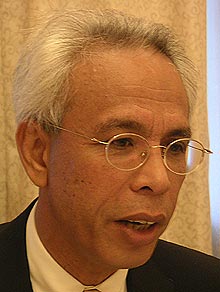
Backbenchers Club chairperson Shahrir Samad talks about how these vested interests lead to lopsided media coverage. In this interview, the veteran politician also fields questions on corruption and money politics.
Malaysiakini: You were not happy with the frontbenchers' performance lately.
 Shahrir:
The real reason is that we would like parliamentary replies to be substantive and comprehensive. It doesn't matter whether the minister or deputy minister attends. What I noticed is that the issues raised on the last day during (the debate on the) motion to thank the Royal address were not replied to by at least two ministries. I deliberately chose to speak at 6.30pm on the (debate's) last day, the time when the media was not there. It's not fair for members of Parliament who spoke on the last day to not get replies or even be addressed. It's not so much about the minister being present although generally we think this will help, (but) when the minister is present then civil servants (who prepare the brief for the ministers) will do their best, do more to make sure the minister's (replies) are not baseless.
Shahrir:
The real reason is that we would like parliamentary replies to be substantive and comprehensive. It doesn't matter whether the minister or deputy minister attends. What I noticed is that the issues raised on the last day during (the debate on the) motion to thank the Royal address were not replied to by at least two ministries. I deliberately chose to speak at 6.30pm on the (debate's) last day, the time when the media was not there. It's not fair for members of Parliament who spoke on the last day to not get replies or even be addressed. It's not so much about the minister being present although generally we think this will help, (but) when the minister is present then civil servants (who prepare the brief for the ministers) will do their best, do more to make sure the minister's (replies) are not baseless.
What about the backbenchers themselves? Their attendance, the 'buddy system' introduced last year is not working.
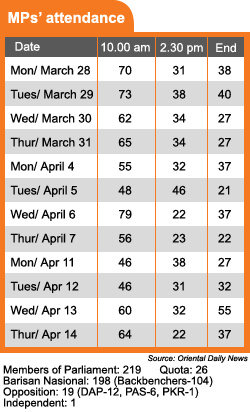 If I was to have my own way, I would see the quorum as only necessary to start the session because focusing on the quorum is detracting from the real role of the MP. Anywhere else in the world, the quorum is only necessary to start a meeting, people can come and go. The quorum is for us to start the important thing, which is to have the debate and the debate can continue (without all MPs present). To call for a quorum is a technicality which can be used by certain parties to put a stop to the debate. When we focus on the quorum, we are not focusing on quality, but on quantity. For example, focus on the number of questions submitted by MPs, I don't submit any questions, does that make me a lesser MP? Even if we submit hundreds or thousands of questions, how many can be answered at the end of the day? We have the situation that we have 60 questions a day, but how many can be answered,10? 12? So what's the point of having the questions?
So it's about the kind of system we have that leads to the lack of interest among MPs to attend?
No, MPs are very interested, the MPs are mostly in the building, they (just) don't go inside the House, they do other things (but) they watch the live proceedings. It doesn't impair the performance of Parliament unless nobody at all attends the session. What I'm trying to do as BBC chief is to emphasise on quality. But how ready is the media to accept our quality? Because we have the situation that when we have a MP speaking for three hours, and there's an interchange of words on an issue for three minutes, that issue of three minutes is highlighted, for example the LRT advertisement. So everyone focuses on how MPs talk about small things. In the end, this is how we are perceived.
The media has got more vested interest than us. We have only our voters whom we represent. But for the media, you have the interest of readers, advertisers, editors and the shareholders so I can understand the problem of the media and I also understand that the media sometimes cannot appreciate us fully. To me, Parliament is a continuation of the people's mandate that was given to us during the election. I don't believe that once a person is given the mandate then he should shut up, that's not right, that's a fall of functional democracy. I appreciate that the media has a role in democracy but while they have a role in democracy, they also have vested interests which they have to sacrifice, whether it is malaysiakini or the New Straits Times or whatever 'mosquito paper'.
 Ruling politicians rarely complain about the media having vested interests.
I have explained to you the problem.
But the Malaysian mainstream media is controlled or owned by the ruling parties.
Well, that's a matter for the owners of the newspapers to answer. As far as I am concerned, I am not the owner or shareholder (of any newspaper).
Do you think the executive has been granted excessive power compared to the judiciary and legislative?
No, I don't think so. The executive has been far more open towards the kind of role that I expect of Parliament. I have been given a free hand to run the BBC and I think there's a great deal of openness and tolerance for our role. If you follow the issues that had cropped up in our debate, it's far different from the situation in preceding years because essentially what is happening is the leadership has not taken a stance that just because we have a big majority (in the general election), we should become a rubber stamp. Instead, we are taking the reverse, we are not a rubber stamp, we are becoming more proactive, open and we are having debates which are critical of government decisions.
You have motions in the past, like the one to impeach the Election Commission (EC) chief and one on Burma which have to go through the executive before being discussed in the House, this does not allow the Parliament to work independently.
On the motion to impeach the EC chief, we have our views too. We don't think we should stop (discussing the motion), but (we) have been told by the executive we should not (be) supportive, we don't agree with that. (As for the) motion on Burma, we understand what's the problems were, we have our views and these views are expressed in different forums linked to the Parliament.
We meant that matters raised in the House have to rely on whether the government is giving the green light for them to be discussed in the House.
But then these are all because of the standing order, nobody can just introduce a motion unless the motion is of a certain criteria, and certainly, that is decided by the speaker. When you say the speaker consults with the executive, it is part of that negotiation or relationship, that is in every parliamentary situation, there is no absolute freedom of Parliament. That is the dynamic interactions that happen and there is standing procedures which allows for certain views to be taken or not, essentially government work has to be given priority because that's the purpose of Parliament.
Being the Public Accounts Committee (PAC) chief, PAC has not been seen to have done much.
Maybe (this is) because of less media attention? Recordings of the PAC are even tabled in Parliament and once it is tabled it becomes public, the media can highlight it if they are interested. But maybe the media wants to look at the current issues, issues of the day rather than look at the audit trail, which is the purpose of the PAC. We look into audit reports of government bodies, departments and agencies, that is not so interesting for the media is it? We have to look at something spent during that year and when it is audited, maybe it is already a year and half old then. We don't blame the media for not being interested in a two-year-old issue because you want to sell newspapers right? Want to sell news, the more current the better. But unfortunately, it is the papers who lose out. So what shall I do? Make it more current? (laughs)
What about recent government projects not going through the open tender process?
 We will look at it when the reports come out. We are not interventionist in the sense (to intervene) in the cases going on, what we are interested in is when the reports come out we look at it. However we are slowly changing the role of PAC to make it also look at the broader picture and focus on certain weaknesses because the main thrust of the PAC's role is to make sure the money that has been approved by Parliament is well-spent. Don't expect PAC to jump on current issues, we can't, we address those current issues in the House through debates and questions. Even questions you have the time problem because the questions have to be submitted before Parliament opens. We have to look at all these procedures to make the Parliament more current.
We have a committee of Barisan Nasional MPs looking at the 'old' parliamentary structure in the standing order, how parliament should perform and (to make) MPs be better MPs. We are not seeking for more money but we are looking for better support for our work. For example, now we are eligible for mileage claims but we have to go through the tedious practice of filling up forms, you need to have a clerk, so part of the (expenditure) has gone to the clerk. Why don't we just get a lump sum based on what is acceptable? These are among other things we are looking at, we prefer to have support, staff to do research and run our office, we prefer that rather than (the government) give (us) the salary and (we) look at it (as in how to spend).
I mentioned many times that Parliament shouldn't be just another government department and everything you want to do is subjected to government rules and regulations, whatever benefits and rights we should get is based on the equivalent level with the civil service. That's not right because we are different, our function and performance are different. We are 24 hours, seven days, 365 days on service unless you go on holiday and even you go on holiday you have to tell the constituents and the office to continue its function. We are also expected to be knowledgeable but how we could be knowledgeable if we are not allowed to spend time going overseas on government missions, on parliamentary associations and activities? So it's really a different situation than what people actually envisage.
Part of this problem is because of the media, it's really a dangerous thing, because it encourages the idea that MPs are unnecessary, the most important are those who become ministers, deputy ministers and parliamentary secretaries, so the rest of us are riff-rafts. That's not right, in that sense, the media has degraded democracy itself because Parliament is an essential part of the democratic and political system. That's why under the National Integrity Plan (PIN), we are in support of what the government wants to do with the Parliament. We have a website now, it is not the best but we are fairly sophisticated.
Talking about PIN, you said the legacy problem hinders (Prime Minister Abdullah Ahmad Badawi) Pak Lah's war against corruption, what do you mean by that?
 There are legacy problems in corruption but of course he has addressed some of the issues. You have the Perwaja chief who has been taken to court, nobody would have thought it would happen, so we should give him (Abdullah) credit. The other issues are the delivery system which is not perfect and we have asked for the delivery system to be reinvented and less centralised, decision is not made at the centre but nearer to the ground. I think all these situations we have inherited. But steps have been taken, things are being de-centralised, more power is given to the lower levels to decide, this came out from the debate of the MPs, but of course the media would not understand all these things. What could we do (when) the media doesn't understand, but we can't blame them. (The media thinks) 'this one MP cakap tak important' (What this MP is saying is not important), we rather report what the minister says.'
What about money politics in Umno?
How can there be money politics in the first place? I want to pose this question. To have money politics people must have money. If they were not born rich, then they must be corrupt, but if they are corrupted then how can they be candidates?
It leads to a question about the 'double standards' between Umno and the Anti-Corruption Agency (ACA). While ACA is saying one thing, Umno says another.
I would like the ACA to just to do their work quietly and when the case goes to court and is prosecuted, then you talk. (It's) not while you are investigating you talk. There is no need for the ACA to present itself as a functional body, it should be measured by the success they have in the cause, in prosecution, it's not persecution, it should be prosecution. Persecution means you start an investigation and you announce you are investigating a minister, MP, that's persecution because you were just investigating. If you were driven by prosecution, then when you prosecute someone, it becomes public domain and I think it should be like that. There are arguments about money politics and corruption, it's an internal matter, let Umno handle it.
So you are saying that the term money politics is not appropriate to be used in Umno's case.
It is money politics... but which is money politics? Do you mean money politics if I give RM50 administrative allowances or money to all the branches each year. Is that corruption? I am assisting them to run their branches and that is my responsibility as a division leader to make sure my branches conduct the meetings. If I want to stand for election, I hold a tea party, I give them tea and cakes, is that corruption?
Umno members who have been found guilty of money politics felt there was no transparency in the party's disciplinary board.
The rules were clear, you look at the rules, you like it you take it, to me politics is like that, the rules are there. You are not allowed to campaign then don't campaign you win or lose is another matter, that's what life is about.
There are cases like when you give money to branches every year its okay with everybody, until somebody challenges you for the divisional post, you win and then you are found guilty of money politics.
Accept it, it doesn't bother me, if you think I'm corrupt then fine
People like Zaid Ibrahim and Shahrir Abdul Jalil (Umno leaders found guilty of money politics) have questioned the difference in punishment. Why hasn't disciplinary board explain this?
They were called to explain and defend themselves but maybe the explanations were not accepted. Maybe the defence is not up to the standard that the disciplinary committee can accept.
So what is your opinion because there are people questioning about it?
I think it is fine, I think people should question, I think it's good to have an honest question rather than everybody keep quiet, like me. I never questioned. If I were suspended, then it's alright, ok, accepted, I know its political, of course (because) I'm a politician, I know its political, fine, take it.
What about the case if you are a MP and have been suspended, should you continue to hold your post?
I think it's their own personal conscience, if they feel it's not fair, it impairs the performance of their duty then they have to make a decision. A lot of what we are depends on our own conscience. If your conscience is clear that you didn't do it but got whacked, then ok, it's clear. But if your conscience is clear but you cannot perform as a MP and under this cloud of suspicion, then make a decision. To me it's always simple that you make a decision and accept the consequences of your decision. It doesn't matter people might say you merajuk (upset). It's what your heart and conscience say.
How do you see Khairy Jamaluddin, a rising star in Umno?
 I think I was younger than (Khairy) when I was made political secretary to (then) prime minister (Tun Abdul Razak). I went through all these things, (like) 'you are a young man, you don't know all these things', I have heard it before - (but) my conscience is clear and I don't abuse my position. So you have to ask him whether his conscience is clear. I was 25 when I was the political secretary to Tun Razak, of course there were criticisms against me as I was young. So what about you (reporters)? You young people writing articles about us? Why should I question that?


Are you sure you want to delete this comment?
This action cannot be undone.