



Survey: Chinese traders pessimistic on M'sia's economic outlook
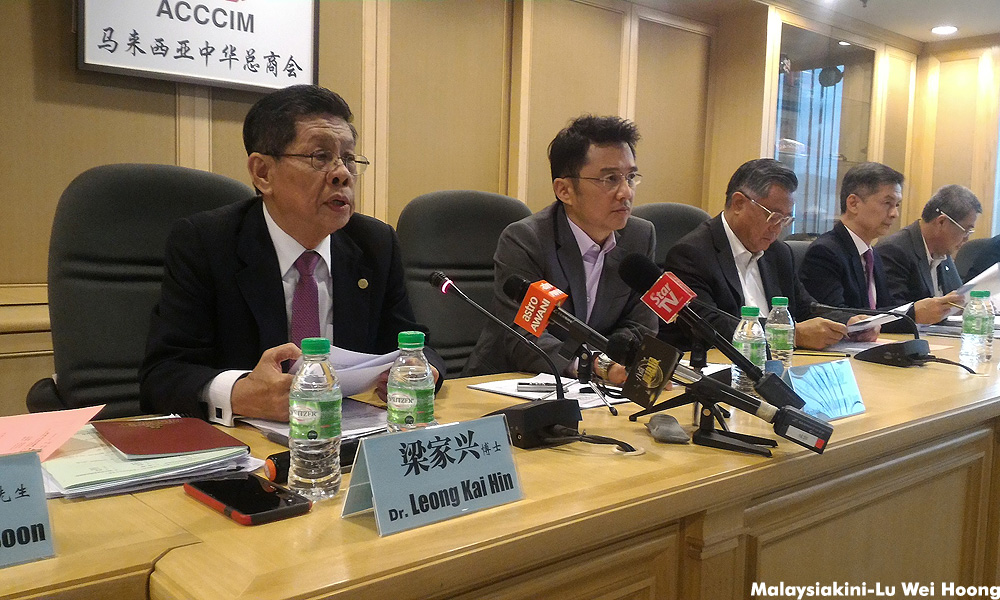
Most members of the Chinese business community have a bleak view of the country's economic outlook in 2016 and 2017, according to a survey by the Associated Chinese Chambers of Commerce and Industry of Malaysia (ACCCIM).
This is despite assurances from the government that Prime Minister Najib Abdul Razak is able to steer the country through challenging economic times.
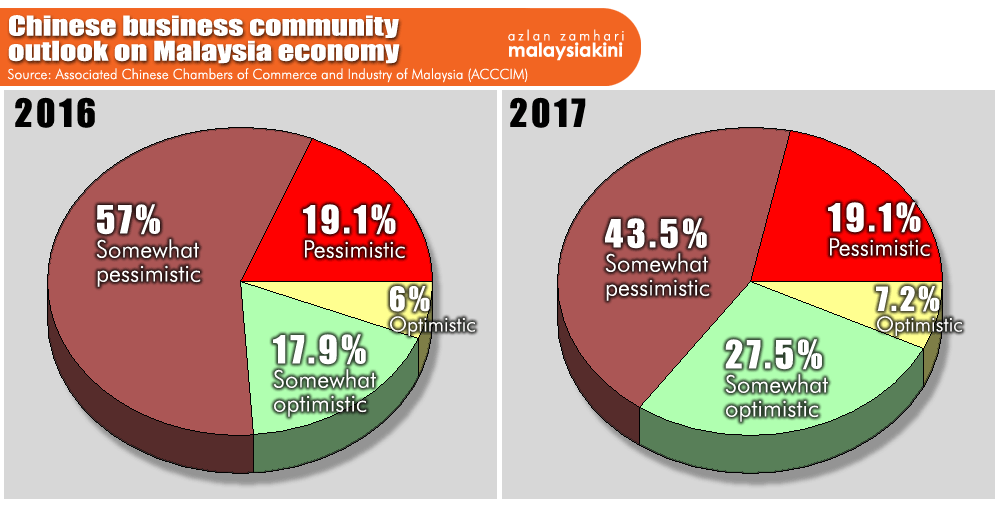
“For the year 2016, it is noted that some 76.1 percent of the respondents expressed that they were either pessimistic (19.1 percent) or somewhat pessimistic (57 percent),” said the report, which was released today.
Most members of the Chinese business community have a bleak view of the country's economic outlook in 2016 and 2017, according to a survey by the Associated Chinese Chambers of Commerce and Industry of Malaysia (ACCCIM).
This is despite assurances from the government that Prime Minister Najib Abdul Razak is able to steer the country through challenging economic times.
“For the year 2016, it is noted that some 76.1 percent of the respondents expressed that they were either pessimistic (19.1 percent) or somewhat pessimistic (57 percent),” said the report, which was released today.
The report, titled 'ACCCIM survey report on economic situation of Malaysia for the 1st half of 2016' says only six percent of the respondents felt optimistic about 2016, while another 17.9 percent were somewhat optimistic.
Fewer respondents are worried about 2017, however, with 65.3 percent saying they are either pessimistic or somewhat pessimistic about the national economy for that year.
Deterioration of the Malaysian economy
“Overall, the Chinese business community is pessimistic about the economic outlook for Malaysia for 2016 and 2017.
“Some measure of reversal and improvement, however, is expected in 2018,” the report states, adding that more than half of the respondents (54.5 percent) feel optimistic about Malaysia's economy for 2018.
The report also says most Chinese traders think Malaysia's economy deteriorated in the first half of 2016.
Meanwhile, 64 percent of the respondents said the nation's economy was sliding while 33 percent said it remained unchanged.
“Nonetheless, the percentage of respondents who believed that there were signs of economic recovery continue to be miniscule.”
Government policies mainly to blame
Most respondents (41 percent) blamed government policies as the main source of economic deterioration.
The remaining factors are soaring operation costs and raw material prices (35 percent), intense domestic competition (29 percent) and drop in foreign and domestic demand (29 percent).
The report said many businesses complained of increasing compliance requirements, such as minimum wage, foreign workers' levy, the Competition Act 2010 and the goods and services tax.
“This has not been helped by the overall weakness of ringgit Malaysia and the continued weak prices of commodities (e.g. crude palm oil and petroleum),” says the report.
The 406 respondents are from the following sectors:
I. Wholesale and retail trade (26 percent),
II. Manufacturing (21.4 percent),
III. Professional and business services (12.8 percent),
IV. Construction (8.4 percent),
V. Tourism, shopping, hotels, restaurants, recreation & entertainment (5.7 percent),
VI. Finance & insurance (5.7 percent),
VII. Others (20 percent).
About 78.6 percent of the respondents are domestic market oriented whereas the remaining 21.4 percent focus on both domestic and export markets (13.5 percent), while 7.9 percent focus solely on the export market.


Are you sure you want to delete this comment?
This action cannot be undone.