



Political funding proposals get thumbs down from Harapan MPs
The proposals from the national consultative committee on political financing for a new law to regulate political expenditure has not been well received by Pakatan Harapan lawmakers.
Pandan MP Rafizi Ramli said the proposals only "plug up" one aspect in a slew of integrity problems plaguing the country.
The proposals from the national consultative committee on political financing for a new law to regulate political expenditure has not been well received by Pakatan Harapan lawmakers.
Pandan MP Rafizi Ramli said the proposals only "plug up" one aspect in a slew of integrity problems plaguing the country.
"To me, it's just a diversion from the real issue of reforms that should have been tackled holistically.
"This was done just because Prime Minister Najib Abdul Razak had a problem with his funding, so to me it's nothing more than a public relations exercise," Rafizi, a PKR vice-president, told Malaysiakini.
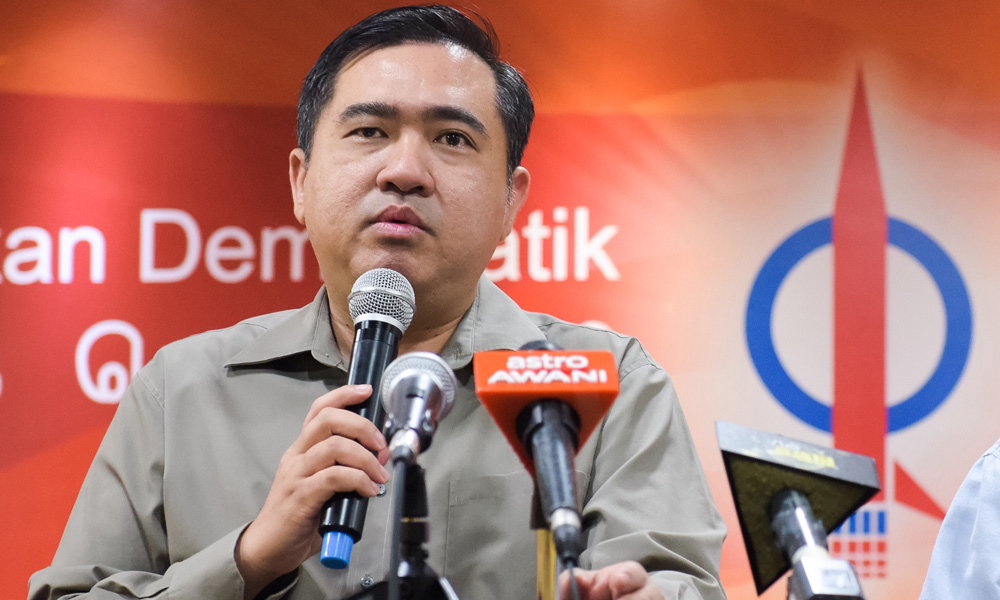 Seremban MP Anthony Loke (photo) echoed this, and voiced concerns on the proposal to make election spending limitless.
"It's an attempt to legalise money politics in elections. You are giving unlimited freedom to candidates to spend as much as they want, to buy votes.
"They can easily cover up this under the pretext of paying political workers," Loke said.
The DAP lawmaker said if BN felt restricted by the spending limits of RM100,000 for state seats and RM200,000 for parliamentary seats, it should instead have brought it to Parliament for a hike in the limits to be negotiated.
Rafizi also rubbished the proposal to ban political funding from foreign sources, government-linked companies and companies that receive government contracts.
'The money can come from CIA'
"The money can come from the CIA, and will end up as some local donation from some kampung.
"The reverse can be true," he said, adding that there were many ways to circumvent the ban by manipulating the global financial systems.
This, Rafizi claimed, was how 1MDB money ended up as 'foreign donation' to Najib, referring to allegations that the prime minister's RM2.6 billion Saudi donation, before the 2013 general election, actually came from the state investment firm.
Najib has denied these allegations.
Likewise, Shah Alam MP and Parti Amanah Negara (Amanah) communications director Khalid Samad said the practice of cronyism in the government would mean that the ban on certain corporate donations could still be circumvented.
Loke also took issue with the proposal to ban anonymous donations above RM3,000.
He said there was no assurance that the suggestion to protect donors from victimisation would be effective, and that the government won't punish those who support the opposition.
"You have to understand the mindset of small businesses. They are afraid that their licences and permits will not be accepted, and that an unseen hand will penalise them," Loke added.
Ultimately, Khalid said, he simply did not trust the BN government to properly implement or enforce any of the proposals.
"I don't trust the people who are going to enforce it. It's a good proposal, but there will be abuse, there will be misuse," he added.
The national consultative committee on political financing was set up following a backlash on the RM2.6 billion issue.
Najib shifted blame for his non-disclosure of the donation to the opposition, saying parties like DAP had opposed his suggestion on political funding reforms.
DAP has denied this allegation.


