



NGO: Barring Siti Kasim from Orang Asli clients 'arbitrary', in 'bad faith'
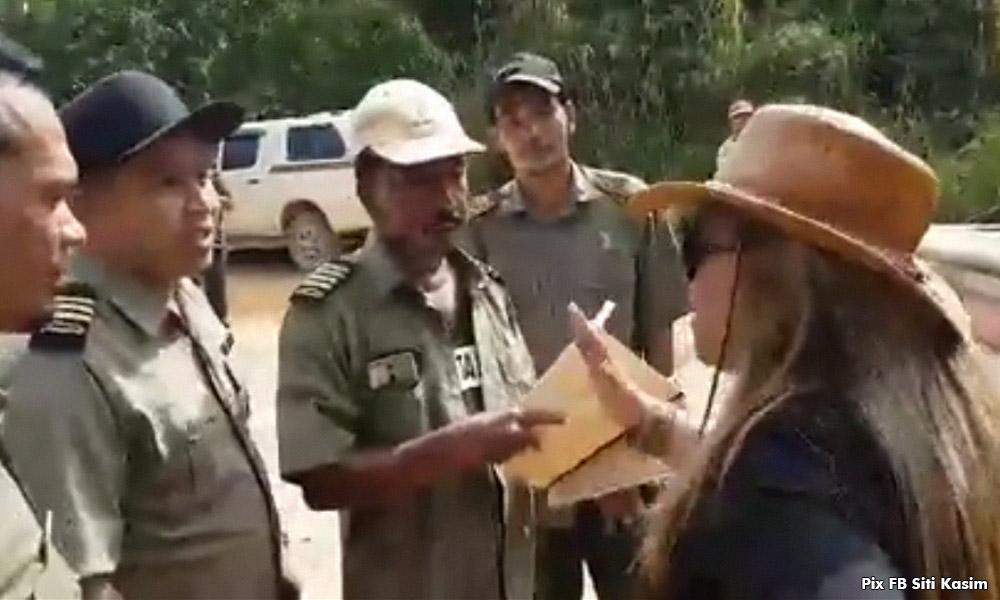
'Arbitrary' and done in 'bad faith' was how Lawyers for Liberty (LFL) described the Kelantan State Forestry Department's decision to block lawyer Siti Kasim from meeting her clients in the Pos Tohoi Orang Asli settlement in Gua Musang, Kelantan.
"The restriction imposed on Siti and other ‘outsiders’, purportedly applied under Section 47 of the National Forestry Act 1984 can only be described as arbitrary and done in bad faith as it is designed to stop the Orang Asli from receiving ‘outside’ assistance in their struggle to protect their customary lands and traditional livelihoods.
"It is also clearly a form of retaliation against Siti for her efforts that had made national news and had put the Kelantan government in bad light," LFL executive director Eric Paulsen said in a statement today.
'Arbitrary' and done in 'bad faith' was how Lawyers for Liberty (LFL) described the Kelantan State Forestry Department's decision to block lawyer Siti Kasim from meeting her clients in the Pos Tohoi Orang Asli settlement in Gua Musang, Kelantan.
"The restriction imposed on Siti and other ‘outsiders’, purportedly applied under Section 47 of the National Forestry Act 1984 can only be described as arbitrary and done in bad faith as it is designed to stop the Orang Asli from receiving ‘outside’ assistance in their struggle to protect their customary lands and traditional livelihoods.
"It is also clearly a form of retaliation against Siti for her efforts that had made national news and had put the Kelantan government in bad light," LFL executive director Eric Paulsen said in a statement today.
Siti had been providing legal assistance to the Orang Asli community for years now and had not been restricted from the forest reserve before, he said.
Her Temiar Orang Asli clients, he added, are in the midst of an ongoing protest against the logging done within their customary lands in the forest reserve, and she has been visiting them to receive instructions on legal action to enforce their customary land rights.
"The sudden restriction imposed has also prevented numerous other parties who are concerned with the well-being of the Orang Asli, including NGOs delivering food aid as well as traders to the Balah forest reserve," he said.
Freedom of movement is a guaranteed right under Article 9(2) of the Federal Constitution and can only be restricted for the security of the federation, public order, public health or the punishment of offenders, he pointed out.
"Clearly, none of the restrictions apply to Siti and others who are out to assist the Orang Asli.
"Further, by preventing the Orang Asli from access to their legal counsel, their right under Article 5 of the constitution has been breached."
LFL, he said, calls on the federal and state governments to acknowledge the Orang Asli's rights over their customary lands, as already recognised by the highest courts of the land.
Siti Kasim was blocked on Wednesday from sending food and supplies to her clients in the Pos Tohoi Orang Asli settlement, where they have mounted a blockade since Sept 26.
She said authorities had also put up a signboard barring all suppliers and traders from entering the village, citing Section 47(e) of the National Forestry Act.
Section 47(e) of the Act states that no entry is allowed into forest reserves without a written permission from the Forestry Department director, with entry allowed for the reason stated on the permit.
Siti stressed that she was invited by the villagers and that a lawyer cannot be barred from accessing her clients.
MP: Abuse of Forestry Act
Meanwhile, Sungai Siput MP Dr Michael Jeyakumar said he lodged a police report in Ipoh this morning over the matter for possible abuse of power.
The PSM leader urged the police to investigate who had given the instructions to bar the 'outsiders' from the settlement, saying this went against the intentions of the Forestry Act.
"The power of the Forestry Department (under the Act) is to protect the forest from commercial encroachment, not to lock in the Orang Asli in their quest to protect destruction of the forest around their kampong," said Jeyakumar in a statement.
"The Forestry Department's actions have encroached on the human rights of the Pos Tohoi and Simpor Orang Asli communities," he said in his police report.
The report calls on the police to investigate if the move was the Forestry Department's initiative or the request of a Kelantan exco.
It also wants a probe into whether logging companies are involved in the move and if any corruption is involved, and into the abuse of Article 9(2) of the Federal Constitution that guarantees freedom of movement.
"It can only be done because of national security, in the name of peace and for health interests.
"Why were the Orang Asli closed off? On what grounds?"
He pointed out Kelantan Deputy Menteri Besar Mohd Amar Nik Abdullah's promise in July 2014 to set up a task force to look into the Orang Asli's complaints has come to naught and logging continues.
The PSM leader added despite the announcement on Oct 4 that logging would temporarily be suspended, the locals now find they are blocked from accessing the forest.
Outsiders bringing supplies and legal aid have also been blocked, he said.
"Isn't the shutting off of supply of basic necessities such as food and medicines also a crime?" Jeyakumar asked.
'Putrajaya has duty to protect Orang Asli'
Meanwhile, the Malaysian Bar said it viewed with concern the Kelantan government's stance on Orang Asli rights in and over their customary and traditional areas.
While state governments possess constitutional powers in respect of matters relating to lands, many court decisions favouring Orang Asli customary rights have unequivocally established that such powers are not absolute.
"The Malaysian courts have also ruled that the federal and state governments owe a fiduciary duty to protect Orang Asli land rights, and must not act in a manner inconsistent with such rights," said Malaysian Bar president Steven Thiru.
Thiru said it was unconscionable for the federal government to abdicate responsibility in protecting the rights of the Orang Asli community.
Article 83 of the Federal Constitution clothes the federal government with the legal power to acquire state land for federal purposes, which include the welfare of the Orang Asli.
"In the past, the federal government has legislated and formulated policies in respect of land and resource matters through the National Land Council, where it holds de facto control and power.
"It is therefore disingenuous of the federal government to suggest that it is completely powerless to assist the Orang Asli in gaining legal recognition to their customary areas," he said.
Thiru urged the federal government to immediately act upon its June 2015 decision to implement the 18 recommendations in the 2013 Malaysian Human Rights Commission (Suhakam) report of the national inquiry into the land rights of indigenous peoples in Malaysia.
"Such an approach would also be in line with the express commitment undertaken by the Malaysian government when it voted in favour of adopting the United Nations Declaration on the Rights of Indigenous Peoples in 2007," he said.
Thiru also condemned the Kelantan government's move to bar outsiders from visiting the Orang Asli, including from receiving legal counsel.
"The Malaysian Bar calls on the authorities to dismantle this blockade, which is another act of discrimination against this marginalised and vulnerable people that deserves nothing less than unreserved condemnation.
"We urge the Kelantan government to forthwith halt all logging activities carried out in Orang Asli areas, and we call upon the federal and state governments to revise their land, resource and environmental policies in a manner that gives full effect to the legal pronouncements of the Malaysian superior courts recognising Orang Asli customary rights to their lands, territories and resources," he said.


Report this comment
Are you sure you want to delete this comment?
This action cannot be undone.