



Researcher: Race play can both help and hinder national politics
An Indonesian activist has suggested that elements of “racism” in politics is a subjective issue, one that could either help to boost, or impede the growth of a democracy.
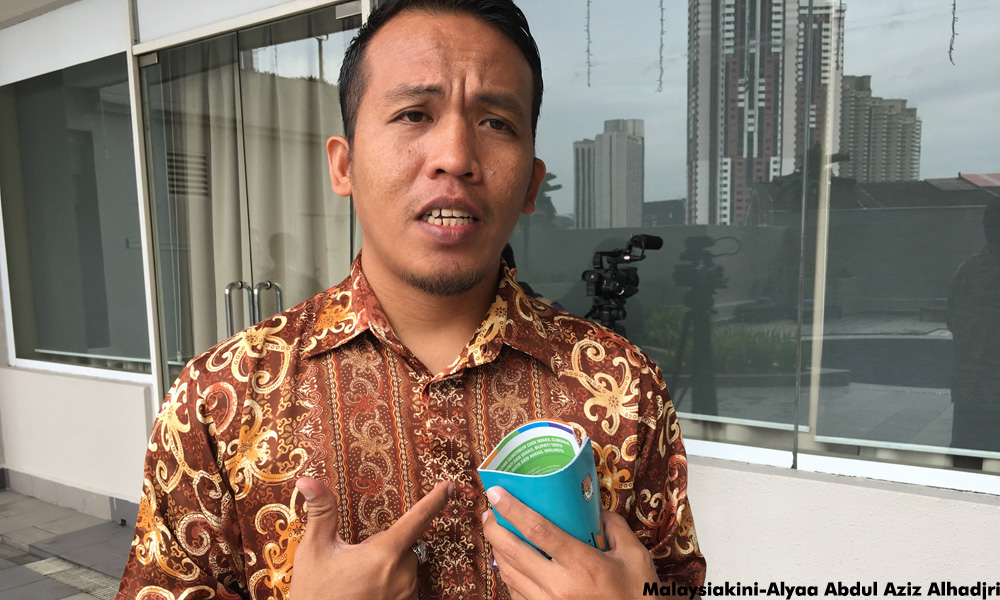
Kholilullah Pasaribu, a researcher from Indonesia’s Association for Elections & Democracy, told Malaysiakini that there are dissenting views on what constitutes acceptable elements of racism in politics.
An Indonesian activist has suggested that elements of “racism” in politics is a subjective issue, one that could either help to boost, or impede the growth of a democracy.
Kholilullah Pasaribu, a researcher from Indonesia’s Association for Elections & Democracy, told Malaysiakini that there are dissenting views on what constitutes acceptable elements of racism in politics.
“In an election, what we are against is ‘dirty politics’ based on lies against another party,” he said when met on the sidelines of a regional forum co-organised by Suaram and Korean NGO May 18 Memorial Foundation at a hotel in Kuala Lumpur.
He said the same principle also applies in Malaysia where the major ruling political parties are divided according to racial lines. Something which demonstrates how race can be a common platform for political strength.
“Efforts by politicians to attract support by focusing on similarities based on race is acceptable but it could have positive or negative outcomes,” he noted.
Kholilullah said he personally believes it is a healthy culture when people gather under racial or religious banners, and that it is only wrong if either or both elements are used to target, vilify or attack others.
Citing the recent demonstration against Jakarta governor Basuki ‘Ahok’ Tjahaja Purnama, Kholilullah said it is an example of a group of people participating in a “political dynamic” and exercising their right to freedom of expression.
“If someone said, ‘I am Chinese and I want to vote for Ahok because he is Chinese or Christian’, that is okay.
“But if someone else said ‘he (Ahok) is a Christian and a threat to our religion’, that is wrong,” he argued.
Reuters on Oct 14 reported that thousands of Muslims from Indonesia's Islamic Defender Front (FPI) and other supporting NGOs held a protest against Ahok’s alleged defamation of a Quranic verse on restrictions against a Muslim from electing a non-Muslim leader.
“The demonstration is not against the Chinese. The protesters rejected Ahok’s use of language which they believe was defamatory to Islam,” said Kholilullah.
According to Indonesian media reports, the protesters referred to Ahok’s urging on Sept 27 in Pulau Seribu, an island off Jakarta, for the people to not be fooled by others who purportedly used the same verse from the Al-Maidah chapter to their political advantage.
Police reports against Ahok have also been lodged for alleged defamation of religion, according to media reports.
Reuters had described the demonstration as possibly further fuelling ethnic tensions ahead of Ahok's re-election bid in February.
Commenting further, Kholilullah said democracy in Indonesia is now at a point where protesters, the government as well as authorities have over time matured in their responses.
He said the FPI, for one, was known for their hardline stance on Islam, but yet the demonstration had ended peacefully with police and the military facilitating their long march from the Istiqlal Mosque in Jakarta to the governor’s office.
“So long as these political dynamics does not result in physical violence, it is okay.
“The state cannot stop such dynamics. It would be a fatal error in a democracy,” he stressed.
‘Facilitate public protests’
While stressing that the authorities have a role to anticipate against possible violence, Kholilullah said the Malaysian government should realise that facilitating public protests would only help the country’s overall development.
“Indonesia may be far behind Malaysia in terms of economic developments but that is not because we have opened up our democratic channels,” he said in reference to institutional reforms implemented since the downfall of Soeharto’s dictatorial regime in 1998.
He said this when asked for comments on the series of clashes between electoral reform coalition Bersih and their detractors throughout the ongoing nationwide convoy leading up to the Nov 19 Bersih 5 rally.
The rhetoric being spewed by the anti-Bersih red-shirts could at times turn towards racist-like sentiments, he noted.
Umno Sungai Besar chief Jamal Md Yunos, leader of the red-shirts movement, was arrested yesterday and served with a two-day remand order.


Report this comment
Are you sure you want to delete this comment?
This action cannot be undone.