



Tough to shrink the bloated public service, Tony Pua admits
With the government allocating 36 percent of the 2017 Budget for the emoluments of civil servants, there have been calls to shrink the bloated public sector.
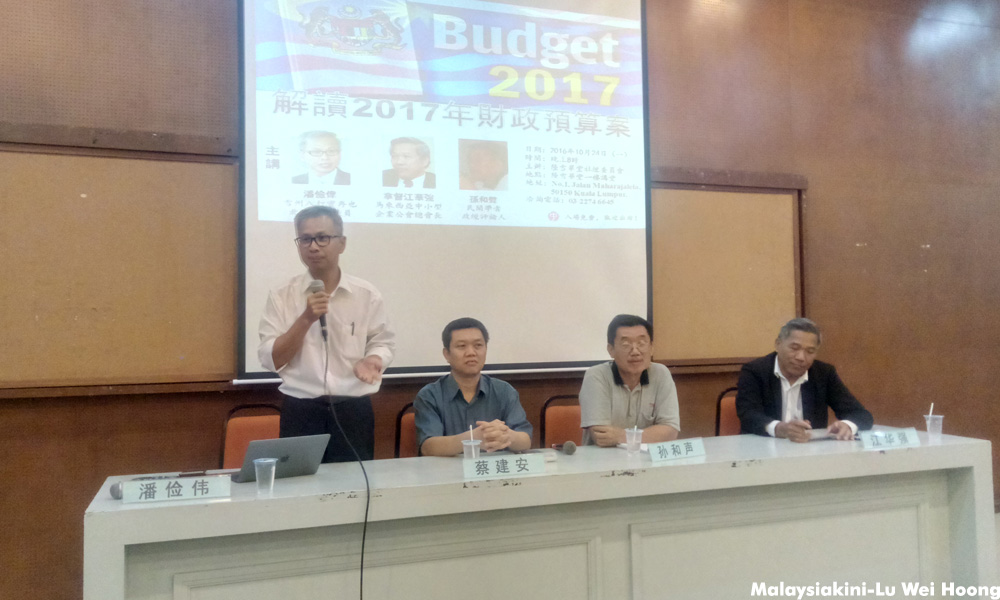
However, the MP for Petaling Jaya Utara, Tony Pua, does not think that cutting down the size of the civil service will be a viable solution, should the opposition take over Putrajaya.
Shrinking the public sector, Pua said, will likely upset the entire civil service and paralyse the government's operations.
With the government allocating 36 percent of the 2017 Budget for the emoluments of civil servants, there have been calls to shrink the bloated public sector.
However, the MP for Petaling Jaya Utara, Tony Pua, does not think that cutting down the size of the civil service will be a viable solution, should the opposition take over Putrajaya.
Shrinking the public sector, Pua said, will likely upset the entire civil service and paralyse the government's operations.
“Say, if you want to retrench five percent of the civil servants, the rest 95 percent would not cooperate with you, and it (the cut) will not be a realistic move.
“We call it deadweight, which you have to bear with,” he told a forum in Mandarin titled “Analysing Budget 2017” at the Kuala Lumpur and Selangor Chinese Assembly Hall yesterday.
Paid, but need not work
To resolve the problem, Pua suggested that a segment of the civil servants be kept on the payroll but need not work.
“In some foreign countries, such civil servants take their salaries, but stay at home instead of going to the office. This is because they may incur additional expenses in travelling and time spent in the office.
“Allowing them to take salaries without working is better than they working and burdening the government,” added Pua, who is DAP national publicity secretary.
Currently, Malaysia has 1.6 million civil servants, a proportionally high figure for the country’s population of 32 million people.
Emoluments for the public sector in the annual federal budgets have been increasing from RM42.2 billion in 2010 to RM77.4 million in 2017, nearly a two-fold increase over a period of seven years, despite government revenue falling.
Shrinking the huge federal public sector has been a politically sensitive issue, with the ruling coalition and the opposition vying for the massive vote bank in the coming general election, which is speculated to be held earlier than scheduled.
No focus on vocational education
Another panellist, Soon Hoh Sing, blamed the government's ignorance of vocational education as another indirect cause of the bloated public service.
Soon, an economics analyst, said the government, since the late 1990s, created many general degree graduates but their skills mismatch the demands of the private sector.
This has caused many graduates to be unemployed, and be a hotbed for social unrest, he said, adding that advanced countries such as Taiwan and Germany have significant numbers of vocational education graduates over other graduates.
“This is an serious problem. If you study political economy, you will find that in a country facing unrests, the cause is high unemployment among the graduates.
“The Arab Spring was born in this context. To prevent this, the Malaysian government does not have a choice but to expand civil servant quota to absorb the graduates,” Soon said.
Otherwise, he added, many youths might join the federal opposition to protest against the ruling party.


Are you sure you want to delete this comment?
This action cannot be undone.