


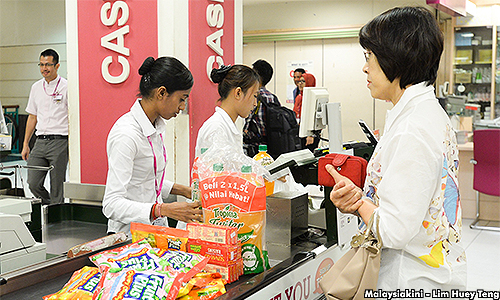

Nielsen: Malaysia’s consumer confidence stable in Q3
Malaysia recorded a stable consumer confidence level in the third quarter of 2016 with an increase of only two index points to 89 percentage points compared with the second quarter of 2016, according to the latest Nielsen Global Survey of Consumer Confidence and Spending Intentions.
Nielsen said although Malaysia was the 30th most confident country globally, it was the lowest in the South-East Asia region and it continued to be pessismistic about the future.
The survey involved more than 30,000 respondents with Internet access in 63 countries. Consumer confidence levels above and below a baseline of 100 indicate degrees of optimism and pessimism, respectively.
Nielsen Malaysia country manager Richard Hall said with little change in the nation’s economic outlook, the low exchange rate coupled with unstable oil prices, there was little for consumers to shift their mind set on the country’s future outlook.
“Hence, it was no real surprise to see the third quarter Consumer Confidence Index for Malaysia to be fairly stable but still on the pessimistic side,” he said in a statement today.
The Nielsen survey said Malaysians’ main concerns still revolve around the economy and job security, with 77 percent of consumers believing that the nation is in a recessionary state.
Plans to save for the future remain a core priority in South-East Asia, Nielsen said.
Consumers in the region continue to be listed as the world’s top 10 most active savers with Vietnamese taking top spot (78 percent) followed by Indonesians (77 percent) in second. Malaysians and Singaporeans are ranked sixth (65 percent) with Thais in eighth place (62 percent) and Filipinos taking ninth spot (60 percent).
As for finances and having set targets for savings and investments, two in five Malaysians are channeling any spare cash after covering essential living expenses to pay off debts, credit cards or loans (40 percent) while one-third are investing in shares or stocks or mutual funds (34 percent).
At least one quarter of Malaysians are also planning for their golden years by depositing their extra monies in the form of a retirement fund (26 percent), Nielsen added.
- Bernama


Are you sure you want to delete this comment?
This action cannot be undone.