
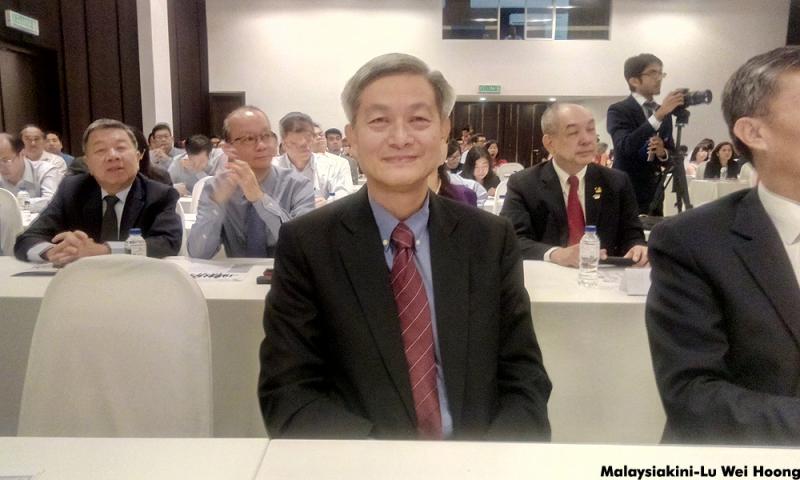
The contingent liabilities of government-linked companies (GLC) should be included into the federal budget, opined senior economist Yeah Kim Leng.

Yeah said Putrajaya could not ignore contingent liability of companies that it owned despite receiving fair "A-" credit rating from major rating agencies.

"We need to watch for the longer term debt issues that Malaysia is facing. This is because we have increasing debt levels which will be passed to next generation because for high level of debt especially (in form of) contingent liability.

"And as you all know that it was mentioned in the parliament that 1MDB debt is not considered federal government debt.

"I think, maybe, it is not for our generation (to pay back), but the next generation have to increase debt servicing cost for national debt," he told the Budget Commentary 2017 forum, organised by the Real Estate and Developers Housing Association (Rehda).

In a parliamentary written reply yesterday, Prime Minister Najib Abdul Razak said 1MDB's debts are not considered as part of the federal government's debts.

This was despite the fact that 1MDB is wholly-oned by Finance Ministry Inc. At its peak, 1MDB was reported to have accumulated upwards of RM40 billion in debt.

Since last year, 1MDB has been aggressively selling off some of its assets and therefore shed some of its liabilities as well.

However, according to the Public Accounts Committee's investigations, Putrajaya still has a RM20.31 billion at stake in 1MDB.

The PAC said the federal government had committed RM5.8 billion in government-guaranteed loans, RM13.56 billion through letters of support and RM950 million in standby credit.

Letters of support were considered part of government exposure as it states that the government would step in to honour bond payments should 1MDB fail to do so.

Several opposition MPs had accused the government of attempting to hide its debts through GLCs to create an illusion that government-to-GDP ratio was being lowered.

Yeah, who is a Sunway University Business School professor, said it was important for the government to include an analysis of sovereign contingent liability claim that will happen in the future in order for it to be considered in the budgetary process.

"Then the government can take measures to address it," he said, adding that such an analysis would also look out for possible default.

Yeah believed that major international rating agencies have taken contingent liabilities into consideration before awarding "A-" to Malaysia sovereignty rating.

"The rating agency do take account into consideration of the amount of contingent liabilities although they may not publish it... They will have to include it as it may not have comprehensive or complete picture."