



Ideas: Transparency, not banning, best way to regulate NGO funding
The solution to the issue of NGO funding is not to ban foreign monies, but for organisations to be transparent about their offshore financing, said think tank Institute for Democracy and Economic Affairs (Ideas).
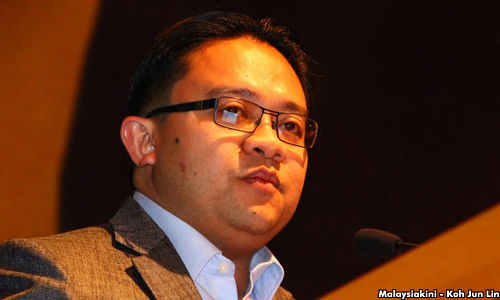
"A ban on foreign funding is unnecessary but I fully support the spirit behind these suggestions - that is to promote and enhance transparency and accountability among NGOs," said its chief executive Wan Saiful Wan Jan in a statement.
"If NGOs call for greater transparency and accountability in government, then they should also apply those principles to themselves and lead by example."
He welcomed the proposed Political Donations and Expenditure Act (PDEA) to regulate NGO funding, but said it should not apply to NGOs in toto as they are different from political parties.
The solution to the issue of NGO funding is not to ban foreign monies, but for organisations to be transparent about their offshore financing, said think tank Institute for Democracy and Economic Affairs (Ideas).
"A ban on foreign funding is unnecessary but I fully support the spirit behind these suggestions - that is to promote and enhance transparency and accountability among NGOs," said its chief executive Wan Saiful Wan Jan in a statement.
"If NGOs call for greater transparency and accountability in government, then they should also apply those principles to themselves and lead by example."
He welcomed the proposed Political Donations and Expenditure Act (PDEA) to regulate NGO funding, but said it should not apply to NGOs in toto as they are different from political parties.
Wan Saiful also questioned the need to restrict foreign funding for 'politically-interested' NGOs.
"However, I wonder what is meant by the term 'politically-interested' NGOs. Does this mean that any organisation interested in pursuing matters such as transparency and good governance is also deemed politically inclined?
"What about local chapters of international bodies like Transparency International or Amnesty International? Will they no longer be able to receive foreign funds from their headquarters?" asked Wan Saiful.
Wan Saiful said most NGOs were set up to advance a social cause, usually environmental, economic, welfare or health, and while their issues can involve political subject matter, the groups are not political parties per se.
"The funding obtained is used to implement projects which go towards addressing issues which help Malaysians. It is important to remember that NGOs are run by people who are working towards a better Malaysia. Those issues can indeed be political. I see no problem with this," he said.
Form charities commission
The Ideas chief argued that the proper way to regulate civil society groups is to form a Charities Commission, as opposed to taking the PDEA wholesale, citing normal practices in developed countries.
"The United Kingdom's Charity Commission could be one potential model to consider. Its board members are independent and their interests and previous affiliations are even listed online, to ensure that any conflicts can be highlighted by the public.
"The commission's aims would be ensuring that NGOs provide truthful information on their activities and expenditure. This strengthens public confidence in the NGO community and increases the government's understanding of this sector," said Wan Saiful.
In any case, he added that NGOs should be encouraged to speak up and be able to voice out criticism.
"They must not be punished for speaking truths and realities. I am certain that a mature government like ours is more than willing and happy to receive constructive criticism."
He was commenting on calls by federal ministers Paul Low and Azalina Othman to ban foreign funding and for greater scrutiny over 'political' NGOs.
This follow calls for censure against organisations that receive funding from foreign entities with ties to Open Society Foundations, linked to American billionaire George Soros.


