



Will new political parties have impact on Umno?
Next week's Umno general assembly 2016 will be unusual, in a sense, as two seats in the leadership line-up will be conspicuously empty.
The annual meetings of the nation's largest Malay-based political party, boasting a membership of 3.5 million, often come under the scrutiny of political observers, but this year's assembly is expected to generate more interest for obvious reasons.
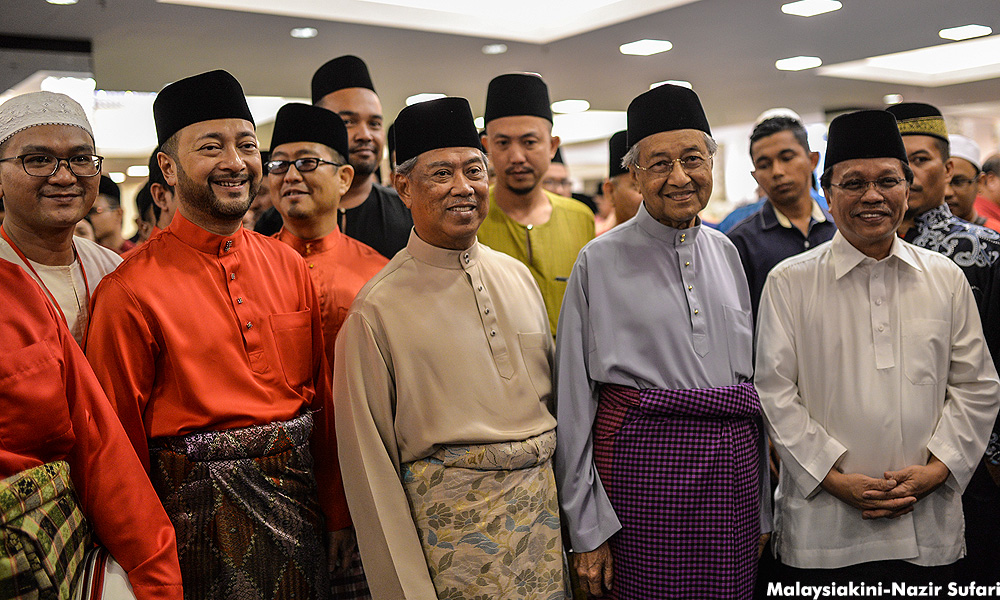
Former deputy prime minister Muhyiddin Yassin was sacked as Umno deputy president on June 24 while vice-president Mohd Shafie Apdal was removed from his post on July 4 by the party's supreme council.
Besides the sacking, the fact that some division leaders and grassroots members are now no longer with the party is also set to dominate the delegates' radar.
The nation's political landscape witnessed some changes after the 13th general election with the mushrooming of new political parties and rebranding of a few existing ones. Two parties were set up out of dissatisfaction with the Umno leadership while another was spearheaded by a group of disgruntled PAS leaders who were ousted from their posts at the party polls in 2015.
Besides Umno, PAS and PKR, there are now three other Malay-based parties, namely Parti Amanah Negara (Amanah), Parti Pribumi Bersatu Malaysia (Bersatu) and Sabah-based Parti Warisan Sabah (PWS).
The dormant Malaysian Workers Party was rebranded as Amanah, led by former PAS deputy president Mohamad Sabu, while Mohd Shafie took over Parti Pembangunan Warisan Sabah and renamed it PWS.
Although Bersatu and PWS have declared that they are multiracial parties, nevertheless their main backers comprise Malays and Sabah bumiputeras.
While the sprouting up of new political parties is a celebration of democratic principles, it has led to new challenges for Umno to deal with. The party, which is the backbone of BN, obviously has to work exceptionally hard to ensure that it continues to enjoy the support of the people, especially Malay voters, at the next general election.
Implications for Umno
The question now is, will Umno be affected by the new Malay-based parties?
Political analyst Che Hamdan Che Mohd Razali, who is a lecturer at Universiti Teknologi Mara's Jengka campus, feels that it would to a certain extent have an impact on Umno.
According to him, the new parties pose a huge challenge to Umno, which is already being harassed on various issues by the opposition.
"Apart from Amanah, the other two, Bersatu and PWS, are Umno splinter parties. Hence, Umno will somewhat be affected in terms of support, influence and strength because the new party activists were previously from Umno too.
"What's more worrying is that these former Umno leaders had served the party for a long time and they may make use of Umno's strengths and weaknesses to ensure the survival of their own political agenda," he told Bernama.
Having observed that Umno is largely dependent on its grassroots support to fend off competition from rival parties that claim to represent the Malays, Che Hamdan said the party's central leadership should not entirely rely on feedback from the division and branch leaders as they may not give an accurate picture of what the situation was like among the masses.
"Sometimes, the information relayed (by the division and branch leaders) to the top leaders is merely cosmetic, which result in them (top leaders) misreading the situation at the grass roots and not addressing important issues properly," said Che Hamdan.
He said it was imperative that Umno reminded its lower echelon leaders of the crucial role they play as agents of change at the grassroots and to reinforce solidarity among party members and even among the people in general.
Malaysian Academic Association Congress president Prof Mohd Idrus Mohd Masirin believed that the new parties' entry into the local political scene would have an impact on the influence wielded by Umno and public support for the
party at the next general election.
"The Umno leadership must view these parties as a challenge," he said, adding that the party derives its strength mainly from the spirit of trustworthiness exuded by its members towards their leaders.
"In my opinion, the time has come for Umno to return to its original struggle (of defending Malay rights), and if it fails to safeguard the interests of the Malays, other parties will step in to do so... if this takes place, Umno's struggle will be affected and it will become more and more irrelevant," he said.
Focus of general assembly
Today's political landscape demands Umno to offer a brand of politics that appeals to all the people, particularly the Y and Z generations.
In keeping with the changing times, it is no longer effective to play up historical sentiments in order to gain the support, and pique the interest, of the younger generations
On the issues that may demand Umno's attention at this year's general assembly, Che Hamdan said he expected it to focus on cleansing the party of elements that were out to destroy the credibility of the party and its leaders.
"The party also has to devote much attention to the work it has to do to rise to the challenges it will face at the next general election. Another important area it has to focus on is understanding the real problems faced by the people," he said.
He added that another important agenda for Umno would be to develop strategies for support and social networking systems for the middle and lower-income groups.
Mohd Idrus said he expected Umno to debate on issues related to the party bleadership, current state of the nation's economy and security threats.
The general assembly will be held from Nov 29 to Dec 3 at the Putra World Trade Centre in Kuala Lumpur.
- Bernama


Are you sure you want to delete this comment?
This action cannot be undone.