


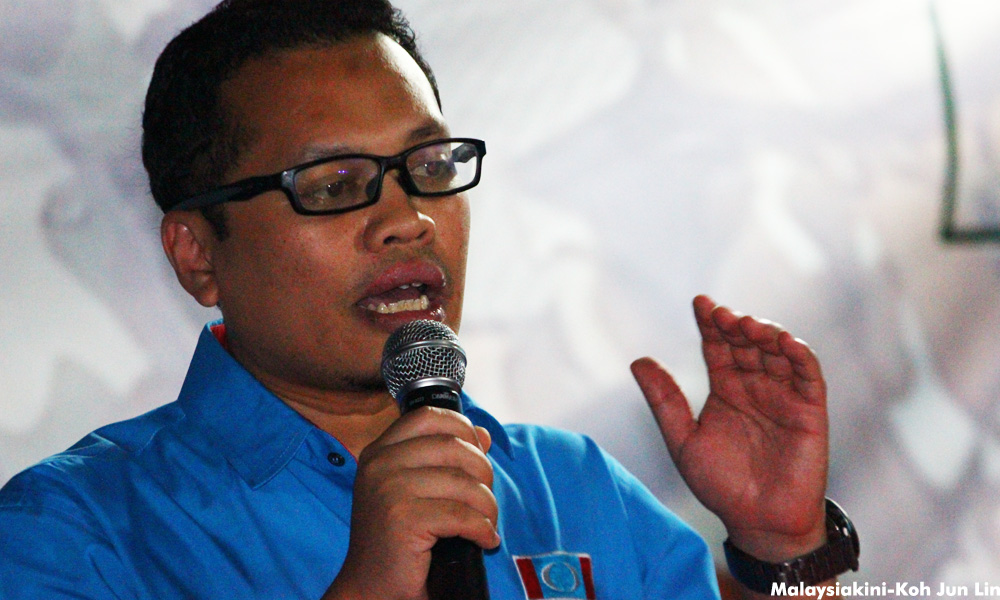

Exco member defends 'Anwar's Thoughts' seminar
Selangor exco member Nik Nazmi Nik Ahmad has defended the state government’s role in organising the seminar on ‘The Thoughts of Anwar Ibrahim’.
He dismissed comparisons between the seminar and those organised by the federal government’s Special Affairs Department (Jasa), in which civil servants would be told to attend.
“No, because we are open. We don’t make attendance compulsory, and for those who attend, they may listen to the views (with an open mind). If they disagree, they can voice their own views,” Nik Nazmi said.
Selangor exco member Nik Nazmi Nik Ahmad has defended the state government’s role in organising the ‘The Thoughts of Anwar Ibrahim’ seminar.
He dismissed comparisons between the seminar and those organised by the federal government’s Special Affairs Department (Jasa), in which civil servants would be told to attend.
“No, because we are open. We don’t make attendance compulsory and for those who attend, they may listen to the views (with an open mind). If they disagree, they can voice their own views.
 “I think we cannot deny Anwar’s contributions to the economy, to religion, and so on in Malaysia,” Nik Nazmi told Malaysiakini when contacted today.
The seminar is organised by the Selangor Standing Committee on Education, Human Capital Development, Science Technology and Innovation, which is headed by Nik Nazmi.
He said NGOs and other groups from within and outside of Selangor have been invited to the seminar.
It will be held at Dewan Jubli Perak in Shah Alam on Monday, Nov 28.
Nik Nazmi said the programme would feature prominent figures in religion and in economics to discuss Anwar’s contributions in areas such as education and in Muslim youth activism.
Anwar, who is serving a five-year jail term for sodomy, was a founding member of Angkatan Belia Islam Malaysia (Abim) in his early years. He was education minister from 1986 to 1991.
Yesterday, a letter from the Selangor Islamic Religious Affairs Department (Jais) inviting religious teachers to the seminar drew the ire of Selangor Umno.
Umno supreme council member Sohaimi Shahadan said Jais was wrong to extend the invitation, claiming that Anwar’s past conduct, such as his sodomy conviction and his support for Bersih, were incompatible with Islam.
“Is Jais too 'blind' to see his misdeeds as opposition leader?” he queried.
The Selangor Islamic Religious Council (Mais) instructed Jais today to rescind the invitation letter.
Asked about the invitation from Jais, Nik Nazmi said Jais was merely asked to extend the invitation to Islamic religious teachers, in their capacity as the state’s civil servants.


Are you sure you want to delete this comment?
This action cannot be undone.