




42 child refugees in Msian detention camps
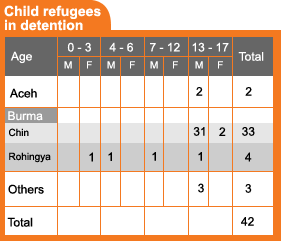
There are 42 child refugees held together with their parents in the 14 immigration detention centres here, said the United Nations High Commissioner for Refugees (UNHCR).
There are 42 child refugees held together with their parents in the 14 immigration detention centres here, said the United Nations High Commissioner for Refugees (UNHCR).
Of the 39 boys and three girls, the youngest is a Rohingyan child less than three-years-old. The majority of others are between the ages of 13 and 17.
According to UNHCR, 33 of them are Burmese Chins, three are Rohingyans and the rest are Acehnese and others.
The longest child resident in an immigration detention center was detained for nine months while an Acehnese woman had delivered a baby under detention last year but has since been released.
 UNHCR head Volker Turk, when met at his office in Kuala Lumpur yesterday, said he personally knows of 19 child refugees of various nationalities held at the Semenyih detention center alone.
He said their detention not only contravenes the UN Convention on the Rights of the Child (CRC) of which Malaysia is a signatory but also UNHCR's own Guidelines on Refugee Children, which state that minors who are asylum-seekers should not be detained.
"In principle, children should not be detained at all. It is harmful to their personal and mental development, and prevents them from gaining access to education," he added.
Dismal conditions
The children's situation, Turk said further, is aggravated by the dismal conditions of immigration detention centers as these were not built for long-term residence but only as 'transits' before being deported or resettled in a third country.
 Human rights groups both within and outside the country have previously highlighted the poor conditions of immigration detention centres in the country characterised by overcrowding, poor hygiene and sanitation, poor food and health-care provisions with verbal and physical abuses by officers guarding the facilities not being uncommon.
Turk said that although there have been improvements in the conditions and running of the centers since they were taken over by the Prisons Department, there was still considerable room for improvement.
"These centers are not made to detain people permanently, so they're not built as 'developed' as prison facilities," he added.
Turk also said the presence of four Rohingya children amongst those detained contradicted the government's promise to recognise Rohingyas as refugees seeking asylum in Malaysia and not subjecting them to arrest and detention.
He was referring to reports in the recent past on large numbers of Rohingyas, including minors, who were arrested and charged for not possessing valid travel documents . The arrests continued after the start of a crackdown on undocumented migrants in March.
During a court proceeding on May 18 before magistrate Mohd Aimi Zaini Mohd Azhar, Rohingyan Rehena Bibi Zafar Ahmad was seen holding on to her four-year-old daughter Sufia Hafiz as the charge was read out.
It is believed that Sufia had been with her mother throughout her detention.
In September last year, Human Rights Commission of Malaysia (Suhakam) revealed that 43 children were being held at the temporary immigration detention centre in Menggatal, Sabah.
That report was followed by a disclosure the next month that 10 child refugees from Aceh and Burma, including a year old baby, were being held in detention.
 Asked to comment on the plight of detained child refugees, Suhakam commissioner Hamdan Adnan said it was not a place that children should be found in.
"Seeing these children sleeping on nothing but a sheet of cloth on the cement floor, sniffling through their runny noses, was very upsetting to see," he said when met earlier in the week.
Dangers of malnutrition
 Migrants workers advocacy group Tenaganita director Dr Irene Fernandez said that neither the physical or psychological welfare of children are protected when they are detained by the immigration authorities.
"There are many children, including babies, who are in immigration detention centers. We have on previous occasions had to provide milk, biscuits and other food to them. After large clamp downs (against undocumented migrants), the conditions become very cramped," she said.
"Such conditions are definitely not appropriate for the special needs of children," said Fernandez, who added that pregnant detainees and breast-feeding mothers and their children are in danger of suffering from malnutrition when detained.
"For someone who is breast-feeding or pregnant, is rice and salted fish enough?" she asked.
In addition to the mental and psychological harm the children suffer from being detained for months on end without access to education and other forms of stimulation, she said problems faced by teenage detainees also need to be addressed by the authorities.
"People voice great concern when its children below ten 10. But for adolescents, this is another area that needs to be looked into because they experience different forms of vulnerability.
"Imagine the trauma of going through your menstruation in detention, for example, and not having sanitary napkins. For a child to go through this, it can very traumatic and very crucial.
"Even after the child has been released, there are no counseling mechanisms to address his or her experiences," she added.
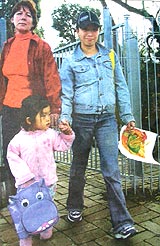 Human rights organisation Suaram said while the media here gives prominent coverage to the case of Malaysian Virginia Leong and her three-year-old daughter Naomi who were detained in Australia since 2001 for immigration offences, Malaysians should not ignore similar situations here.
"A substantial number of refugees and asylum seekers have been enduring vulnerable situations and hardships (in Malaysia) similar to those experienced by Virginia and Naomi," said Suaram coordinator Seah Li Ling.
Australian opposition Labour Party leader Kim Beazley attributed Virginia and Naomi's recent release this week to "pressure from Malaysian news reports."
According to Children Out Of Detention (ChilOut), a group of parents and citizens opposed to the mandatory detention of children in Australian immigration detention centers, there are still 68 children in immigration detention.


