



Myanmar activist urges Najib to save Rohingya
A Myanmar human right activist has urged Malaysian Prime Minister Najib Abdul Razak to lead the international community to impose economic sanctions against Myanmar over the genocide of Rohingya in Rakhine state.
London-based Burma Human Rights Network (BHRN) executive director and founder Kyaw Win proposed this as Najib will be the first head of government to join a major gathering to voice concern about the Rohingya issue on Dec 4.
A Myanmar human right activist has urged Malaysian Prime Minister Najib Abdul Razak to lead the international community to impose economic sanctions against Myanmar over the genocide of Rohingya in Rakhine state.
London-based Burma Human Rights Network (BHRN) executive director and founder Kyaw Win proposed this as Najib will be the first head of government to join a major gathering to voice concern about the Rohingya issue on Dec 4.
The 38-year-old wanted to extend his gratitude personally to Najib on the Dec 4 gathering if the law allowed a foreigner to attend a protest.
"I would like to send a message around the world to follow his step," he said in an interview with Malaysiakini.
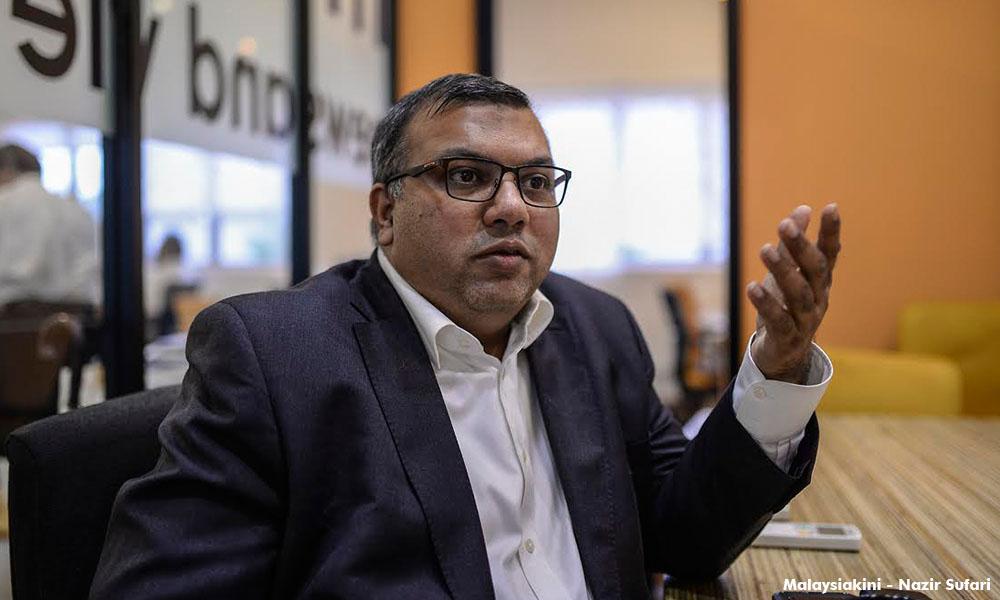
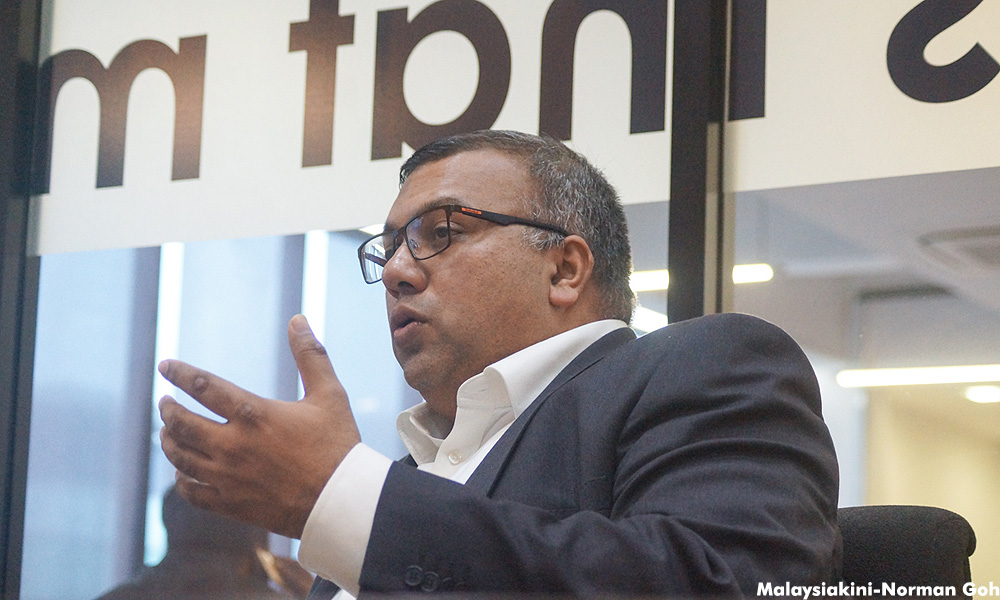 The Myanmar refugee who fled his homeland in 2009 to United Kingdom, is currently on a tour around South East Asia to appeal to Asean communities to intervene against the brutality of the Myanmar army. He arrived in Malaysia from Nov 28 and would be here until Dec 5.
He has found encouraging response in Indonesia and Malaysia thus far and he plans to travel to Thailand later.
Kyaw Win, however, noted that a protest might not be enough to end the plight of the Rohingya.
'Economic sanctions can work'
"Thus, let's not stop here. Saving lives is a very honourable job, why not Prime Minister Najib, who has the heart to do something for the people, head in the right direction?
"(If I see him at the Dec 4 gathering), I would like to discuss with him about the possibilities to save Rohingya, who are at the edge of extermination and the strategies of achieving this," he said.
"I also want to share and update him on the current situation... The military are killing people, gang raping women, looting families, burning houses, destroying food and paddy fields," he said.
Elaborating further in the interview, he said one of the most effective ways would be imposing economic sanctions and an arms embargo against Myanmar, particularly against the Myanmar army who controlled the wealth in the country by being involved in major businesses.
He appealed to Najib to take the lead and forward the economic sanction idea to his international counterparts.
'Aung San played out'
Asean countries may feel the "spillover effect" and be forced to deal with the Rohingya refugees issue if it doesn't put its foot down on the issue, he warned.
Violence against the Rohingya community has intensified in recent days after an attack on Myanmar's army outposts.
International reports have highlighted satellite images where Rohingya villages were razed to the ground.
The Myanmar government has refused to recognise the Rohingya community as citizens despite several generations having lived in the country.
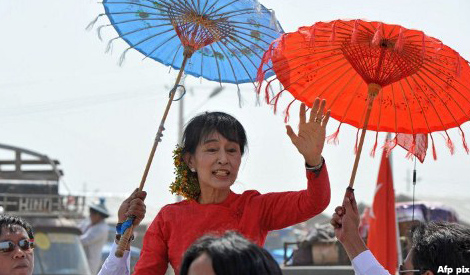 While a few parties in Malaysia have called for Myanmar's leader Aung San Suu Kyi's Nobel Peace Prize to be cancelled following her refusal to deal with the issue, Kyaw Win urged Malaysians to know the real perpetrators behind Rohingya's suffering.
"The first culprit is the military and the army general who are responsible for the chaos, the second is the current government, then followed by extremist Buddhist organisations, which spread hatred," he elaborated.
"Aung San hopes that by coorperating with the army, they will agree with her and support her on what she wants to do. But the army is discrediting her, her reputation is tarnished," he said.
"She silenced the Muslims as soon as she was in power (last November), we don't have Muslim representatives in Parliament. She did not want to upset the army and extremist Buddhists in Burma," he added.
The violence against Rohingya and persecution against other religious and ethnic group are needed to tell the majority Buddhists in Myanmar that the army is able to protect them, said Kyaw Win.
"They want to show that Myanmar needs army involvement in politic and this is the atmosphere they want to create," he said.
'Children dying in Rakhine'
Prior to the recent round of genocide, he said the international society seemed indifferent to Rohingya's plight as they were only concerned about the transition of the Myanmar government from an authoritarian government to a democratic government.
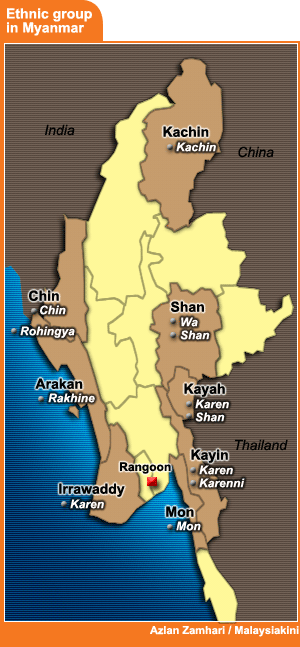 "Rohingya have suffered since 1978. The worst happened in 1991 when a travel restriction was imposed. The Rohingya are living in a 21st-century Nazi ghetto.
"They cannot travel around and have to apply for permission to get married, they cannot have more than two children," he said.
"According to Action Contre la Faim (Action Against Hunger, ACF) report, 20 percent of children out of the 470,000 population at Maungdaw, are in an alarming stage and are going to die. Nobody knows about it because there was no gun fight, (so) nobody cares," he said.
As a result, millions of Rohingya have fled the country to safer neighbouring states, including Malaysia.
Kyaw Win said he was concerned about the treatment the Rohingya community received in Malaysia.
"I realise this is a very big burden on the Malaysian government. But since they are already here, why don't we use the issue to the benefit of Malaysia and the Malaysian public?
"Why not the government invest in them and build them up by offering them education and healthcare. One day, they will definitely contribute to Malaysia's economy and they will pay taxes," he said.
Invest in Rohingya
There are countless cases where former refugees excelled in the countries which provided them shelter and granted them citizenship, he said.
"Take Albert Einstein, he was a refugee himself. Even in the UK's House of Common, there are so many MPs who were once refugees or their families migrated from Germany and Pakistan," he added.
Given a chance, he believed Rohingya people could be Einsteins in every field in the countries they resided.
"But, when you are isolating a large group of people without healthcare, education and dignity, it is human nature to do anything in order to survive and feed their family," he said.
The community may fall victim to human trafficking when they are being isolated, he said.
Malaysia was rocked by the discovery of 139 graves at 28 transit camps by the authorities, which were constructed by human trafficking syndicates along the Malaysia-Thai border, at Wang Kelian, Perlis in May 2015.
"I believe Malaysian people and the government are generous, they have open their arms for us long ago. Since they are here and you don't want to kick them out because this will look bad for you, why not do things the smart way?
"This is a progressive and diverse country, why don't you allow your brother and sister to become part of your family?" he asked.
"You will find that they are the most hardworking people as they know there is no way out for them and they will do their best," he noted.


Are you sure you want to delete this comment?
This action cannot be undone.