



Facebook outlines ways users can report fake news
Facebook yesterday provided details about methods it is testing or has begun implementing to control the distribution of fake news over its social media platform.
Facebook announced a few weeks ago that it was working on improvements to address fake news after massive criticism of its role in influencing the US presidential election.
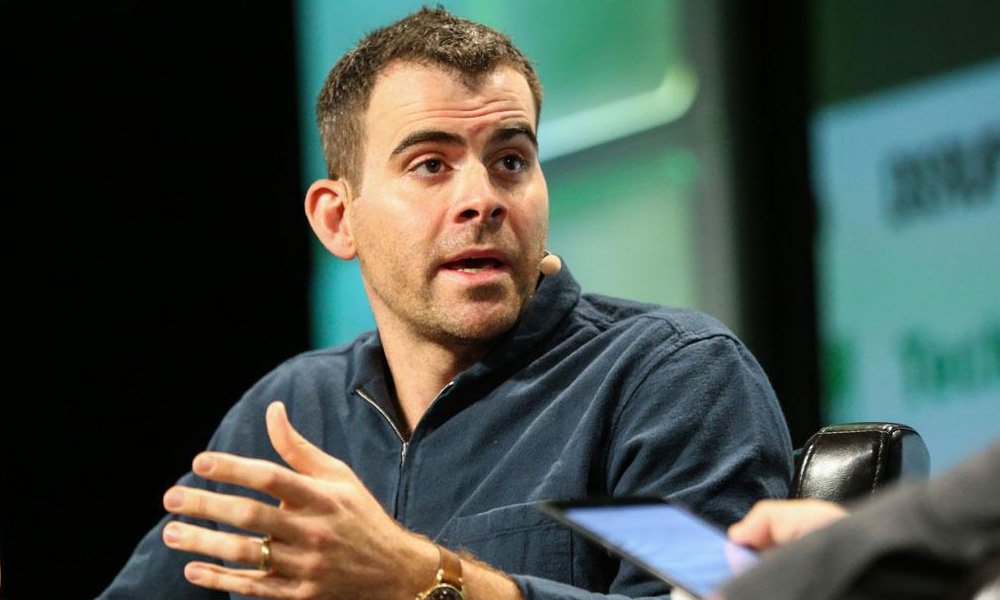
 In a blog entry Facebook manager Adam Mosseri listed four areas he said were focused on "the worst of the worst," defining these as clear hoaxes spread by spammers for their own gain.
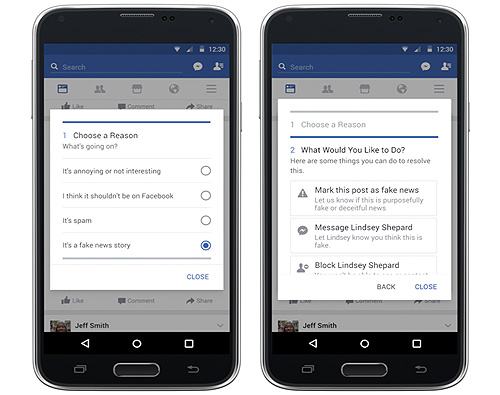
Mosseri said one of the ways making it easier to report a hoax.
Facebook is testing several ways to do this, including clicking the upper right hand corner of a suspected fake news post.
"We've relied heavily on our community for help on this issue, and this can help us detect more fake news," he said.
Another being tested is the flagging of stories as disputed after being identified as fake by fact-checking organisations. Stories reported by Facebook users and other signals will trigger them being sent to the organisations.
"If the fact-checking organisations identify a story as fake, it will get flagged as disputed and there will be a link to the corresponding article explaining why," Mosseri's blog post said. Stories that have been disputed may also appear lower in Facebook's news feed.
The other things being tested are ways to signal when users decline to share stories and ways to reduce the financial incentives to spread fake news on Facebook. After the election it was revealed that some people who spread fake news are paid to do so by advertisers that attached their messages to the fake news stories.
Mosseri said these were just some of the first steps Facebook is taking in the fight against fake news.
"We'll learn from these tests, and iterate and extend them over time," he said.
In the final three months before the US presidential election on Nov 8, sharing and commenting on fake content on Facebook skyrocketed and surpassed the content from major news outlets, according to an analysis by the website Buzzfeed.
Among the fake news stories widely shared was one that said Pope Francis had endorsed Republican Party nominee Donald Trump. Another story described a child sex-trafficking ring, supposedly backed by Democratic Party nominee Hillary Clinton, operating out of a Washington pizzeria's basement.
Despite the story having been debunked, it inspired a North Carolina man to travel to Washington to "self-investigate" the conspiracy theories.
Edgar Maddison Welch walked into the pizzeria and fired shots with an assault rifle on Dec 4. No one was injured, and Welch surrendered after finding no evidence of a child sex-trafficking ring. He faces charges in federal court.
Clinton last week said an "epidemic of malicious fake news and false propaganda" presented a threat to US citizens.
"It's now clear that so-called fake news can have real-world consequences," Clinton said.
- dpa


Are you sure you want to delete this comment?
This action cannot be undone.