



What it's like living with mental disorder in Malaysia
The first time Farida Nadia Faizal Yamimi had suicidal thoughts, she was 10 years old, and she thought she would rather die than take on UPSR.
She later realised her suicidal thoughts came from her self-doubt and self-hate.
“A lot of times, as I grew up, (I thought) hey, if I die, what is the big deal?
“There would be one less mouth to feed, I would be breathing less oxygen and eating less food.
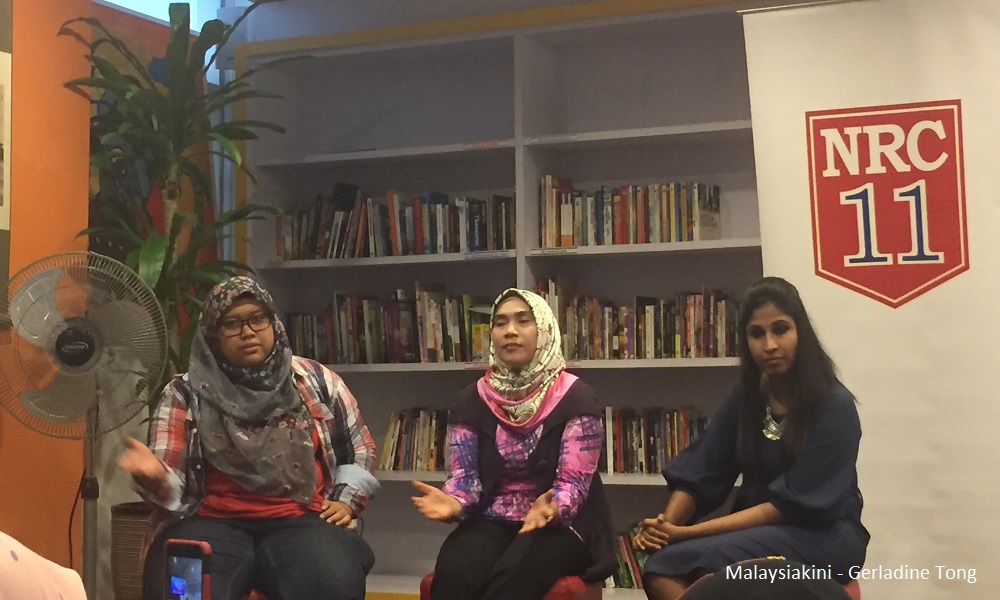
“But hey, guess what, I didn’t die,” she said at a forum discussion in Kuala Lumpur yesterday entitled ‘Mental Illness: Breaking Stigmatism’.
Farida is diagnosed with borderline personality disorder, which is characterised by a pattern of ongoing instability in moods, behaviour and relationships, amid her other symptoms.
The first time Farida Nadia Faizal Yamimi had suicidal thoughts, she was 10 years old, and she thought she would rather die than take on UPSR.
She later realised her suicidal thoughts came from her self-doubt and self-hate.
“A lot of times, as I grew up, (I thought) hey, if I die, what is the big deal?
“There would be one less mouth to feed, I would be breathing less oxygen and eating less food.
“But hey, guess what, I didn’t die,” she said at a forum discussion in Kuala Lumpur yesterday entitled ‘Mental Illness: Breaking Stigmatism’.
Farida is diagnosed with borderline personality disorder, which is characterised by a pattern of ongoing instability in moods, behaviour and relationships, amid her other symptoms.
She is now taking medication and is going for treatment and appointments for her mental illness, but the journey to where she is now was an arduous process.
Coming from a kampung in Pontian, Johor, she said she did not think it was odd for her to be having suicidal thoughts at 10.
“I didn’t have any exposure, I’m a kampung kid. I thought every other 10-year-old thinks about dying,” she said.
By the time she was 13, she was an outcast that did not fit in anywhere, so she turned to the Internet.
Thankfully, she said, her father used to own a cybercafe, and with both her parents working full-time, they gave her a computer for her personal use.
“I made friends online. They were my only friends,” she related.
At 15, she was talking to an online friend from New Jersey, US, about her feelings, when he pointed out that what she described sounded a lot like depression.
She had no clue what he was talking about, she said, so she started researching the topic and realised she resonated with all the symptoms for depression.
Now that she realised she might have a problem, Farida said she decided to see a counsellor.
Several participants of the forum pointed out that they have had bad experiences with their school counsellors, who did not maintain their privacy.
Seeking qualified help
Universiti Putra Malaysia (UPM) head of psychotherapy and intervention section Siti Fatimah Abdul Ghani, a fellow forum panellist, said these school counsellors were most likely not registered counsellors.
“In counselling, the most important thing is seeking professional help (from) registered counsellors,” she said.
Registered counsellors under the Malaysian Board of Counsellors (LKM) have to abide by the ethics of confidentiality with their clients, she said.
“(Otherwise) LKM can take back our licences,” she said.
Hospital Kuala Lumpur (HKL) psychology officer Rani Chandra added that the clients can also sue them for breaking their pact of confidentiality.
Siti Fatimah said the only exception to the ethics of confidentiality is if the client revealed to them that they were planning to do harm to themselves or someone else.
Rani reminded the audience that counsellors and clients must both be aware about their rights.
The counsellor Farida saw did not break any confidentiality pact, she said, but the “disturbed” look on her face as Farida related her suicidal thoughts made her realise suicidal thoughts were not normal.
“So then I talked to my family about this, and the first person I spoke to was my mother.
“Her first reaction was ‘Really?’, and her second reaction was, ‘Is this Mama’s fault?’
“I felt guilty because (I thought maybe) it is better if I did not exist, because my parents would not feel this bad,” she said.
She first sought treatment at 17, where she was initially diagnosed with dysthymia, a form of chronic depression.
Rani said someone with depression does not necessarily have a mental illness.
But if a person were to stay in that state for a prolonged period of time, such as more than two to six months, there is a high possibility for them to get major depression disorder, she said.
As a counsellor, she said, she wanted to be able to treat patients before they are categorised as having mental illness.
“Usually, they come to see me at a severe stage when it is very hard to treat, where they have been in that situation for five, six years,” she lamented.
She implored the public to seek professional help before it reaches that stage.
‘Don't wait till suicidal’
“When you see you cannot do your daily routine, you cannot connect with your surroundings or somebody, and you always have this empty feeling inside you, it is time for you to seek help.
“Do not wait until you want to commit suicide or harm someone,” she said.
For Farida, she had already lived with her symptoms since she was 10 by the time she received treatment and was prescribed medication at 17.
“I wanted instant gratification (at first). I thought if I take this pill, tomorrow I would be a functioning human being.
“But of course, that did not happen,” she said.
What did change, slowly over the course of a few months, was her behaviour, she said.
She did not hate herself as much any more, she noticed, nor did she throw as many temper tantrums as she used to, a change that her mother also noticed.
Lot of services
For those who might be seeking counselling, Siti Fatimah said in a university setting, there are many types of counselling.
There are walk-in counselling services, tele-counselling and even online counselling for those who are not ready to go face-to-face with a counsellor, she said.
“Do not say you do not know where to go. There are a lot of services, the thing is whether you want to get in touch with the information, or just let it be,” she said.
In a hospital setting, Rani advised those who want to seek help to see a medical officer at any hospital or clinic first, where they can get a referral to a counsellor.
All they have to do, she said, is to tell the medical officer that they have “personal issues” they would like to discuss with a counsellor.
“There is no need to reveal anything else if you don’t feel comfortable doing so,” she said.
She also said patients can choose their counsellors or psychiatrist, or even change them if the patients do not feel comfortable with them.
Farida said she did not know she could choose her counsellor, but she was lucky, she said, as she got one she was indeed comfortable with.
Now, Farida is currently studying for her bachelor’s degree, while still continuing with her treatments and taking medication, but she is more than willing to share her story to shed some light on what it is like to live with a mental health disorder.
“When people say you can cure mental illness, it is like saying you want to cure being an amputee.
“It is not a sickness, it is part of your identity. Sometimes it might not be the best thing, but you live with it,” she said.
Call her a patient, a victim, a survivor of mental illness, she does not care, but she warned that this is not true for every person diagnosed with mental illness.
“When in doubt (of what to call someone with a mental illness), ask,” she said.


Are you sure you want to delete this comment?
This action cannot be undone.