



'Playful' new quiz aims to teach women's rights in Islam
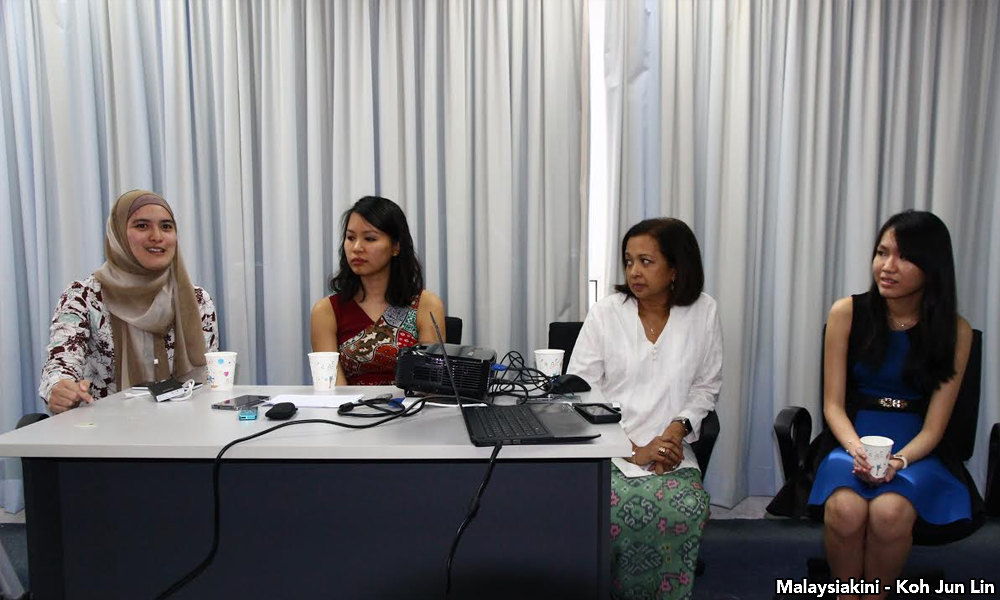
The NGO Projek Dialog has launched a series of online quizzes touted as a fun way to teach women’s rights in Islam to the public.
The first of the Hidayah Muslimah (enlightenment for Muslim women) series of quizzes released today asks visitors to answer a series of ten questions to find out “Which Islamic heroine are you?”.
At the end of the quiz, the website will tell the visitors which female Muslim historical figure they most resemble, as well as links to learn more.
Co-writer Yana Riza said there are 12 quizzes in total, and one would be released each week. Future quizzes - some of which are aimed at men, and others at women - would tackle issues such as marriage, family and rape.
The NGO Projek Dialog has launched a series of online quizzes touted as a fun way to teach women’s rights in Islam to the public.
The first of the Hidayah Muslimah (enlightenment for Muslim women) series of quizzes released today asks visitors to answer a series of ten questions to find out “Which Islamic heroine are you?”.
At the end of the quiz, the website will tell the visitors which female Muslim historical figure they most resemble, as well as links to learn more.
Co-writer Yana Riza said there are 12 quizzes in total, and one would be released each week. Future quizzes - some of which are aimed at men, and others at women - would tackle issues such as marriage, family and rape.
“At the end of the day, this is about women empowerment. I think it is very beneficial even if people disagree, just to get the dialogue going,” she said.
She said the quizzes include references to Malay pop culture and are intended to be "playful".
Nevertheless, months of work had gone into conceptualising, researching, and writing the quizzes.
“We are very careful to make sure that this is not something we have conjured out of nothing. There is a lot of research and fact-checking that has gone into this, so we have tried as best possible to present a very fair presentation of what women’s rights are in Islam.
“Sometimes we find that a lot of the discourse surrounding women’s issues are a little biased. It’s a patriarchal reading of how women are understood in Islam. So we are trying to provide alternative narratives to that,” Yana said.
The project’s coordinator Victoria Cheng added that the quiz also collects anonymous information for Projek Dialog’s research, but visitors can opt to share the results of their quizzes on social media.
Meanwhile, social activist Marina Mahathir who launched the project, said she hoped that the quiz would gain traction.
“Unfortunately, we find that there is a lot of discrimination going on against women, including violence and taking away their rights.
“Secondly, a lot of Muslim women don’t know what rights they are entitled to in their own religion. They are taking this often from what they hear - which is not necessarily correct - and often find that it doesn’t really connect with their real lives.
“So I really think that a project like this that tries to personalise the situations that women find themselves in and relate it to their rights in Islam, is a very good step forward and enables more women to understand how all these rights that they have in Islam applies to them - or not - and if it doesn’t, then how can they claim them,” she said.


