



Education the key to Rohingya survival
As many Malaysian parents prepare their children to start the new schooling year, not much has changed for children of Rohingya refugees around Selayang, near Kuala Lumpur.
With the lack of access to formal education, their only hope lies with informal classes run by non-governmental organisations.
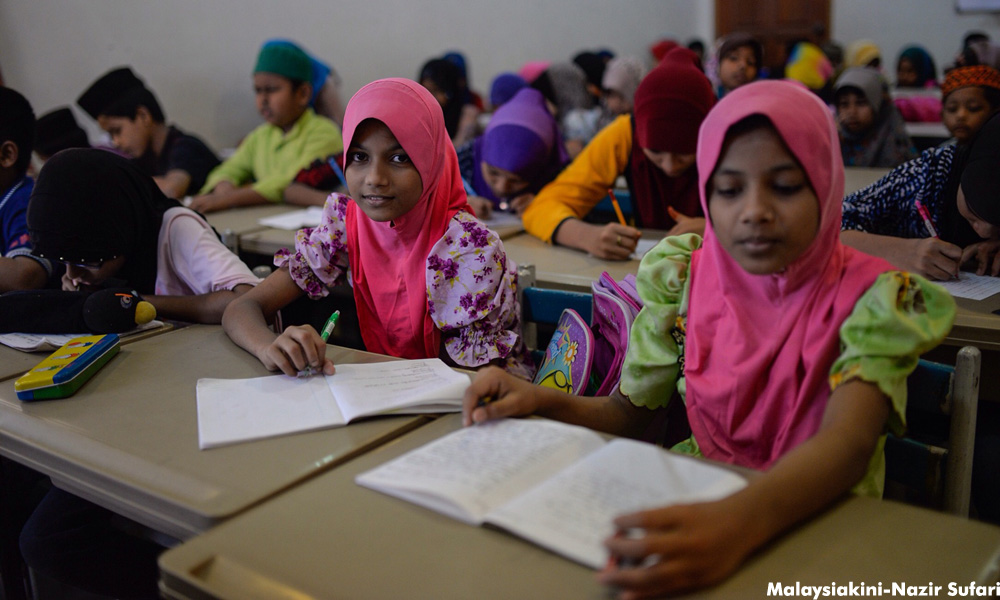
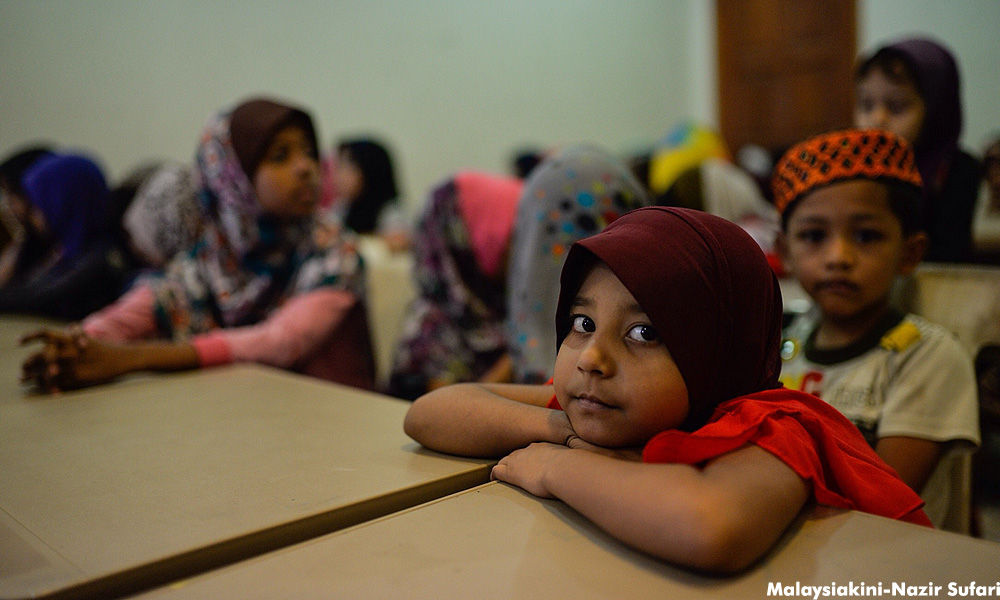
On the third floor of a refugee centre operated by several local NGOs, some 80 children of all ages sit along rows of tables across a packed classroom.
Some were sharing their exercise books or scribbling on blank sheets of paper as their teacher, who is also a Rohingya refugee, stood in front of the classroom.
As many Malaysian parents prepare their children to start the new schooling year, not much has changed for children of Rohingya refugees around Selayang, near Kuala Lumpur.
With the lack of access to formal education, their only hope lies with informal classes run by non-governmental organisations.
On the third floor of a refugee centre operated by several local NGOs, some 80 children of all ages sit along rows of tables across a packed classroom.
Some were sharing their exercise books or scribbling on blank sheets of paper as their teacher, who is also a Rohingya refugee, stood in front of the classroom.
Since August last year, the informal classroom was set up and dubbed as the Rainbow of Love initiative, founded by Rohingya activist Rafik Ismail.
Rafik told Malaysiakini that most of the children were "starting from zero" and needed to be taught basic literacy skills.
 "A majority of them are Muslims… So Iqra' (to read) is important. Aqidah (faith) is also important.
"We have two sessions. In the morning our focus is on academic lessons, on Bahasa Melayu, English and also the Myanmar language," Rafik said.
"Malay is important because they are living in Malaysia. With a good command of the language, they can better explain their situation or request for assistance from other parties," he explained.
This, he said, was on top of helping the refugees to better integrate in their new surroundings.
Centre operating since 2012
Since 2012, Rafik said, the Selayang Rohingya Centre has been operating to assist refugees in accessing various forms of assistance.
"At that time, when we did the monthly aid distributions, we saw there were many children who did not go to school.
"So then we decided to set up the Rainbow of Love school," said Rafik who fled Myanmar as a six-year-old boy, together with his parents and family members.
The school currently has three academic teachers and two religious teachers, operating from 9am to 5pm every Monday to Saturday.
Describing himself as being one of the fortunate ones, Rafik, who is now 41, noted that a growing number of Rohingya refugee children are being born in Malaysia.
With their future uncertain, Rafik said, having language skills would go a long way towards helping the children and refugees to survive in any country, including Malaysia.
Earlier, hundreds of Rohingya refugees gathered at the centre to receive aid from the Organisation of Islamic Countries’ (OIC) special envoy to Myanmar, Syed Hamid Albar.
In calling for a lasting solution to the Rohingya crisis, Syed Hamid touched on the importance of education as one way to secure the future of their children, whether to remain in Malaysia or eventually resettle in a third country.
Packages of rice and groceries were distributed to the refugees, with each recipient having to queue and register their details with the centre's representatives.
On one side, a large pile of donated clothes were placed on a plastic mat, as part of the centre's Garage Giveaway initiative.
Aside from the Rainbow of Love school, the Selayang Rohingya Centre also offers free boarding facilities for refugees who are single mothers, in an effort to prevent them from falling victim to human trafficking syndicates.


Are you sure you want to delete this comment?
This action cannot be undone.