


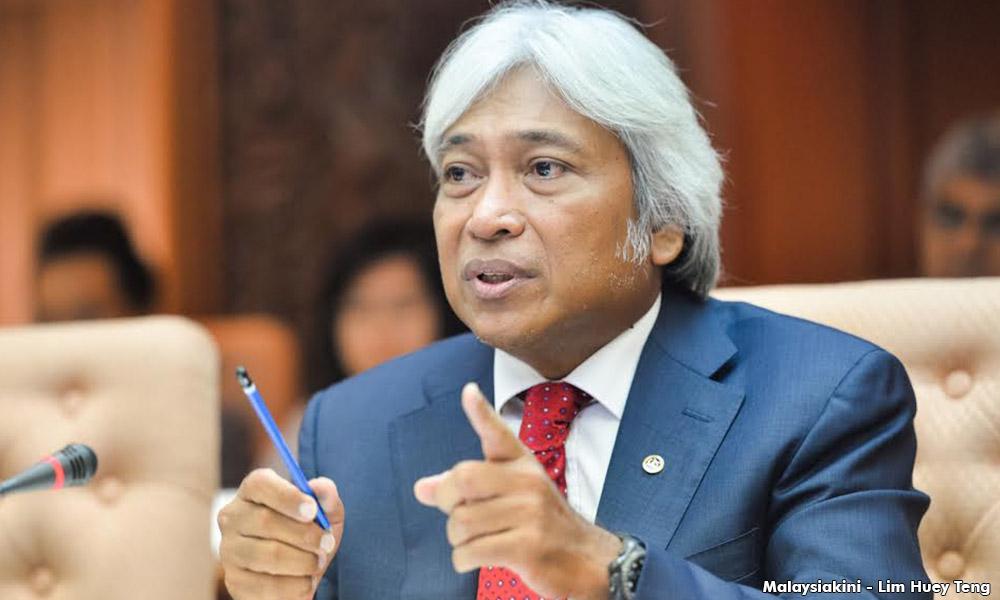

'Don't be fixated with assessing the equilibrium level of ringgit'
Economic analysts and observers should not be fixated with the level of the ringgit, Bank Negara governor Muhammad Ibrahim said today.
This is not a right and productive thing to do, he said. "We should not be too focused on an equilibrium value of the ringgit.
"Few views were offered by the economic analysts and observers. It is as though suggesting that this is our target in ensuring the stability of the economy. This is not accurate and productive," Muhammad said at the Finance Carnival organised by the central bank and attended by more than 100 finance service providers.
Economic analysts and observers should not be fixated with the level of the ringgit, Bank Negara governor Muhammad Ibrahim said today.
This is not a right and productive thing to do, he said. "We should not be too focused on an equilibrium value of the ringgit.
"Few views were offered by the economic analysts and observers. It is as though suggesting that this is our target in ensuring the stability of the economy. This is not accurate and productive," Muhammad said at the Finance Carnival organised by the central bank and attended by more than 100 finance service providers.
"Whether the ringgit is at the right level or not, let the market's demand and supply dictate the level. We should not be fixated on any particular level," he told reporters later.
Through the bank's Dec 2, 2016, measure, he said the ringgit - which depreciated 4.3 percent against the US dollar or fell below RM4.486 in 2016 - had shown signs of stabilisation.
"It will take a few months because the stabilisation will take three to six months before it can really show some outcome, but the initial results showed the ringgit has stabilised very much," Muhammad added.
On Dec 2, the central bank had requested companies to convert at least 75 percent of their export proceeds into ringgit.
Muhammad also said that Bank Negara may impose new measures to further strengthen the currency.
While not revealing the details of possible measures, he said the central bank would not resort to capital control and ringgit pegging.
The ringgit would remain under pressure next year as volatility and uncertainty in the global financial markets continued to impact capital flows.
Asked about the claim by the World Bank that the ringgit has been among the most affected currencies by the developments in the US, Muhammad declined to comment.
"You ask the World Bank," he replied.
"The key point is that the ringgit must be stabilised. If ringgit stabilises, then businesses can make decisions."


Are you sure you want to delete this comment?
This action cannot be undone.